A Chitwan National Park safari is the classic two- or three-day jungle add-on to a Nepal trip, and it costs a fraction of an African safari. Nepal's first national park (1973) and a UNESCO World Heritage Site since 1984, Chitwan protects 952 km² of sal forest, riverine grassland and oxbow lakes in the Terai lowlands, about 160 km southwest of Kathmandu. You move through it three ways: by open jeep, on foot with a licensed guide, or by dugout canoe. What you're almost guaranteed is a greater one-horned rhinoceros at close range. The Bengal tiger is the lottery ticket — 145 live here, in jungle dense enough to hide them.
This guide works through the planning decisions in order: real wildlife odds, which safari format suits you, what everything costs, when to go, where to sleep, and a costed three-day plan you can copy. For the park's full story, our Chitwan background guide covers the history and visitor basics in detail.
Chitwan Safari at a Glance
In Africa, a safari usually means a closed 4x4 and a driver who radios ahead when a cat is found. Chitwan is scruffier and more intimate. Jeeps are open, tracks are dirt, and walking inside a park that holds rhinos and tigers is one of the main activities, not a fringe option. All three formats run on the same permit system, and most visitors sample each over two or three days.
| Fact | Detail |
|---|---|
| Established / status | Nepal's first national park (1973); UNESCO World Heritage since 1984 |
| Area | 952.63 km² core park, plus a 729.37 km² buffer zone added in 1997 |
| Headline wildlife | 694 one-horned rhinos, 145 Bengal tigers, 544 bird species |
| Foreigner entry fee | NPR 2,000 (~US$15) per person, per entry day |
| Best safari months | October to March (dry, short grass, waterhole action) |
| Gateway towns | Sauraha in the east; Meghauli and Kasara in the west |
Chitwan earns its itinerary slot twice over. Until the 1950s this was a royal hunting ground of more than 2,600 km² holding roughly 800 rhinos; settlement and poaching cut both forest and animals to almost nothing before the 1973 park designation turned it around — the 2021 census counted 694 rhinos back. Your entry fees and guide payments fund that protection. And the money is small: a comfortable 2-night trip runs US$180-300 per person, against thousands for a comparable African lodge stay.
Wildlife You'll See — and Your Real Odds
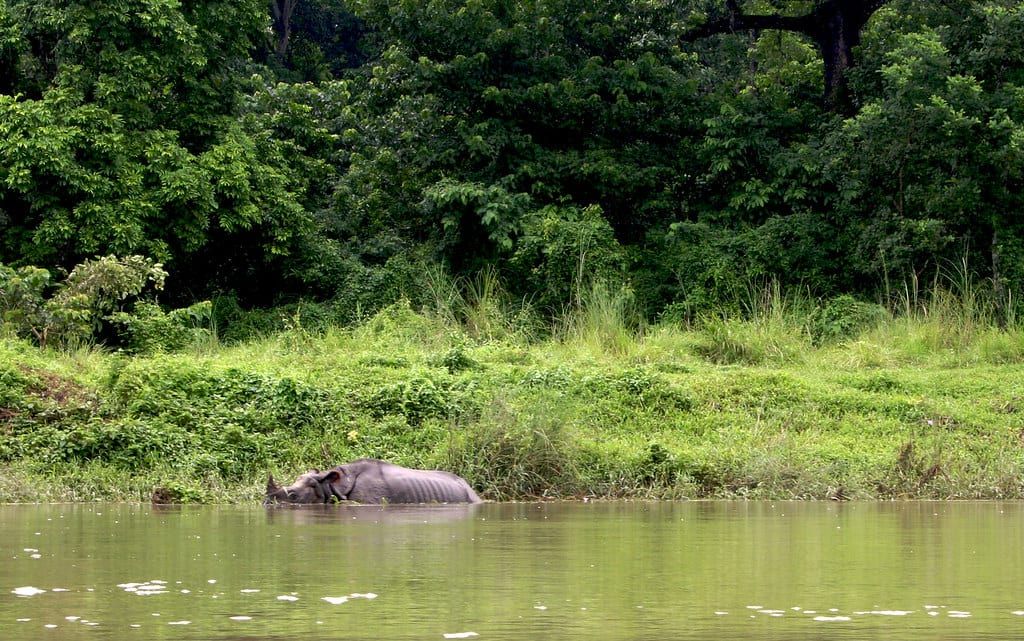
Set expectations before you book, because Chitwan delivers reliably on some species and rarely on others. The near-certain list: one-horned rhinos (694 at the 2021 count, the world's second-largest population), spotted and sambar deer, wild boar, rhesus and langur monkeys, gharial and mugger crocodiles, and plenty of the park's 544 bird species. Give it a day or two and you will see a rhino — one grazing the Rapti flats at first light is the signature Chitwan moment. Our guide to Chitwan's animals covers the rest of the cast species by species.
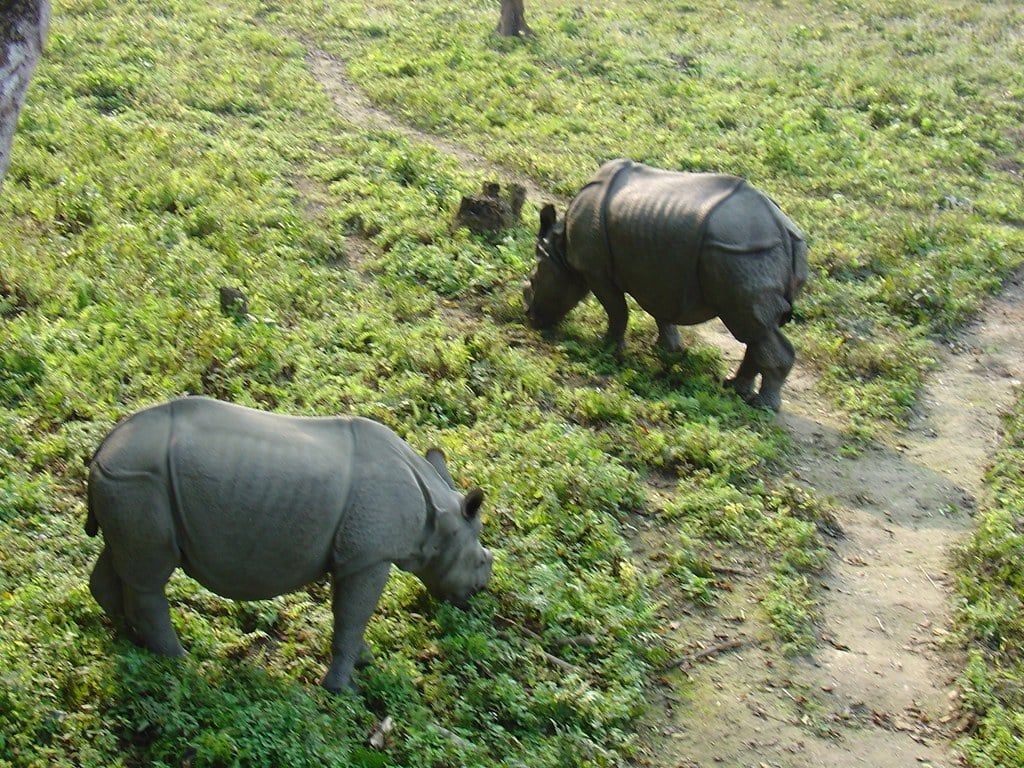
The realistic tier: sloth bears digging for termites, leopards, and wild elephants. Nepal's wild elephant population is only 150-200 animals, so treat any sighting as an event. The lottery is the tiger. Chitwan holds 145 of them (2025 national census, Nepal's largest population), but dense sal forest and tall grass hide cats that would be obvious on open savannah. Bardia National Park in Nepal's far west gives better tiger odds; Chitwan is the rhino park that sometimes produces a tiger.
Timing and luck matter more than money. Animals come to water at dawn and late afternoon, so the 6-7 AM jeep departures and the post-lunch slot out-produce midday by a wide margin. Outcomes swing day to day, too: one operator's group counted almost 30 rhinos in a single day, then four the next. Budget at least two activity days to average out the luck.
Choosing Your Safari: Jeep, Walking, or Canoe
The three formats suit different travelers, and the choice is really about what you want from the day: the jeep is the all-rounder, the walk is the thrill, the canoe is the atmosphere.
Jeep Safari
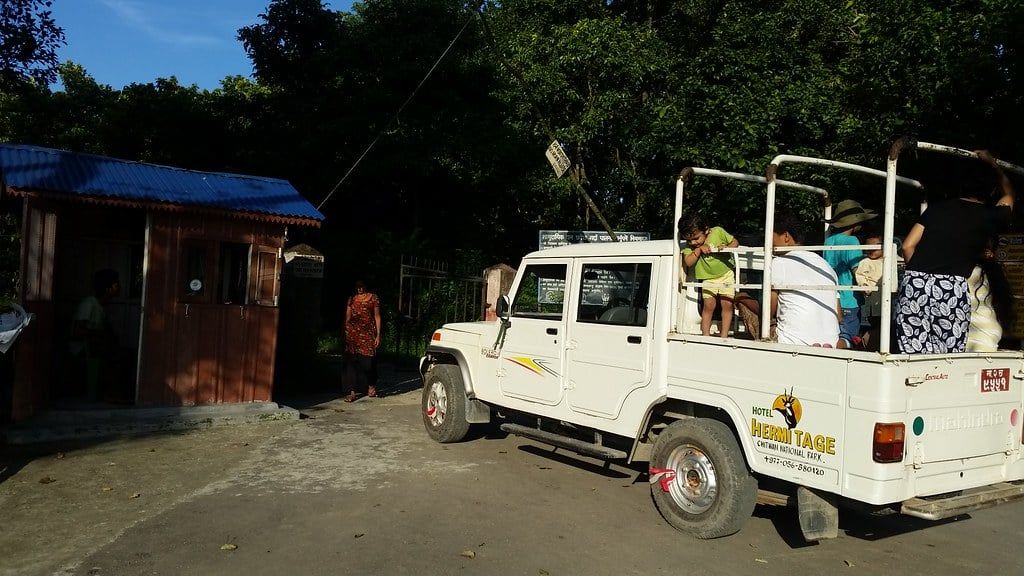
Jeeps cover the most ground and suit everyone, including children and travelers who can't walk far. A shared half-day runs about 4-5 hours and costs NPR 1,250-1,900 (US$10-15) per seat booked locally; full days stretch to 7-10 hours. The catch: jeeps stick to dirt tracks through dense forest, so visibility is a corridor — which is exactly why tiger sightings from vehicles are rare. Book the dawn departure. If you'd rather compare ready-made options, our Chitwan safari tours page lists vetted jeep, walk and canoe trips side by side.
Walking Safari
Walking is Chitwan's signature oddity: you enter a park with rhinos, sloth bears and tigers on foot, protected by guides carrying nothing but bamboo sticks. The law requires two licensed guides on every jungle walk, and being on foot is quieter than a jeep — you'll hear langurs alarm-calling and find prints you'd never catch from a vehicle. It is also the format with real risk. Rhino attacks on walkers are documented and some have been fatal; 11 people died in animal attacks across the Chitwan district in 2024-25, mostly rhino charges, and sloth bears attack more tourists here than any other animal. The rules that keep you safe: follow the guide instantly, stay in a tight group, and never walk between sunset and sunrise.
Canoe Safari
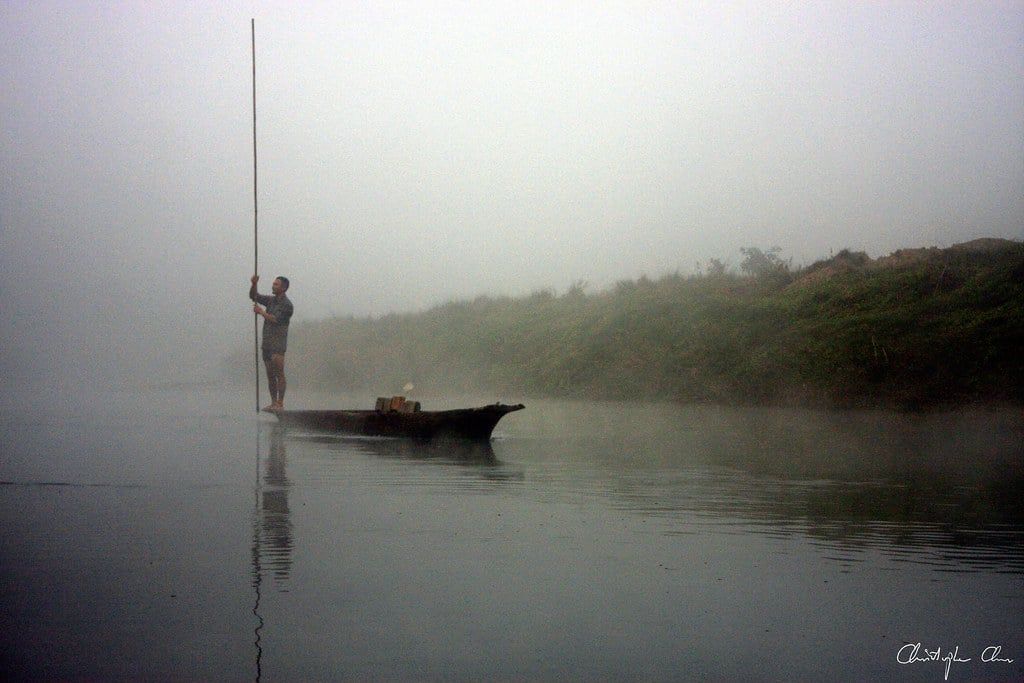
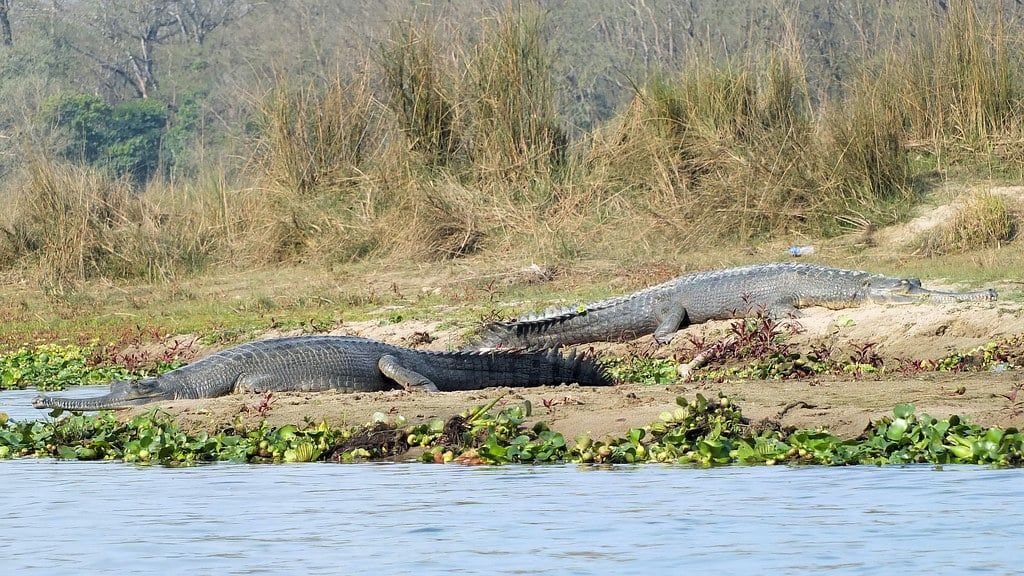
The canoe is one to two hours drifting down the Rapti in a hand-carved dugout, past mugger crocodiles and thin-snouted gharials basking on the banks, with kingfishers and herons working the shallows. It costs NPR 1,000-1,500 and operators often bolt on a jungle walk or a breeding-center visit. Ask about the less-visited Budi Rapti river if you want fewer boats around you. Dry season is best — monsoon current interrupts trips.
Elephant Rides: Skip Them
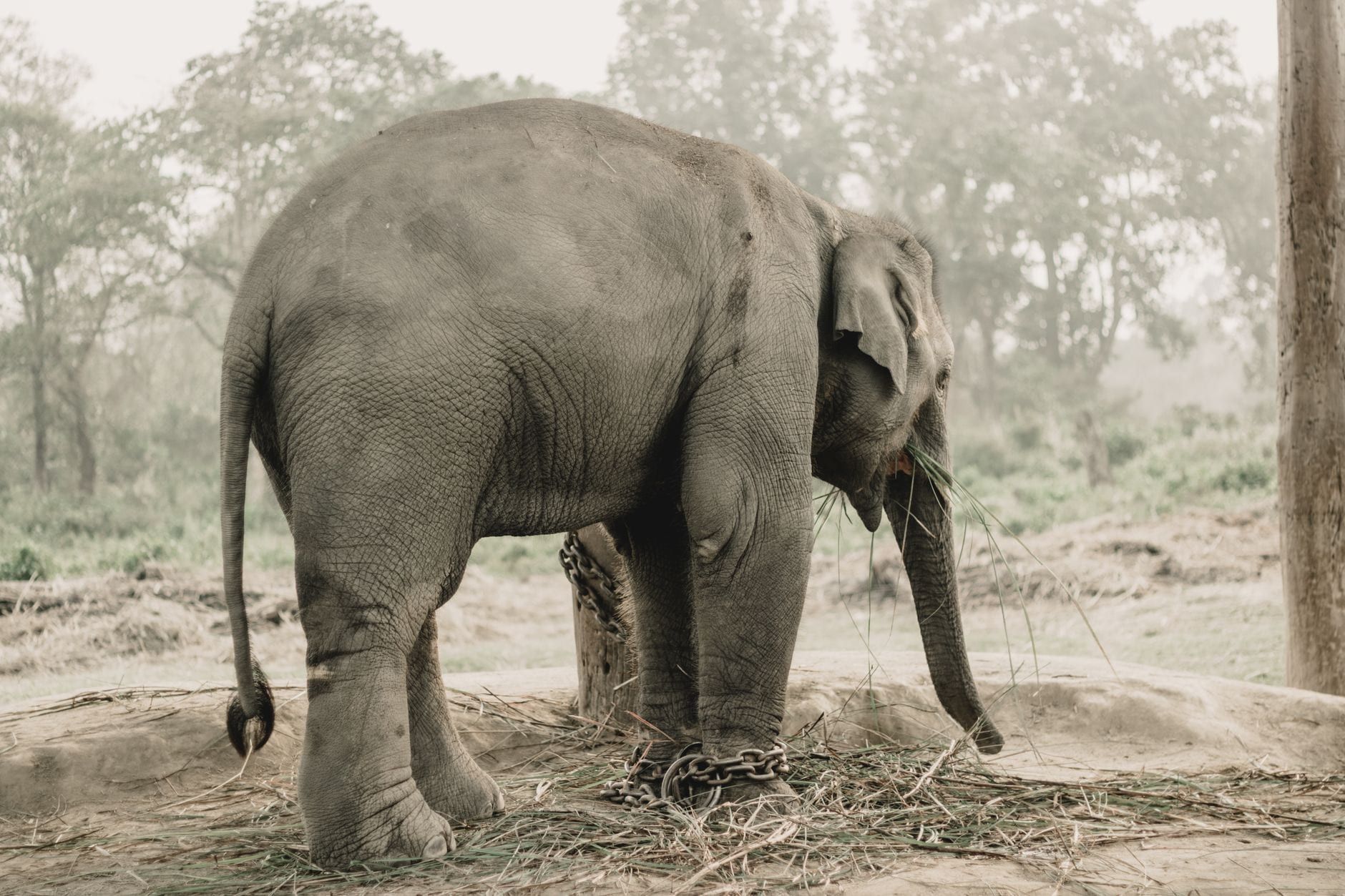
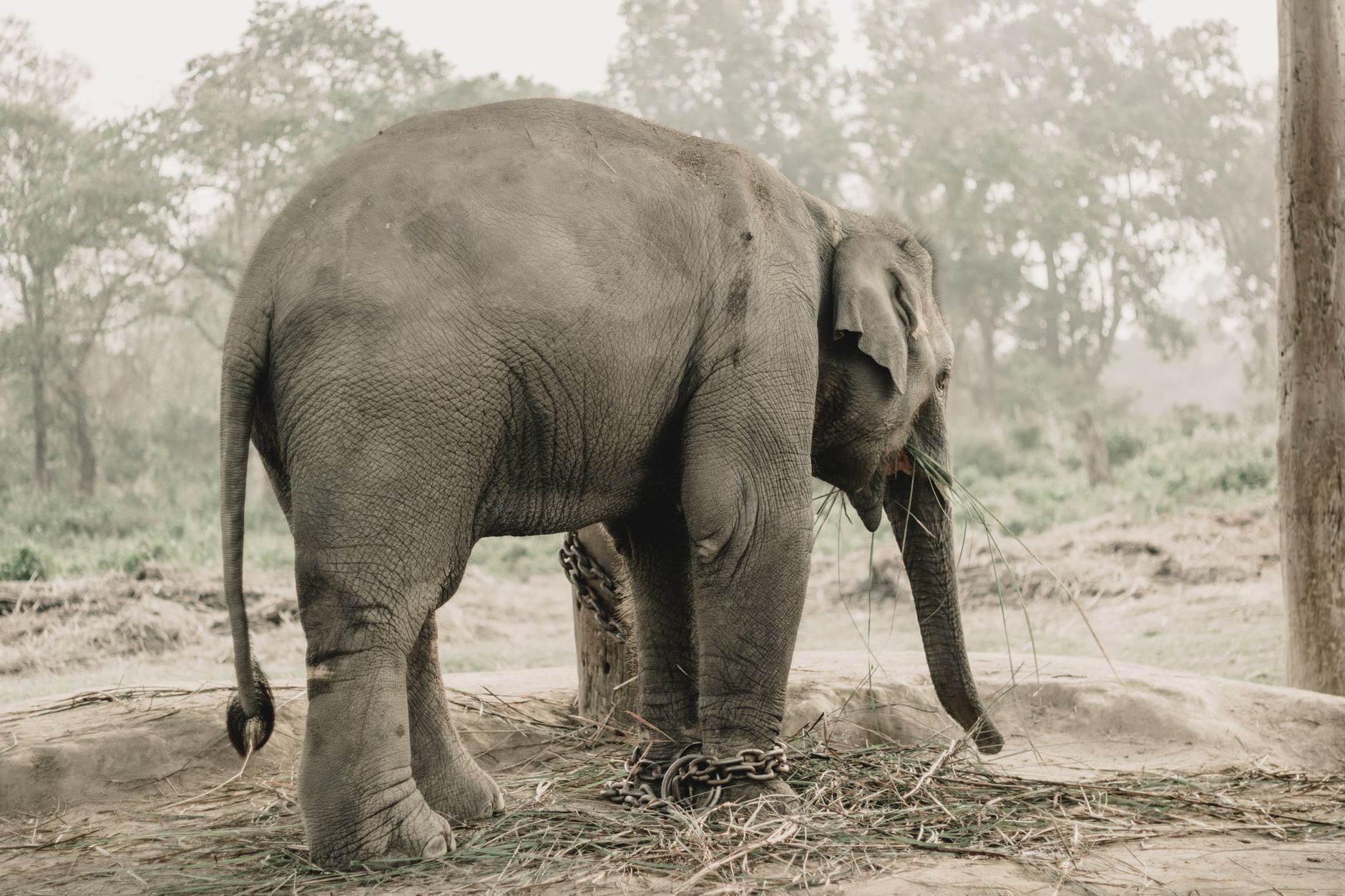
Rides are still sold in Sauraha, and you should pass. Training a riding elephant involves a breaking process handlers call "crushing", and operators now steer visitors toward jeep, walk and canoe safaris instead. If elephants are the draw, two properties run ride-free programs where you observe and walk with the animals: Tiger Tops' elephant camp and Sapana Village Lodge.
Half-Day, Full-Day, or Multi-Day?
A half-day (4-5 hours) suits short stays and anyone pairing the safari with the Tharu show, a village walk, or a cycle to the lakes — but the jeep mostly drives and only stops when something is spotted. A full day (7-10 hours) changes the game: the driver stops and waits at fresh sightings, takes jungle breakfast or lunch stops, and climbs observation towers over waterholes. For photographers and serious wildlife watchers, that waiting time is where sightings come from.
Multi-day trips add an overnight at a camp or tower inside the jungle — the play if tigers are your priority, since dawn and dusk deep in the forest is where the long-shot odds live. In the March-May dry season a third night earns its keep: wildlife concentrates near shrinking water, and a second jeep day measurably improves the haul. One day can also be compressed: canoe at dawn, a two-hour jungle walk, and an afternoon half-day jeep in a single outing.
What a Chitwan Safari Really Costs
Start with the official layer. Park entry is NPR 2,000 (~US$15) per foreigner per entry day, NPR 1,000 for SAARC nationals and NPR 150 for Nepalis; children under 10 enter free. The fee is charged per day, so every day you go back inside you pay again. Buy permits at the gates or in advance at the Tourist Service Center in Kathmandu's Bhrikutimandap, where processing takes about 15 minutes — see our hours and fees page before you go.
On top of entry, the park charges a NPR 5,000 jungle-drive permit per jeep, and guide contributions run NPR 1,000-1,500 per person — three separate line items that surprise travelers who assumed their package covered everything. Market rates booked through agencies: a shared half-day jeep US$25-45 per person with fees bundled; a private jeep US$150-250 half-day or US$210-350 full-day per vehicle; canoe trips from US$10-20 through agencies up to US$40-100 through resorts; guided walks US$15-30; the Tharu cultural show US$3-5. Booked locally in Sauraha, that same shared jeep seat is NPR 1,250-1,900 — the bundle premium is what you pay for someone else's logistics.
Realistic totals for 2 nights/3 days: US$120-180 per person on a budget, US$180-300 with a standard full-board lodge package, both excluding transport from Kathmandu or Pokhara. Add tips (about 10% of trip cost to the main guide, 5% each to driver and assistant, or US$5-10 per day for a naturalist guide) and lodge-bar drinks, which are priced like resort drinks. Packages usually beat separate booking — a two-day activity program alone runs US$60-110 per person.
Where to Base Yourself: Sauraha vs the Quieter West
Sauraha, on the park's eastern edge, is where almost everyone stays: budget guesthouses, dozens of operators, the evening cultural show. It is also crowded on the inside — the eastern sector runs over 300 registered jeeps through roughly 40% of the park's wildlife. The western sector around Kumarwarti and Meghauli, where the Kasara park headquarters sits, has about 7 jeeps and roughly 60% of the wildlife. Fewer vehicles, more animals, higher prices, and only a handful of lodges.
Rough guide: budget travelers and first-timers, Sauraha; wildlife watchers who would rather see ten animals without another jeep in the frame, the west. Lodging runs US$15-30 for a guesthouse room, US$60-120 per person full board at a standard safari lodge, and US$250-600+ at the luxury end — our Chitwan accommodation guide breaks down the options. One warning: hotels are banned from operating inside the park itself, so treat any "lodge inside the park" claim as marketing.
Best Time to Visit Chitwan for a Safari
October to March is the window. Days run 21-29°C, the post-monsoon grass is short, and animals gather at waterholes as the ground dries — the year's best visibility, at the cost of 20-30% higher prices in the October-February peak. Winter mornings are cold in an open jeep: December nights drop to around 8°C, and fog can sit on the river flats until mid-morning. Bring the layers.
February brings grass burning — the tall elephant grass is torched so it can regrow, and the short-grass park in March is markedly easier for spotting. March-May heats up to 37°C but concentrates wildlife at shrinking water; go early, finish early. June-September is the monsoon: July alone averages about 24 rain days, tracks flood, canoe trips stop, and flash floods are a documented danger in the district. Prices drop. So does the safari. For month-by-month detail, see our best time to visit Chitwan guide.
How to Get to Chitwan
The tourist bus is the default: 5-7 hours from Kathmandu or Pokhara to Sauraha at NPR 500-1,500+ (US$10-15, or US$20-30 on a deluxe air-conditioned coach), with morning departures leaving Kathmandu between about 6:30 and 9 AM. Confirm your drop-off before booking — "Chitwan" can mean Sauraha, Bharatpur, Tandi or Ratnanagar, and they're up to an hour apart. Our directions guide maps the routes and transport options in full.
Flying is a 25-minute hop to Bharatpur (Buddha Air, Shree Airlines, Yeti Airlines), around US$150 one-way for foreigners, then 18 km and 30-45 minutes by taxi to Sauraha. Nepal's domestic flights delay and cancel freely in bad weather, so book the first departure of the day to keep rebooking options — a cancelled afternoon flight eats a safari day. A private car runs NPR 12,000-20,000+ (US$100-140) per vehicle each way over 4-6 hours, and splits well for three or four people. Whichever way you come, don't schedule a safari for the arrival afternoon after a 5-7 hour bus ride. Pre-arranged tours from Kathmandu bundle the transfer with the safari program if you'd rather not assemble the pieces yourself.
Booking Your Safari: Licensed Guides Are Mandatory
The Department of National Parks and Wildlife Conservation requires a licensed nature guide for every core-area activity — jungle walks, jeep safaris and canoe rides alike — and walks need two. You cannot legally self-guide or self-drive. The constraint simplifies booking: your lodge or a registered operator arranges permits and guides, usually the evening before a morning departure.
Money first: arriving in Sauraha, picking a lodge, and booking activities on the spot saves 30-50% against pre-booked online packages. Check room and tour prices at two or three guesthouses before committing. When vetting an operator, skip anyone pushing the most expensive package before asking what you want to see; confirm exactly what "park fees included" covers (the NPR 2,000 entry plus the NPR 5,000 jeep permit is the usual gap); and prefer outfits where guide and driver are separate roles. One permit trick: a full-day ticket bought after 2 PM can be paired with proof of a next-day activity booking, stretching one permit across that afternoon and the following morning.
A Sample 2-Night/3-Day Safari Plan (Costed)
This is the standard shape of a Chitwan visit, costed for a budget traveler booking locally in Sauraha. A couple sharing a room and a jeep lands around US$150-200 per person all-in, including the bus from Kathmandu and every park fee.
Day 1: Arrive, Village Walk, Evening Show
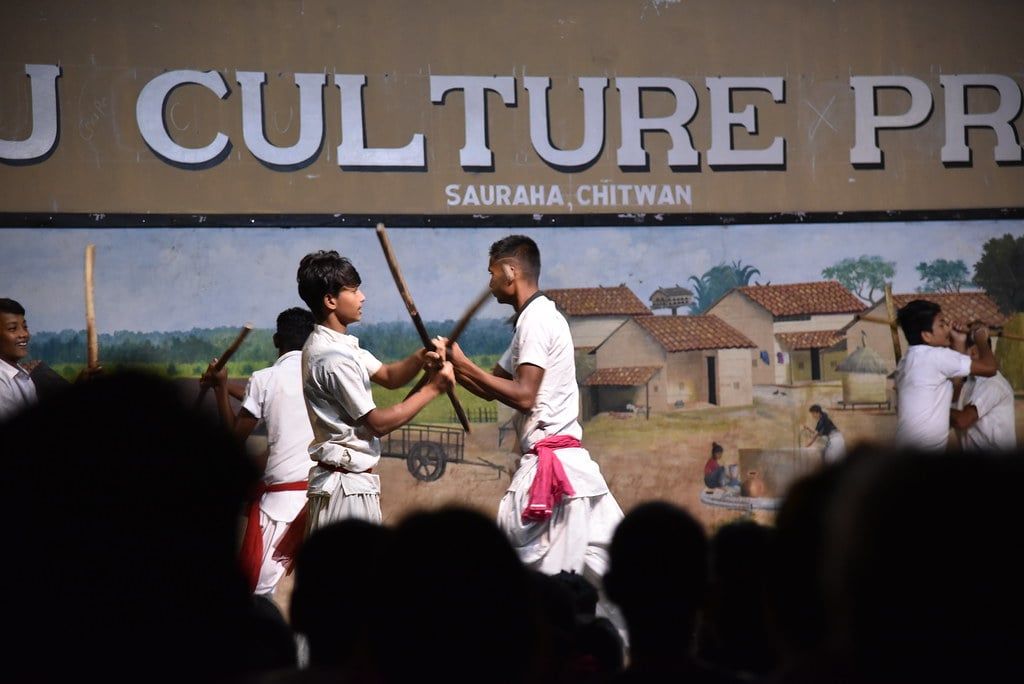
Take the morning bus from Kathmandu or Pokhara (5-7 hours) and check in by early afternoon. Spend the late afternoon on a Tharu village walk — the Indigenous Terai community's mud-and-thatch houses with painted walls line lanes you can cover on foot. The stick-dance show starts at 7 PM in Sauraha and costs about NPR 200 (US$3-5); many lodges include it. No park permit needed today.
Day 2: Canoe, Walk, Jeep
Dawn canoe on the Rapti for gharials, muggers and river birds, then a two-hour guided jungle walk back through the forest edge. If transport allows, add the Gharial Breeding Center at Kasara — it has reared and released this critically endangered crocodile since 1978, and the hatchling pools put the species at arm's length; only 200-250 gharials survive in Nepal. Afternoon: shared half-day jeep onto the rhino flats. Day's entry fee: NPR 2,000.
Day 3: Full-Day Jeep or Bird Morning
Either commit to a full-day jeep (7-10 hours, jungle meal stops, tower waits) or take a birdwatching morning — with 544 species, Chitwan rewards it — and an afternoon bus out. In the March-May dry season, the full-day jeep plus a fourth night is the upgrade that pays.
| Item | Cost |
|---|---|
| Park entry, 2 days | US$30 (NPR 2,000 × 2) |
| Shared half-day jeep × 2 | US$20-30 (NPR 1,250-1,900 each) |
| Guide contribution | US$8-12 (NPR 1,000-1,500) |
| Canoe ride on the Rapti | US$8-12 (NPR 1,000-1,500) |
| Tharu cultural show | US$3-5 |
| Guesthouse, 2 nights, with food | US$40-70 |
That totals roughly US$110-160 per person, plus US$10-15 for the bus from Kathmandu. Swaps: a one-day compression (canoe, walk and half-day jeep in a single day) cost one group of five about US$60 each all-in; an overnight jungle tower replaces a lodge night for tiger-focused travelers; in March-May, add a second jeep day.
What to Pack and Wear
Color first: wear khaki, brown, gray or tan, and skip red, white and yellow, which make animals flee or fixate. Open jeeps get cold and windy on 6 AM winter starts — a windbreaker and warm hat matter more than you'd expect in a lowland jungle — and monsoon demands a real raincoat, not a poncho. Long sleeves beat repellent for the first hour of any walk.
Health: mosquitoes are constant, dengue outbreaks occur, and malaria is listed as a Terai risk, though no cases are reported from the park itself — precautions, not panic. Use DEET, sleep under a net, and do a tick and leech check after every walk. Gear: binoculars (ask your guide; good ones carry spares), a zoom lens, water, and a dry bag for the canoe. Inside the park, drones need special written permission, single-use plastic stays out, and flash photography of animals is not allowed. Never buy wildlife products — it is a prosecutable offense in Nepal.
Frequently asked questions
Can you visit Chitwan National Park without a guide?
No. The Department of National Parks and Wildlife Conservation requires every foreign visitor to be accompanied by a licensed nature guide for all core-area activities — jungle walks, jeep safaris and canoe rides — and jungle walks legally require two guides.
How much does a Chitwan safari cost per person?
Park entry is NPR 2,000 (~US$15) per person per entry day for foreigners. A shared half-day jeep runs US$25-45 with fees bundled, or NPR 1,250-1,900 booked locally. A realistic 2-night/3-day trip totals about US$120-180 on a budget or US$180-300 with a full-board lodge package, excluding transport.
Will I see a tiger in Chitwan?
Possibly, but unlikely. Chitwan holds 145 tigers (2025 census) in dense jungle that hides them well. Multi-day deep-jungle trips and the quieter western sector improve the odds, and Bardia National Park in Nepal's far west is the better tiger bet.
What is the best month for a Chitwan safari?
October-December and February-April, in the dry season: winter days run 15-25°C, visibility is best, and February's grass burning shortens the elephant grass further. Avoid June-September, when monsoon rain floods tracks and interrupts canoe trips.
Are elephant safaris in Chitwan ethical?
Most operators now say no. Rides involve a cruel 'crushing' training process, and jeep, walking and canoe safaris are the recommended alternatives — along with ride-free elephant experiences at Tiger Tops Elephant Camp or Sapana Village Lodge.
Is one day enough for a Chitwan safari?
One full day can fit a canoe ride, a jungle walk and a half-day jeep — one group of five paid about US$60 each for that combination — but 2 nights/3 days is the recommended minimum for real wildlife depth.
Should I book my safari in Sauraha or the western sector?
Sauraha is cheapest, with the most operators and lodges, but over 300 jeeps and roughly 40% of the park's wildlife. The western sector has about 7 jeeps, roughly 60% of the wildlife, and pricier, limited lodging.
Sources
- ntb.gov.np/plan-your-trip/before-you-come/park-entry-fees
- chitwannationalpark.gov.np
- chitwannationalpark.gov.np/regulation.html
- whc.unesco.org/en/list/284
- en.wikipedia.org/wiki/Chitwan_National_Park
- buddhaair.com
- iucn.org/story/202607/tiger-census-nepals-tiger-number-increases-429
- smartraveller.gov.au/destinations/asia/nepal