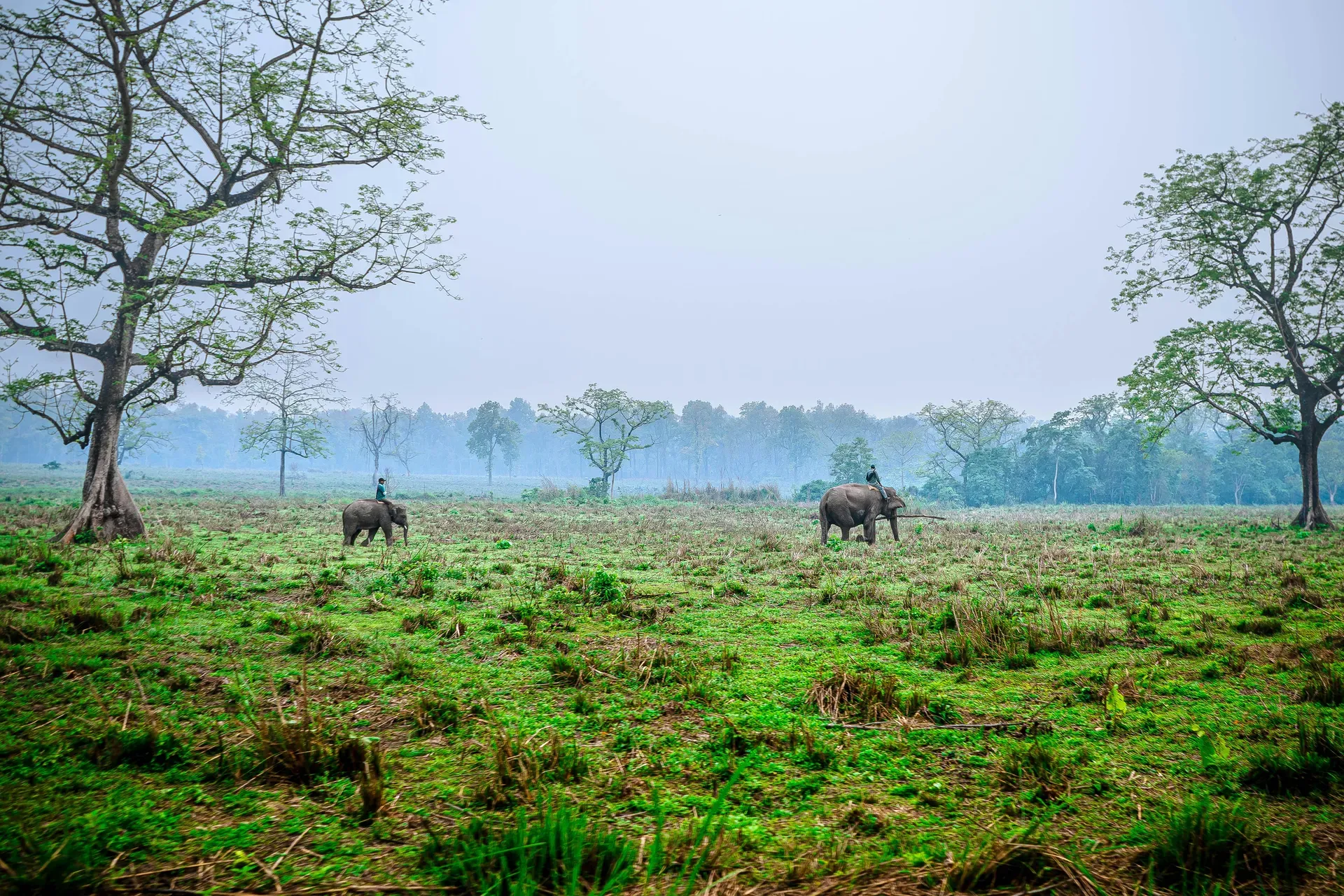
Choose from jungle safaris by jeep, canoe rides on the river, guided nature walks, and multi-day packages with overnight stays in a jungle tower. Tours run from quick half-day excursions to full 4-day itineraries, with pickups available from Kathmandu, Pokhara, and hotels inside Chitwan.
 Free Cancellation
 3-day package with one night in a wooden jungle tower and one in a 3-star resort, with jeep safari, canoeing and all meals.
 Free Cancellation
 3-day Chitwan safari package: jeep safari, canoe ride, jungle walk, Tharu dance, full board and park fees.
 Free Cancellation
 4-day Chitwan package with a night in a wooden jungle tower, jeep safari, canoeing, and Tharu culture show.
 Free Cancellation
 Two-hour guided walking safari inside Chitwan National Park, with hotel pickup, entrance fees, and an English-speaking nature guide.

Shared 4.5-hour jeep safari inside the park with a licensed English-speaking guide and permit included.
 Free Cancellation
 Three-day, two-night Chitwan safari from Pokhara with jeep safari, Tharu village visit, and round-trip tourist bus.
 Free Cancellation
 Three-day, two-night Chitwan package with round-trip tourist coach from Kathmandu (or Pokhara), all meals and jeep safari included.

Full-day shared tour combining a morning canoe ride, guided jungle walk, and afternoon jeep safari inside the park.
 Free Cancellation
 Three-day Chitwan trip from Kathmandu with all meals and a canoe ride on the park's rivers.
 Free Cancellation
 Daily deluxe tourist bus from Kathmandu's Shorakhutte to Chitwan, departing 07:00 AM.
Read what travelers share about their experience visiting Chitwan National Park — from practical tips to personal highlights.
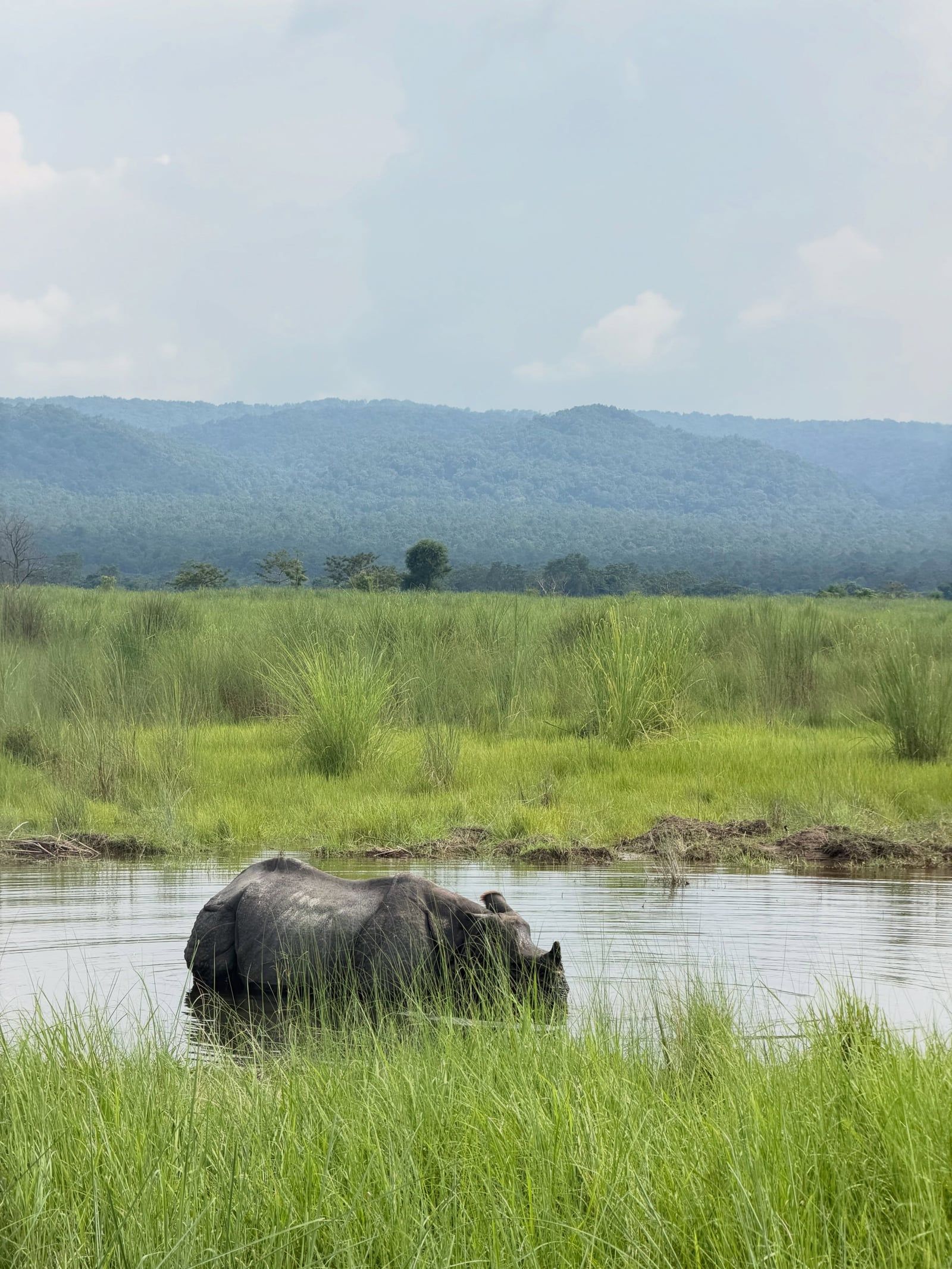
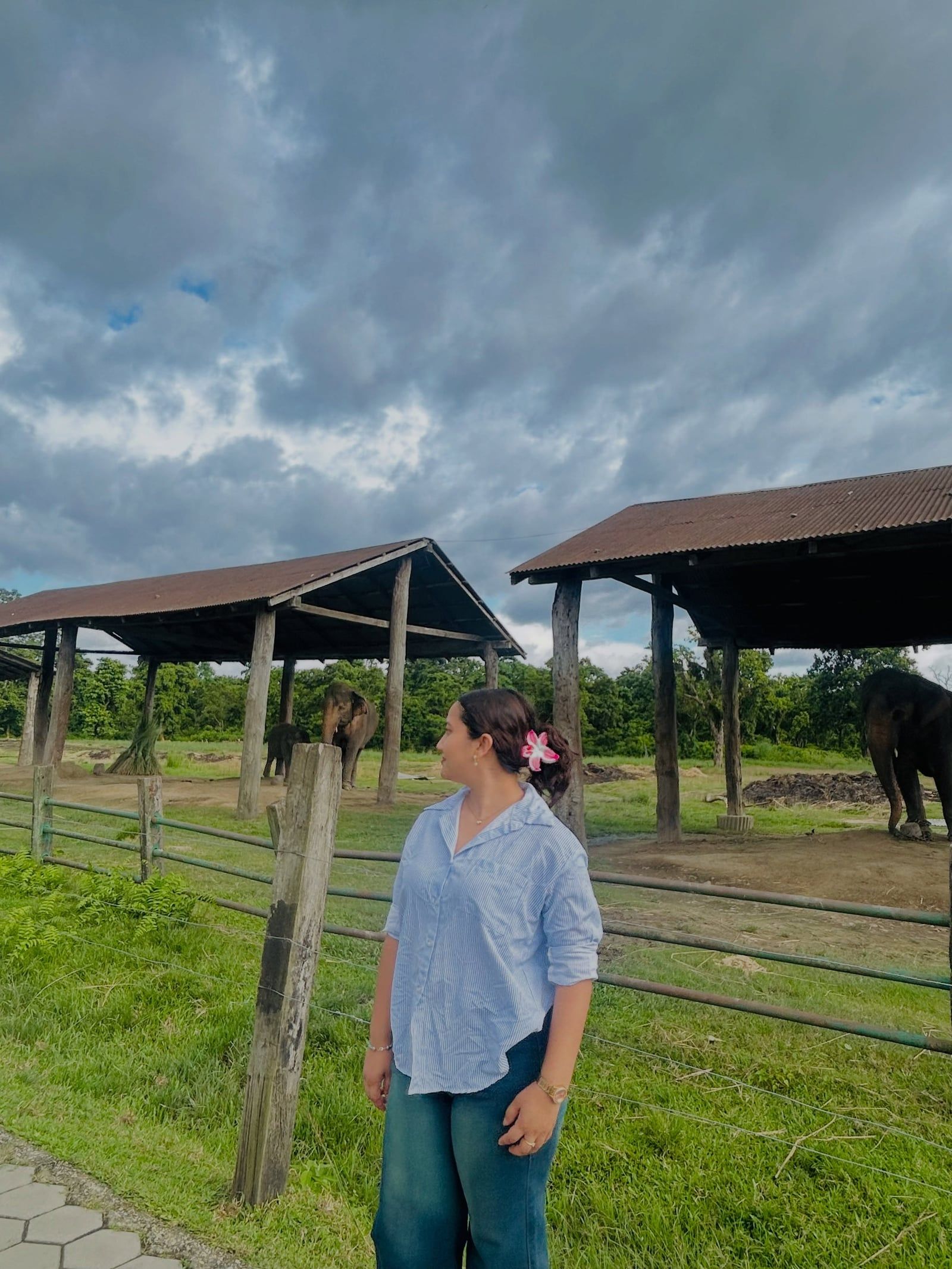
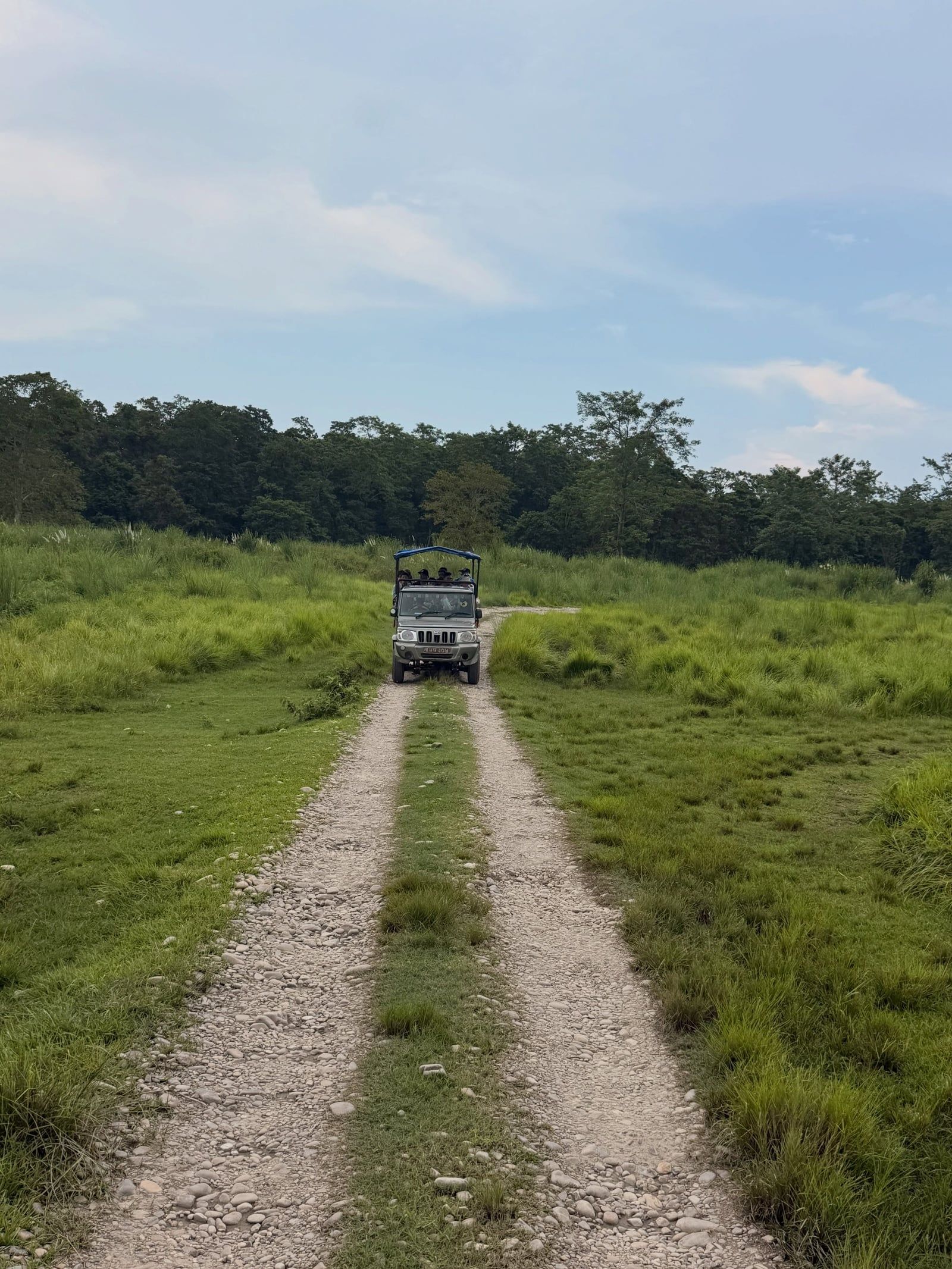
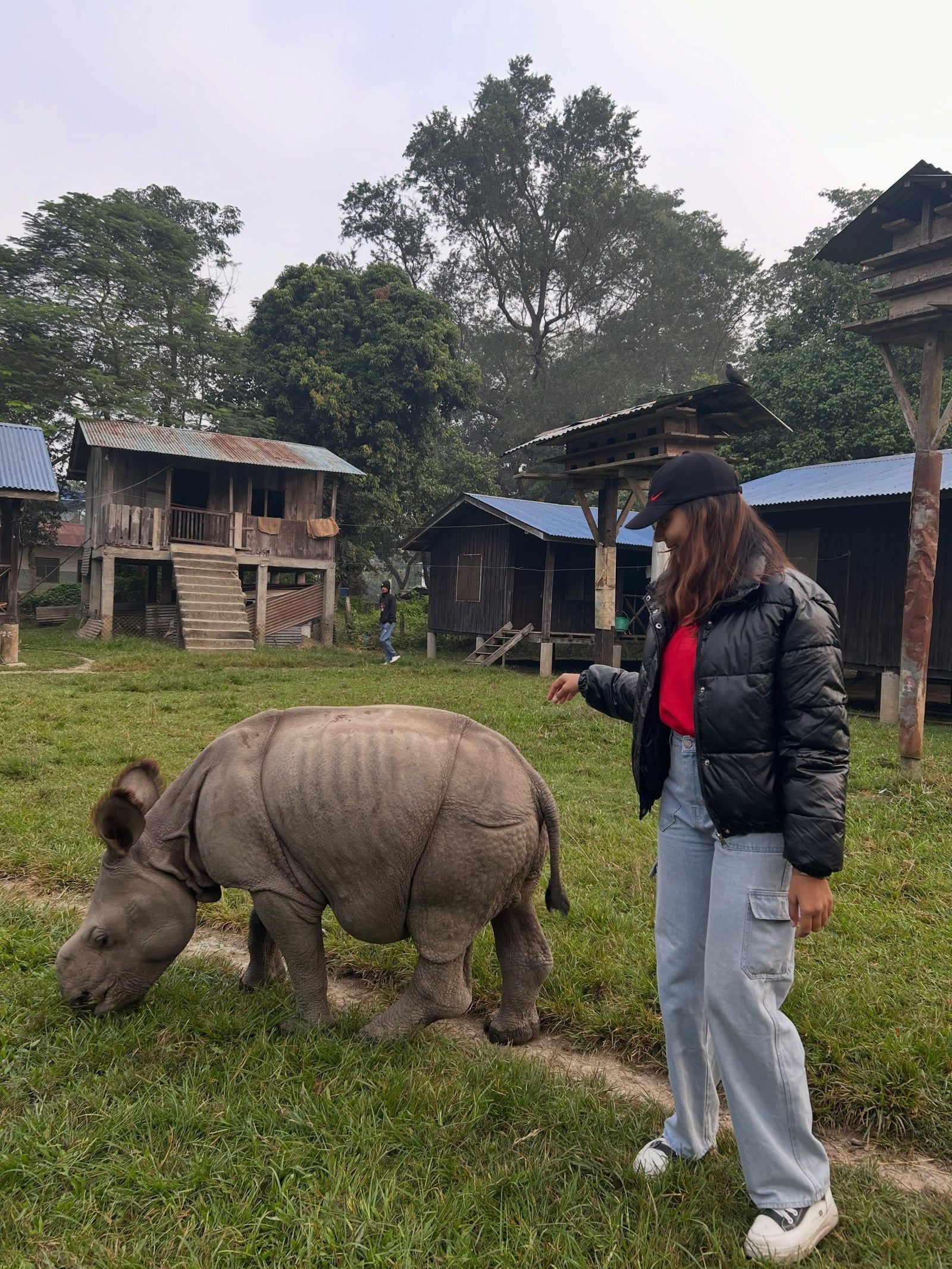
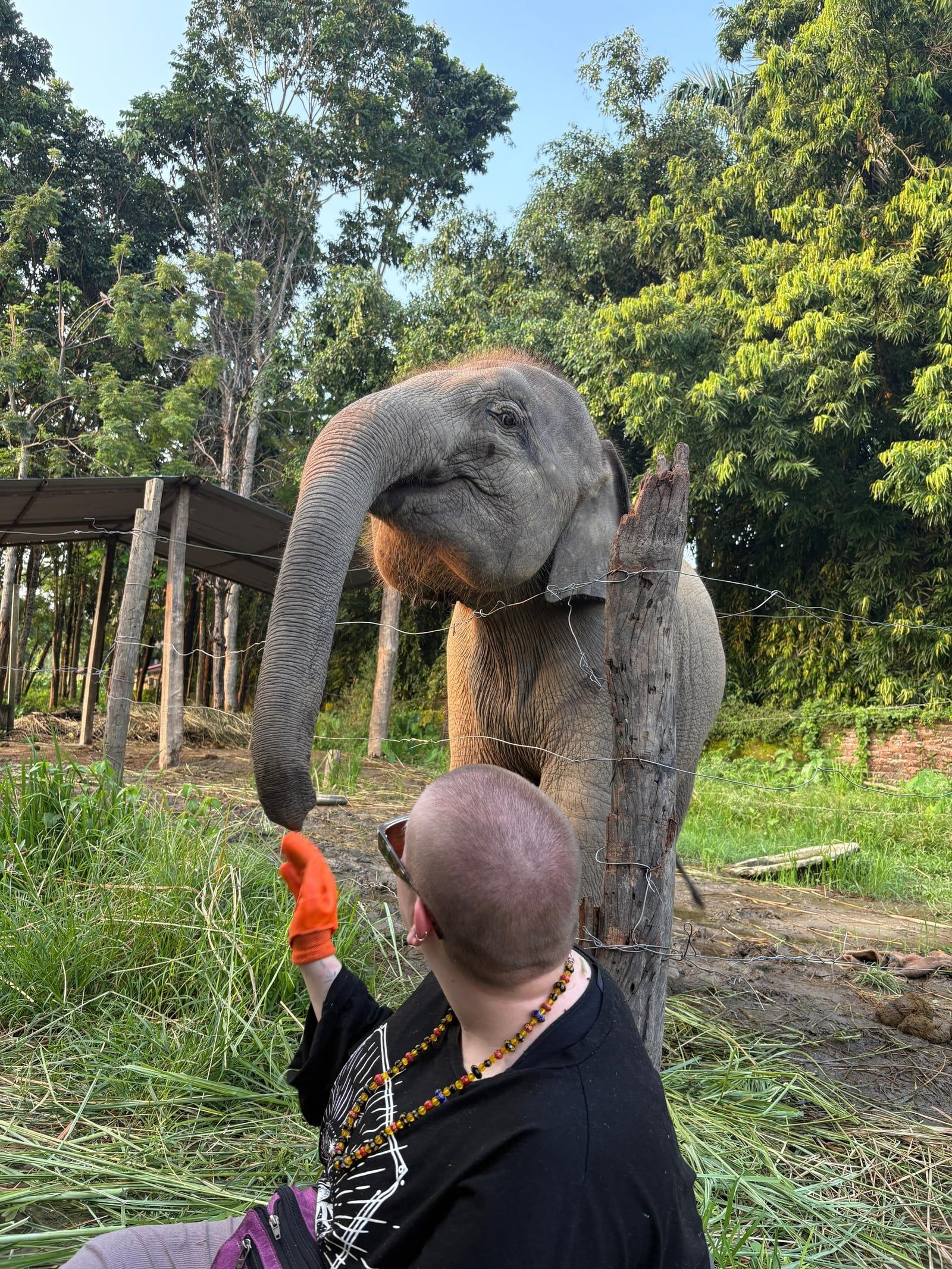
A Chitwan tour runs on three activities: an open-jeep safari at dawn, a dugout canoe ride on the Rapti River, and a guided jungle walk through sal forest and tall grass. Most visitors book a 2-night/3-day package from Kathmandu or Pokhara that bundles all three with meals, a lodge in Sauraha, and an evening Tharu stick-dance show. What you're really here for is the one-horned rhino — 694 live in the park, and a morning jeep drive almost always finds one grazing the river flats.
Jeeps leave the Sauraha gate between 6:00 and 7:00 AM and spend 4–5 hours crossing sal forest, grassland, and river flats. Rhinos graze at first light; sambar, spotted deer, and wild boar step onto the tracks as the sun warms up. A shared seat costs roughly NPR 1,250–1,900 (about US$77 on Viator).
Chitwan holds 694 greater one-horned rhinos (2021 census) — the world's second-largest population — plus 145 Bengal tigers (2025 census), Nepal's biggest count. Rhinos are near-certain. Tigers aren't, but dawn and dusk drives past waterholes give you realistic odds.
A silent 1–2 hour drift in a dugout canoe past marsh mugger crocodiles and gharials basking on the banks, with kingfishers and herons working the shallows. Costs NPR 1,000–1,500 per person. Go in the dry season, when the water is calm.
After sunset in Sauraha, the Indigenous Tharu community performs stick dances and drumming in village venues. Pair it with an afternoon walk past mud-and-thatch houses with painted walls. No park permit needed.
Several packages include a night in a wooden tower inside the park, with a guide and ranger sleeping in the same building. Deer graze below after dark and rhinos sometimes pass. Tiger roars are possible — no promises.
At Kasara, 30–40 minutes from Sauraha, the park hatches wild-collected gharial eggs and restocks rivers with this critically endangered crocodile. The center opened in 1978 with Frankfurt Zoological Society support, and the hatchling pools let you see the species up close.
Chitwan tours range from a US$37 guided walk to a US$350 four-day package with a night inside the park. What's included varies more than the prices suggest, so check the fine print on permits and meals before you pay.
Options on this page: a 2-hour nature walk (US$37), a shared 4.5-hour jeep safari (US$77), a full-day shared safari combining canoe, jungle walk, and jeep (US$111), and multi-day packages from US$144 to US$350. Packages run 2, 3, or 4 days and include a lodge in Sauraha. All use English-speaking guides; one package operator also lists German, Italian, French, and Spanish guides.
Book ahead for October–February, especially Christmas–New Year, when prices run 20–30% higher. Morning safaris leave at 6:00–7:00 AM, so permits and jeeps are arranged the evening before through your lodge or operator. In low season you can book a day or two out.
Sometimes. The US$200 three-day package includes the national park fee; the US$144 'Chitwan National Park Tour' excludes all fees and taxes — you'd pay the NRs 2,000 foreigner entry separately, plus NPR 5,000 per jeep for the jungle-drive permit. Shared jeep safaris at US$77–111 include the entrance permit, jeep, and guide.
Your permit covers the park, not the buffer zone's best free day out: cycling to Beeshazari Tal, a 32 sq km Ramsar oxbow-lake system 12 km from Sauraha, with a NPR 500 bike rental and no jeep queue. Devghat, a Hindu pilgrimage site at a river confluence, sits 30–45 minutes away. Lumbini is 131 km southwest by morning bus (~NPR 1,400).
The jungle tower overnight is Chitwan's standout add-on — a wooden structure inside the park where a ranger sleeps on-site while deer and rhinos move below. It books into two packages: 2 nights/3 days at US$226 or 3 nights/4 days at US$350, both with all meals included.
Jeep safaris are the standard choice for reduced-mobility travelers — no walking required — though one shared-jeep listing is explicitly not wheelchair accessible, and a 72-hour Kathmandu-based tour is listed as wheelchair accessible with accessible transport. Jungle walks involve 2–4 hours on foot through tall grass. Several jeep and full-day tours are not recommended for pregnant travelers or those with spinal injuries.
Most multi-day packages offer a full refund if you cancel at least 24 hours before departure. The two shared safaris (US$77 and US$111) are final sale — no refunds at all. Don't book those until your dates are locked.
Children under 10 enter the park free (bring ID). Operators generally don't take children under 5 on full-day safaris because of the long hours and rough tracks, so families default to morning half-day tours plus the canoe ride, elephant breeding center, and Tharu show.
Swipe to see more
| Nature Walk (Guided) | Half-Day Shared Jeep Safari | Full-Day Shared Safari | 3-Day Package with Transport | Jungle Tower Overnight Package | |
|---|---|---|---|---|---|
| Duration | About 2 hours on foot | 4 hours 30 minutes | About 8 hours | 72 hours (2 nights) | 72–96 hours (2–3 nights) |
| Price from | US$37.39 | US$76.66 | US$111.11 | US$185–225 | US$225.65–350 |
| Best for | Birders and travelers with one free morning in Sauraha | Budget travelers who want the core safari without a package | Visitors cramming everything into one day | First-timers arriving from Kathmandu or Pokhara | Wildlife obsessives who want animals at their bedroom window |
| What's included | Park entrance, English-speaking nature guide, hotel pickup and drop-off, bottled water | Park entrance permit, shared open jeep, English-speaking jungle guide, Sauraha hotel pickup | Permit, guides, 35–45 min canoe trip, jungle walk, afternoon jeep safari | Round-trip tourist bus, lodge in Sauraha, all meals, jeep safari, guide, and (on the US$200 tour) the park fee | 1 night in the jungle tower plus hotel nights, all meals, jeep safari, canoe ride, park fee (4-day version), bus transport |
Swipe to see more
The park admits visitors from about 6:00 AM to 6:00 PM daily. There is no single published gate schedule, so treat those hours as the working window your operator will use.
Jeep safaris run on two departures: dawn (roughly 6:00–7:00 AM) and mid-afternoon. Walking inside the park is prohibited between sunset and sunrise, and morning safaris are the ones worth setting an alarm for — that's when wildlife is active.
Permit counters at the gates operate roughly 10:00 AM–5:00 PM. In Kathmandu, the NTB permit desk at Bhrikutimandap runs about 9 AM–5 PM and closes Saturdays and public holidays; processing takes around 15 minutes. Arrange permits through your lodge the evening before any morning safari.
Tourist bus from Kathmandu: 160 km, 5–7 hours, NPR 500–1,500+ depending on bus class. Most leave Thamel-side stops between 6:30 and 9:00 AM. A deluxe air-conditioned bus books on Viator for US$12, departing Shorakhutte daily at 7:00 AM.
Flights: Buddha Air flies Kathmandu–Bharatpur in 25 minutes (about 20 minutes from Pokhara). Bharatpur Airport is 18 km from Sauraha — budget another 30–45 minutes by taxi or hotel transfer. Frequency drops in low season.
Private car: NPR 12,000–20,000+ per vehicle from Kathmandu, 4–6 hours door to door. Best for families and anyone with a fixed safari time. Confirm fuel, tolls, and waiting time are covered.
From Pokhara: tourist buses cover 150 km in 5–8 hours, usually arriving by afternoon.
One trap: 'Chitwan' on a bus ticket can mean Sauraha, Bharatpur, Tandi, Ratnanagar, or Patihani — up to an hour apart. Confirm your drop point before booking, and don't schedule a safari the same day you arrive after a 5–7 hour ride.
October to March is the window. Days run 21–29°C, nights drop to about 8°C in December, and the post-monsoon grass is short enough to actually see animals, which concentrate at waterholes through the dry season.
October–February is also peak season. Expect crowds and prices 20–30% above low season, worst around Christmas–New Year.
Whenever you go, book the 6:00–7:00 AM departures. Wildlife activity collapses by mid-morning heat.
The park core is not wheelchair-friendly: tracks are rough dirt, safaris run in open 4x4 jeeps, and at least one shared half-day safari is listed as not wheelchair accessible. That said, jeep safaris are the standard workaround for reduced-mobility travelers — no walking required — and one 72-hour Kathmandu-based tour is listed as wheelchair accessible with accessible transport.
Elderly visitors: jeep safaris, canoe trips, and the Tharu cultural show all involve minimal physical demand. Skip the guided jungle walks, which mean 2–4 hours on foot through tall grass, and choose half-day morning safaris over full-day ones on rough tracks.
Families: children under 10 enter free, and kids under 5 are generally not taken on full-day safaris. Safest picks: morning jeep safari, canoe ride with a licensed guide, the cultural show, and the elephant breeding center. Supervise children closely near the river and park edge — wildlife moves through buffer-zone areas.
Sauraha is the tourist base: lodges (packages here use deluxe rooms), restaurants, bicycle rental (~NPR 500/day), the Tharu Cultural Museum, and the visitor center with wildlife exhibits. Gates are 10–20 minutes away by road.
Inside the park: expect basic conditions. The jungle towers used for overnight stays have simple bedrooms, toilets, and lights, with a ranger on-site around the clock. There are no ramps or paved trails at the park gates.
Sites to know: the Gharial Breeding Center at Kasara (21 km from Bharatpur, 30–40 minutes from Sauraha), the Elephant Breeding Center at Khorsor, and the park headquarters museum at Kasara on the quieter western side.
There is no food or water available inside the park — carry your own on every safari and walk.
Permits and guides are mandatory. Every entry needs a park permit (NRs. 2,000 foreigners, NRs. 1,000 SAARC, NRs. 150 Nepali, under-10s free — per person, per entry) and a licensed guide through a registered operator. The jeep 'jungle drive' permit costs NPR 5,000 per jeep on top. Permits are bought at the gates or in advance at the Tourist Service Center, Bhrikutimandap, Kathmandu; bring a passport copy.
Take the rules seriously. Rhinos and other large animals killed 11 people and injured 41 in Chitwan district in 2024–25. Guides on walking safaris carry only bamboo sticks — when they say move, you move instantly.
A 2-hour guided nature walk starts at US$37, a shared 4.5-hour jeep safari at US$77, and a full-day shared safari with canoe, walk, and jeep at US$111. Multi-day packages run US$144–350 including lodge, meals, and tourist bus from Kathmandu or Pokhara. On top of any tour price, budget for the NRs 2,000 (about US$15) foreigner entry fee if your package doesn't include it, plus the NPR 5,000 per-jeep jungle-drive permit.
It depends on the tour, so read the inclusions list. The US$200 three-day package and the shared safaris at US$77 and US$111 include the park fee; the US$144 Chitwan National Park Tour excludes all fees and taxes. The entry fee for foreigners is NRs 2,000 per person per entry, and it's charged again each day you re-enter.
Yes — you cannot enter the core zone alone. Every visit requires a park permit and a licensed guide arranged through your lodge or a registered operator, usually booked the evening before. Permit processing takes about 15 minutes at the gate or at the NTB Tourist Service Center in Kathmandu.
Maybe, but don't build the trip around it. Chitwan holds 145 tigers (2025 census), Nepal's largest population, and dawn or dusk jeep drives past waterholes between October and March give the best odds. Rhinos are the reliable sighting — 694 live in the park — and sloth bears, leopards, and gharials are realistic secondary targets.
The standard 2-night/3-day structure covers a Tharu village walk and cultural show on day 1, jeep safari plus Rapti canoe on day 2, and birdwatching before departure on day 3. On this page, the US$200 package includes the park fee and round-trip bus from Kathmandu, while the US$226 version swaps one lodge night for a night in a jungle tower inside the park. Pick the tower if you want animals at your window; pick the standard if you want a real bed both nights.
Safe when done with the trained guides the park requires, but genuinely adventurous — Chitwan is unusual in letting walkers into the core with guides carrying only bamboo sticks. Eleven people died in animal attacks in the district in 2024–25, mostly rhino charges. Follow guide instructions instantly, never walk at night, and expect leeches in the wet season. Travelers with poor cardiovascular health or spinal injuries are advised against the jeep-based tours too.
Most multi-day packages and the bus ticket offer a full refund if you cancel at least 24 hours before departure. The shared jeep safari (US$77) and one-day shared safari (US$111) are final sale with no refund for cancellations — only book those once your dates are fixed.
You sleep in a wooden tower inside the park with basic bedrooms, toilets, and lights, while a guide and ranger sleep in the same structure around the clock. Deer graze below after dark and rhinos regularly pass; tiger roars are possible but rare. It books as part of a 3-day (US$226) or 4-day (US$350) package with all meals included, and it's not recommended for pregnant travelers.
October to March: days run 21–29°C, the post-monsoon grass is short for visibility, and animals gather at waterholes. June to September is monsoon — July alone has about 24 rain days, jeep tracks flood, and canoe trips on the Rapti get cancelled. April and May hit 37°C. Prices run 20–30% higher from October to February.
Tourist buses take 5–7 hours over 160 km and cost NPR 500–1,500+ (or a US$12 deluxe bus leaving Shorakhutte at 7:00 AM). A private car runs NPR 12,000–20,000+ and takes 4–6 hours. Buddha Air flies Kathmandu–Bharatpur in 25 minutes, then it's an 18 km, 30–45 minute transfer to Sauraha. Several packages include the bus transport in the price, with pickups from Kathmandu, Lalitpur, Bhaktapur, or Pokhara.
Browse verified tours with free cancellation and instant confirmation.
Find Tours


This 3-day package spends its first night in a wooden jungle tower built inside the park — basic bedrooms, toilets, lights, and a guide and ranger sleeping in the same tower around the clock. Deer grazing and rhinos passing are the realistic nighttime entertainment; tiger roars are possible but not guaranteed. Dinner that night is packed and eaten in the tower. Day 1 starts with a 7:00 tourist coach from Kathmandu or Pokhara, followed by lunch, a nature-guide briefing, a canoe ride and a jungle walk. Day 2 moves you to a deluxe room in a 3-star category resort after a morning jungle walk, with a 2–2.5 hour jeep safari in the afternoon and a local dance show before dinner. Day 3 is an early exit: breakfast at 6:30, coach departure at 7:00 back to Kathmandu or Pokhara. All six meals (2 breakfasts, 2 lunches, 2 dinners) are included, along with air-conditioned transport, the canoe ride, jungle walk with bird watching if you want it, and both nights' accommodation. Alcohol is not. Guides speak English, and representatives meet you in Kathmandu, Pokhara or Chitwan — the listed pickup time is 24 hours before departure so they can brief you in person the day ahead. Full refund if you cancel at least 24 hours before departure.
For a full refund, cancel at least 24 hours before the scheduled departure time.
English


Two nights, three days, with round-trip tourist bus between Kathmandu and Chitwan included in the price. You choose your own pickup point in Kathmandu, Lalitpur, Bhaktapur or Pokhara, and the operator collects you from there. The package runs through the standard Chitwan activity set: a jeep safari into the park interior, a canoe ride, a jungle walk, a village tour, and an evening Tharu culture dance. The park fee is covered, so are all three meals each day — breakfast, lunch and dinner. Guides speak English. Tigers and one-horned rhinos live in the park (198 and 650 respectively across Nepal), and sightings are never guaranteed — the jeep safari and jungle walk give you the best odds. Anything not listed, such as drinks or personal expenses, you pay yourself. Cancel at least 24 hours before departure for a full refund.
For a full refund, cancel at least 24 hours before the scheduled departure time.
English


This 4-day, 3-night package is built around one night spent sleeping in a wooden tower inside the jungle — you'll hear birds at dusk and, with luck, spot animals from the tower before dark. The other two nights are at your lodge. Days are filled with the standard Chitwan activity set: jeep safari, canoe ride on the Rapti River, jungle walking, bird watching, and a Tharu culture show (entry included). Transport is a tourist bus with air conditioning from Kathmandu or Pokhara, with private vehicle transfers between your hotel and the bus stand. Pickup from your hotel or the airport is by private vehicle; departure time is 6:00–6:30 AM. Guide languages: English. All three daily meals are covered — breakfast, lunch, and dinner — along with the Chitwan National Park fee and GST. Jungle walking and bird watching run according to your interest, not a fixed schedule. Cancel at least 24 hours before departure for a full refund.
For a full refund, cancel at least 24 hours before the scheduled departure time.
English


This one runs on foot. A nature guide leads you into the jungle of Chitwan National Park for a two-hour walk — slower and quieter than a jeep safari, which is the whole point if you're there for the birds. The walk sticks to the forest paths, with regular stops when the guide hears or spots something: chirping birds are the reliable soundtrack, and the guide handles the spotting. Entrance fees to the park are covered, along with an English-speaking guide, hotel pickup and drop-off, and a bottle of water. Cancel at least 24 hours before departure for a full refund. Wear closed shoes and long trousers — you're walking through brush.
For a full refund, cancel at least 24 hours before the scheduled departure time.
English


A shared open jeep runs 4 hours 30 minutes inside the park, covering its three main vegetation zones. Because it's a sharing tour, you ride with other budget travellers rather than booking the vehicle privately. Included are the park entrance permit, the jeep, and an English-speaking local jungle guide certified by the National Park and the Nepal Government. Anything beyond those three — food, drinks, tips — is on you. Pickup and drop-off from any hotel or resort in Sauraha is free. Outside Sauraha village, and for airport transfers, there's an extra charge. Note the booking terms before you commit: all sales are final, with no refund for cancellations.
All sales are final. No refund is available for cancellations.
English


This 3-day, 2-night safari runs from Pokhara, with pickup from any hotel in the Lakeside area and transfers to the intercity tourist bus for the round trip to Chitwan. Once there, a nature guide leads the jungle activities on the itinerary, which include a jeep safari, a visit to a Tharu village, and an evening cultural performance. Accommodation in a hotel, the national park entrance fee, and all hotel shuttle runs by private car within Chitwan are covered in the price. Guides work in English. Meals aren't listed among the inclusions, so budget for them separately. Cancel at least 24 hours before departure for a full refund — tighter than many operators, so flag it early if your Pokhara plans are loose.
For a full refund, cancel at least 24 hours before the scheduled departure time.
English


This is a 2-night, 3-day package built around jeep safaris, with canoe rides, bird watching, and cultural programs filling out the schedule. Transportation is by tourist coach from Kathmandu to Chitwan and back, and you can also start from Pokhara instead. All meals are covered — breakfast, lunch, and dinner — along with park entrance fees, the safari activities, and guide fees. Guides are available in English, German, Italian, French, and Spanish. Pickup is flexible: tell the operator your Kathmandu hotel details and they'll arrange collection, with the driver holding your name. Cancel at least 24 hours before departure for a full refund.
For a full refund, cancel at least 24 hours before the scheduled departure time.
German, English, Italian, French, Spanish


A full-day (about 8 hours) shared tour built around three activities: canoeing, a jungle walk, and an afternoon jeep safari. The day starts early with a 35–45 minute canoe trip on the natural river, mainly for bird- and wildlife-watching along the banks. From there you continue on foot with two jungle guides, who cover wildlife behaviour and safety instructions before the walk sets out. The jeep safari follows in the afternoon and pushes into the deeper parts of the park, passing several natural lakes where animals gather. Likely sightings include the Greater one-horned rhinoceros, sloth bear, four deer species, two monkey species, and plenty of birds. A Royal Bengal tiger sighting is possible but rare. Guides speak English. Included are the guides, the national park entrance permit fee, and all three activities. Pickup and drop-off from any hotel or resort in Sauraha is free; pickups outside Sauraha and airport transfers cost extra. If the jeep safari inside the park is closed, it runs in the Buffer Zone forest instead. Note that all sales are final — no refunds for cancellations.
All sales are final. No refund is available for cancellations.
English


This is a 72-hour tour with pickup from any hotel in Kathmandu, so you don't need to arrange your own transport out of the city. An English-speaking guide accompanies the group throughout. All three days' meals are covered — breakfast, lunch, and dinner — though park entry fees and taxes are not, so budget for those separately. The river portion is by canoe, drifting down through the floodplains of the Narayani, Rapti, and Reu rivers, where the banks are lined with tall elephant grass and silk cotton, acacia, and sisam forest. Evenings end with sunset over the jungle from the river. Cancellation is straightforward: cancel at least 24 hours before departure for a full refund. Anything later and you lose the cost.
For a full refund, cancel at least 24 hours before the scheduled departure time.
English


This is a bus ticket, not a guided tour: a deluxe tourist bus from Kathmandu to Chitwan, departing daily at 07:00 AM from Shorakhutte. The ride takes 4-6 hours. The buses are air-conditioned with air suspension, reclining seats with footrests, and onboard entertainment systems. The ticket covers the seat only; food and anything else along the way is extra. Free cancellation up to 24 hours before departure for a full refund. After that, you're paying regardless.
For a full refund, cancel at least 24 hours before the scheduled departure time.