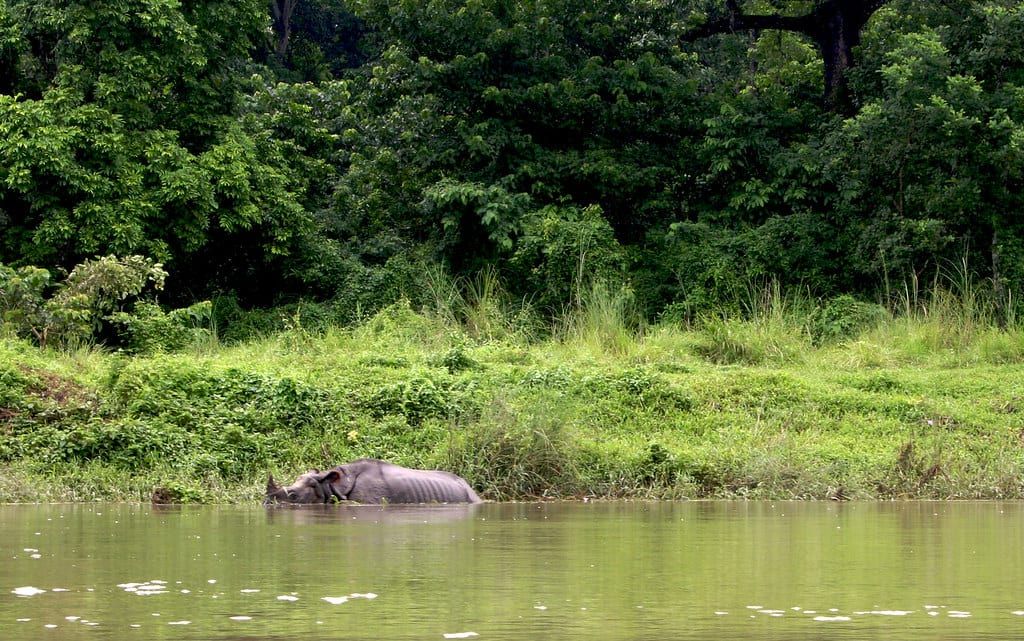
Sixty-eight mammal species, 544 birds, and the world's second-largest population of greater one-horned rhinos: Chitwan National Park packs more headline wildlife into its 952 sq km of Terai lowland than anywhere else in Nepal. Rhinos here are close to guaranteed. Tigers are not. Knowing which animals fall into which category — and how to tilt the odds — is what this guide is for.
Nepal's first national park, created in 1973 and a UNESCO World Heritage Site since 1984, Chitwan sits roughly 160 km southwest of Kathmandu in the subtropical Inner Terai. It's one of the few places on earth where rhinos and tigers both thrive in serious numbers — 694 and 145 respectively in the latest national counts — and it delivers them at a fraction of the crowds and cost of an African safari.
Chitwan's Wildlife at a Glance
Three habitats do the heavy lifting. Sal forest, a tall hardwood jungle, blankets roughly 70% of the park and hides the tigers, leopards and gaurs. Tall elephant-grass grasslands — some stalks higher than a jeep — hold the deer, rhinos and, if you're lucky, a sloth bear shuffling past. The Rapti, Narayani and Reu rivers and their wetlands carry the crocodilians, dolphins, otters and a large share of the birds. Guides work the seams between the three, because that's where animals concentrate at dawn and dusk.
The numbers behind the scenery: 68 mammal species, 544 birds on the park's official register, and, per UNESCO, about 31% of Nepal's mammals and 61% of its birds. If you want the full story of the park's history and visitor setup, we cover that separately in our Chitwan guide — this article stays on the animals.
Local operators market Chitwan's flagship species as the Big Six: Bengal tiger, greater one-horned rhinoceros, sloth bear, leopard, gaur and Asian elephant. Before you fall for the branding, here's the honest odds ladder:
- Near-certain: chital deer, langurs, rhinos, crocodiles, peacocks
- Common: sambar, wild boar, macaques, kingfishers and herons
- Possible with luck and time: gaur, sloth bear, wild elephants, dolphins
- Jackpot: tiger, leopard, clouded leopard
Getting there is a 5–7 hour bus or 25-minute flight from Kathmandu (all the transport options are covered here), and most people base themselves in Sauraha on the park's northern edge.
The Big Six: Chitwan's Iconic Wildlife
One animal per profile, each with its population, habits and — the part most guides skip — when and how you're most likely to actually see it.
1. Greater One-Horned Rhinoceros
Rhinos are the reason to come to Chitwan, and the park delivers them with a reliability few parks anywhere can match. The 2021 national census counted 694 in the park — 694 of Nepal's 752 — the world's second-largest population of the species. Fifty years ago there were fewer than 100; this is the animal Chitwan saved.
They graze the floodplain grasslands and head to water in the early morning and late afternoon, so those are your windows. A jeep safari along the Rapti flats at first light usually turns up several, often close enough to hear them tearing grass. A single horn, up to 60 cm long, folds of armored hide, an animal the size of a small car: it never gets old. On foot, keep to your guide's side and give them real distance — rhinos charge without much provocation and they are the park's most dangerous animal to walkers.
2. Bengal Tiger
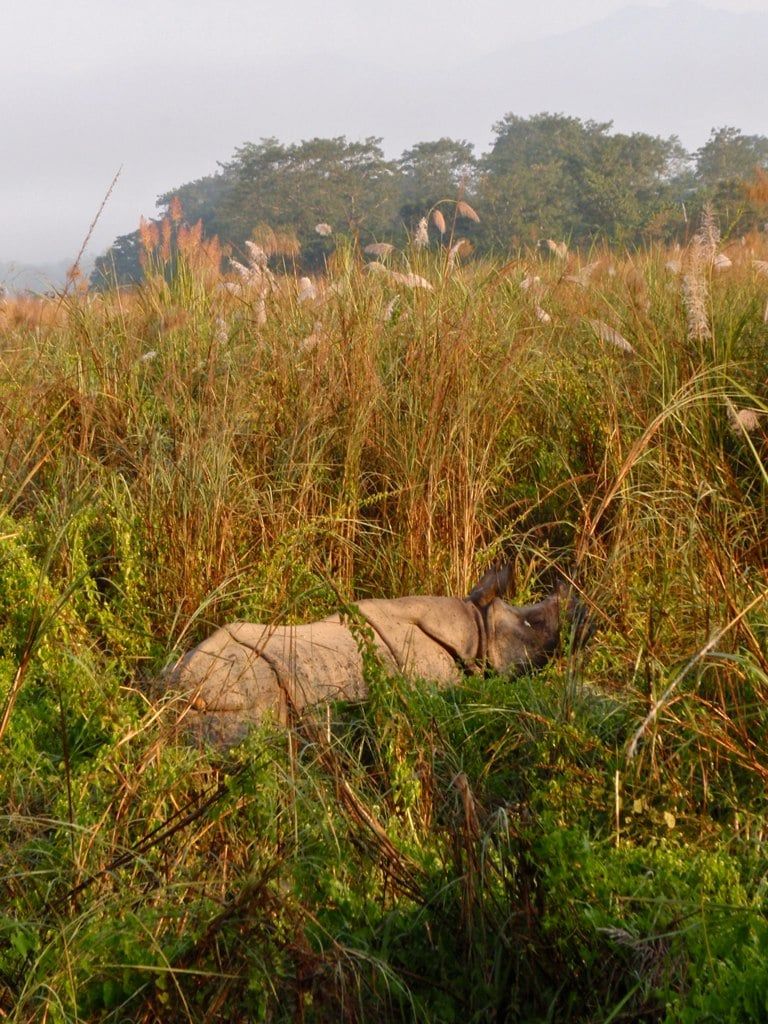
Chitwan holds 145 tigers according to the 2025 national census — Nepal's largest population — and the country was the first of the world's 13 tiger-range nations to double its wild count. None of that changes your personal odds much. Tigers here move through dense sal forest and grass taller than a standing person, and most visitors leave with pugmarks, scratch marks on trees and the memory of deer alarm calls rather than a sighting.
Treat those signs as the experience they are — a guide freezing at a sambar's bark and motioning the jeep silent is genuinely exciting. To maximize your chances, take early-morning jeep safaris and come in the March-to-May window, when the undergrowth dies back and punishing heat drags tigers to waterholes in daylight. Chitwan's tigers also spill across the border into India's Valmiki Tiger Reserve, part of why the wider population keeps growing.
3. Sloth Bear
Shaggy, black, and built around a diet of termites and honey, the sloth bear is Chitwan's most underrated sighting — and one of the park's real specialties, with an estimated 200–250 animals, Nepal's densest population and among the highest densities in Asia. They're largely nocturnal, so what you're hunting is the tail end of their night: a bear slurping termites at a mound in the morning shadow, or loping away from a waterhole at dusk.
March through May is prime time, when bears must drink daily and the drying park funnels them to a shrinking set of waterholes. Full-day jeep safaris cover the distant ones other vehicles skip. If you meet one on a jungle walk, get behind your guide immediately — sloth bears, not tigers, are the classic mauling risk in South Asian forests.
4. Leopard
An estimated 70–100 leopards live here, Nepal's largest population of the species, and almost nobody sees them. They're solitary, mostly nocturnal, and comfortable draped over a branch 15 meters up in the sal canopy, where a spotted coat dissolves into leaf-dapple. Dusk and dawn drives along forest edges are your only realistic play.
A daylight leopard sighting is rare enough that even veteran guides text each other about it. If you get one, you'll understand why — a leopard descending a tree trunk head-first is the single most feline thing in the park.
5. Gaur
The gaur is the world's largest bovine — bulls weigh 1,000–1,500 kg and stand up to 2.2 m at the shoulder, dwarfing any domestic buffalo. Chitwan's 2021 survey counted 388, more than double the 188 of 1997. They favor the hilly Churia terrain in the park's south and the drier forests, moving in small herds and grazing toward water in the evenings.
Ask your driver to push toward the Churia foothills on a full-day safari; half-day routes along the river flats rarely reach gaur country. From a distance a herd reads as dark boulders — until the boulders move.
6. Asian Elephant
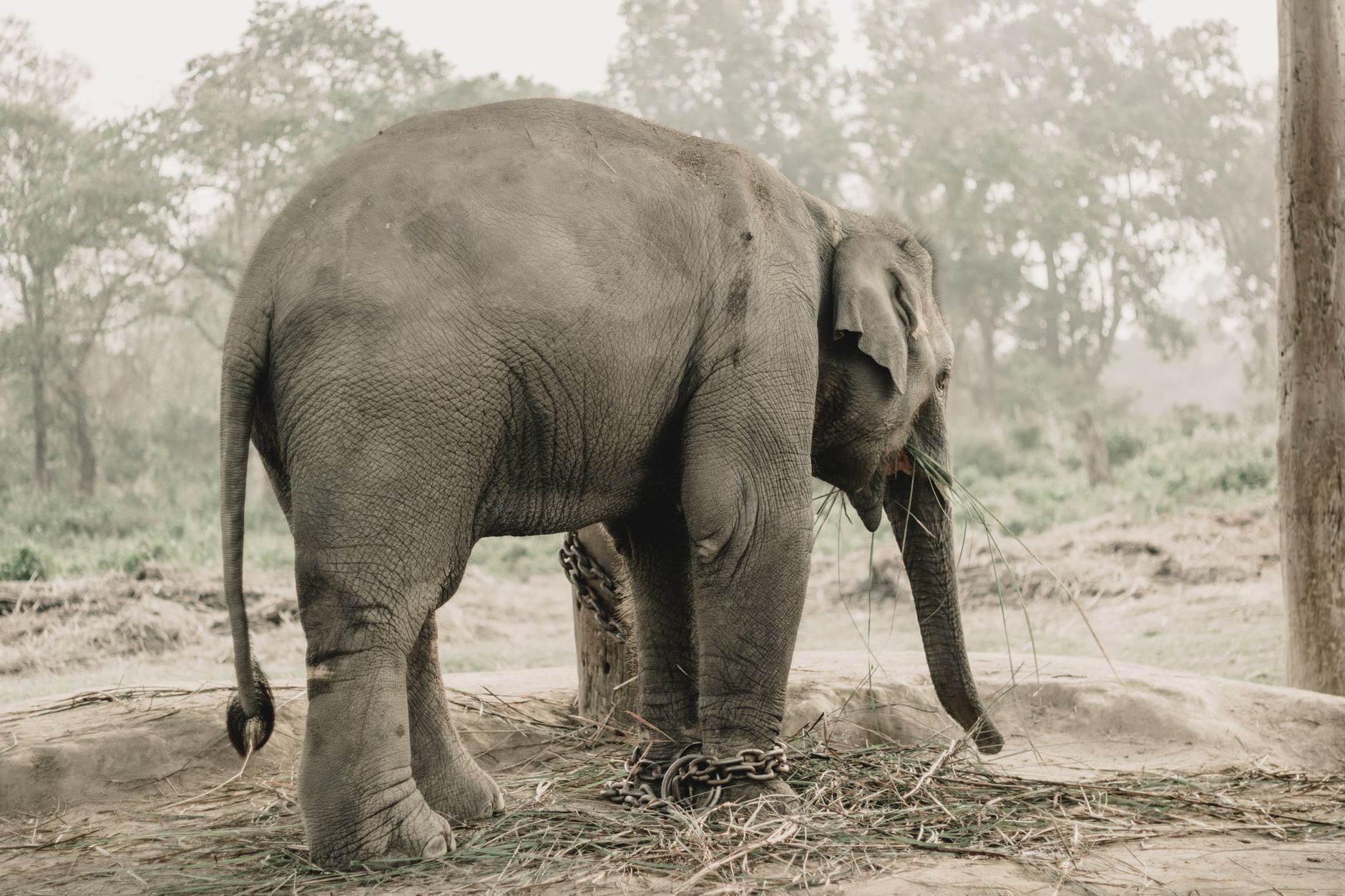
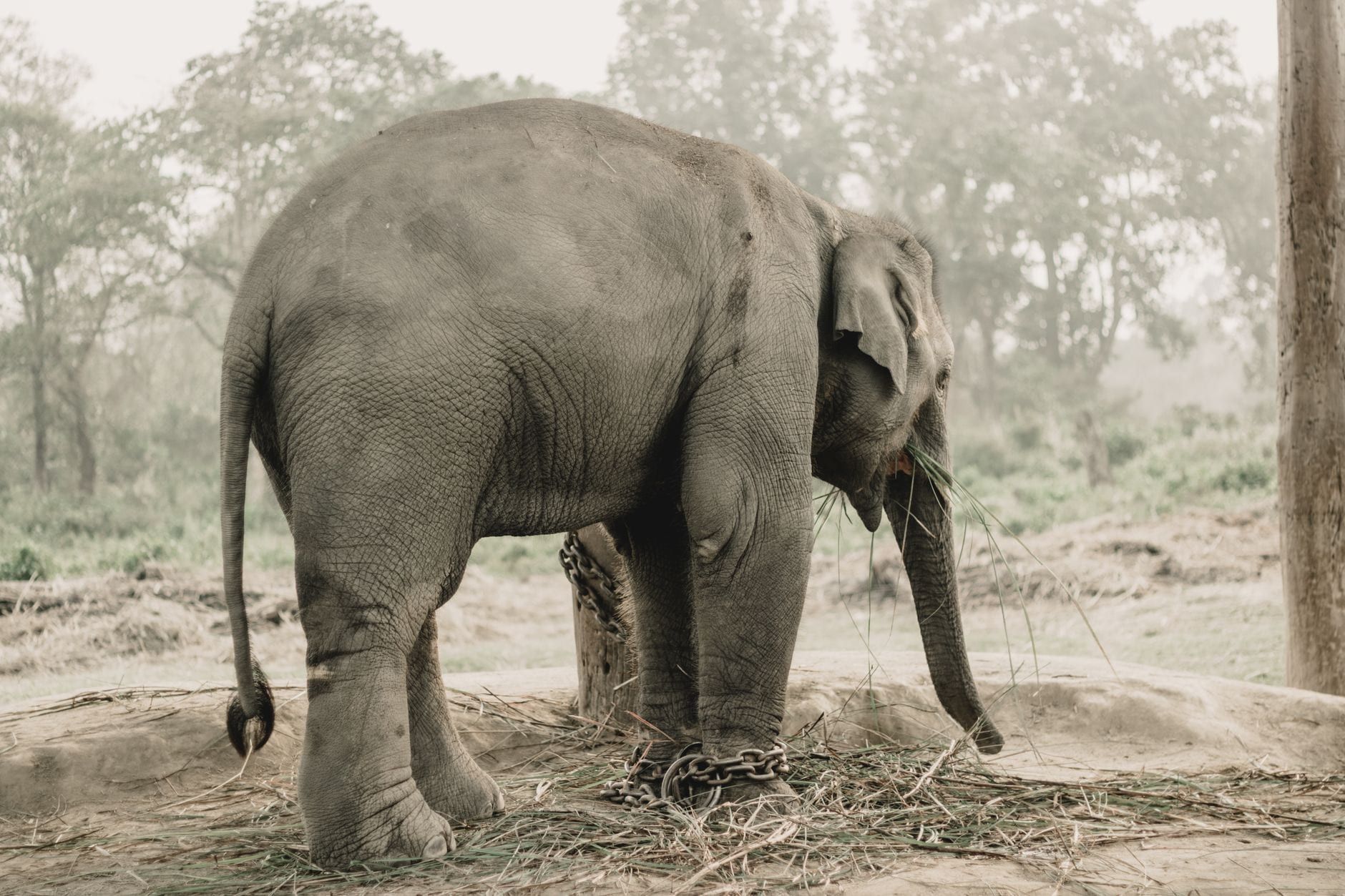
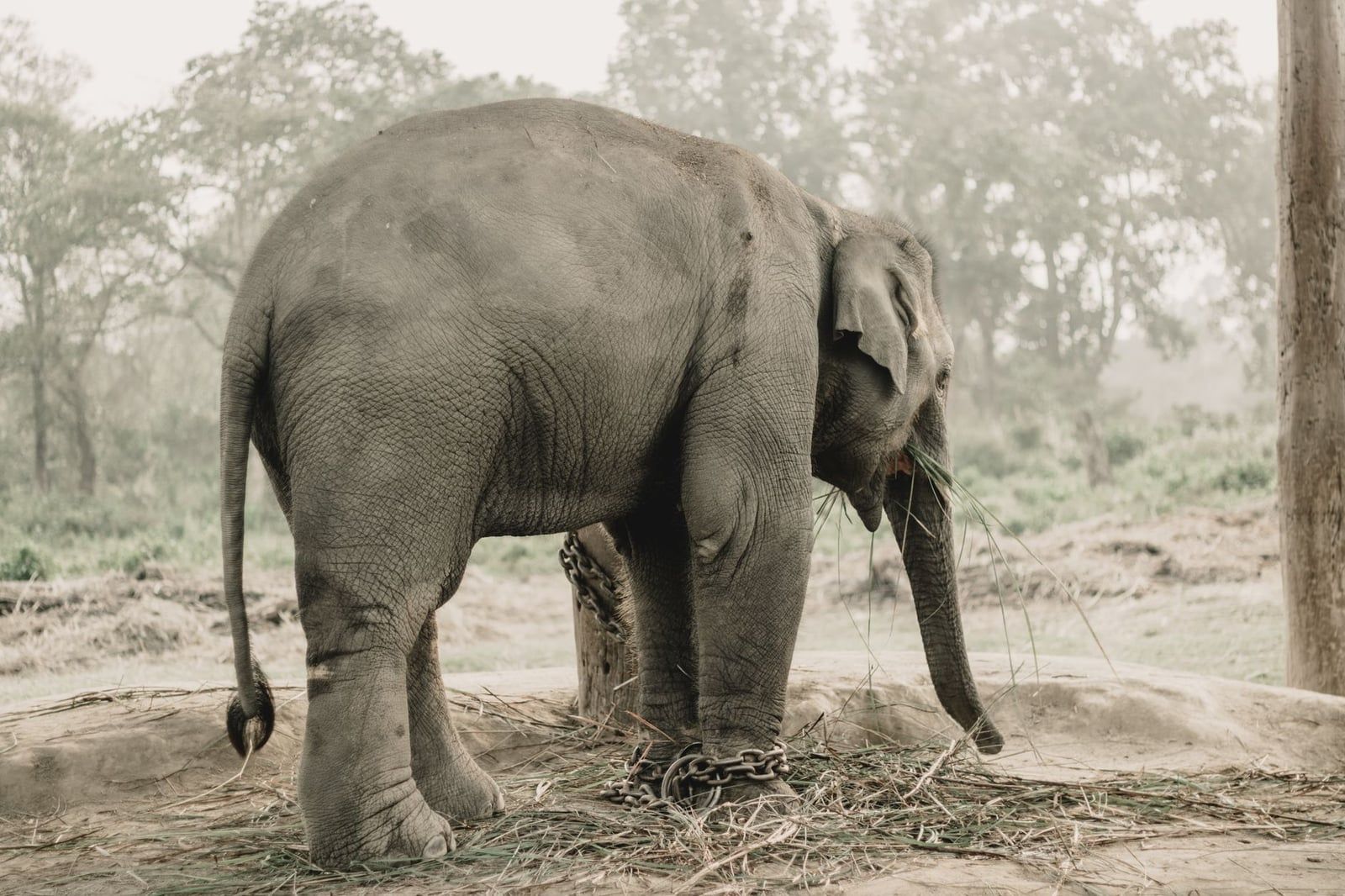
Around 50 wild elephants live in the park, part of a Nepal-wide wild population that has grown to roughly 400 from about 150 in 2008. They move in matriarch-led herds along corridors that link Chitwan with Parsa National Park and beyond, and encounters tend to be brief and loud — a herd crashing through riverine forest, a lone bull crossing a track at dusk.
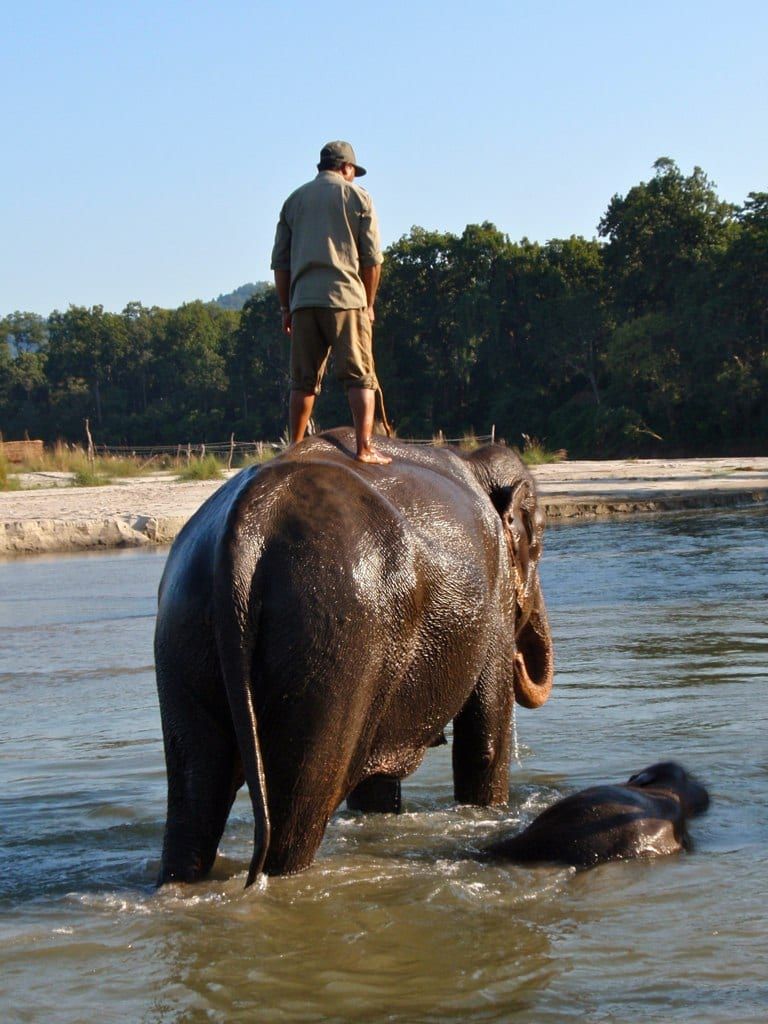
Distinguish these from the captive animals at the Elephant Breeding Center near Sauraha, which explains the park's domesticated-elephant care. And skip any riding outfit: elephant-back safaris are being phased out in Nepal, and watching wild elephants from a jeep is both better for them and, frankly, a better show. Our Chitwan safari tours focus on exactly that kind of experience.
Commonly Seen Animals: Deer, Monkeys and Other Easy Sightings
Chitwan's prey species are the show most visitors actually get, and they're worth watching in their own right. Spotted deer — chital — are the park's most common large mammal, drifting through the open grasslands in herds and grazing misty meadows at dawn. Learn their alarm call, a sharp repeated bark, because that sound is how guides track tigers: chital stare at where a cat is moving long before you'd ever see it.
Sambar, Asia's largest deer, are their shy, deep-forest cousins — mostly nocturnal, darker, heavier, and a tiger's preferred meal. Two smaller deer round out the family: hog deer, which sprint through the grass with their heads held low, and barking deer, or muntjac, which genuinely bark like a dog when startled. Wild boar are everywhere, rooting up the soil in family sounders and, in doing so, turning it over for everything that grows after.
The monkeys split the real estate. Hanuman langurs occupy the high canopy, pale-bodied and long-tailed, while rhesus macaques work the ground level and are far easier to see. Both raid crops in the buffer zone and both have learned that tourists mean food, so keep your distance and never feed them — a fed macaque becomes an aggressive one.
Reptiles, Crocodiles and River Wildlife
The Rapti and Narayani rivers add a whole second park, and the dugout canoe trip is the cheapest, calmest hour of wildlife viewing in Chitwan.
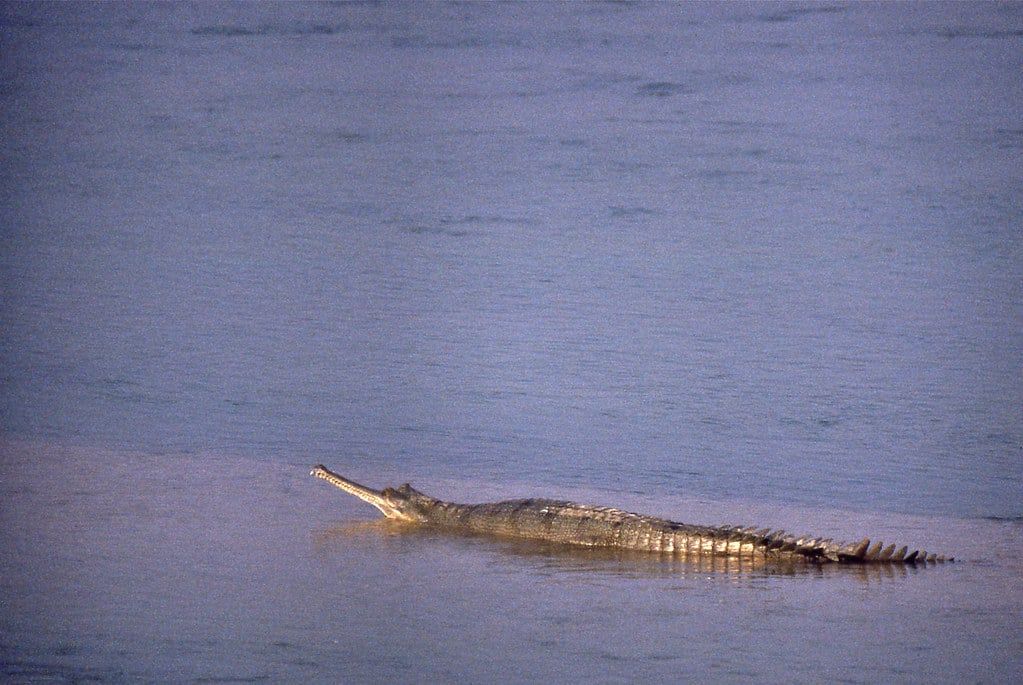
Two crocodilians share the water, and telling them apart is half the fun:
| Gharial | Mugger crocodile | |
|---|---|---|
| Snout | Long, pencil-thin snout; males grow a bulbous growth called a ghara | Broad, classic crocodile snout |
| Diet | Fish almost exclusively | Generalist — fish, birds, mammals |
| Status | Critically endangered; restocked from the Kasara breeding centre | Common and stable in Nepal |
| Where you'll see it | Basking on sandbanks mid-river, best from a canoe | Basking on the banks, especially in winter |
The Gharial Breeding Centre at Kasara, founded in 1978 with Frankfurt Zoological Society support, has released more than 250 captive-raised animals into the Rapti — a lifeline for a species down to a few hundred adults worldwide. Muggers need no such help; on a winter canoe ride you'll pass a dozen basking on the banks like logs with opinions.
Gangetic river dolphins are the river's rare prize: nearly blind, hunting by echolocation in the murky water, and one of only four freshwater dolphin species on earth. They've recently been confirmed back in the Narayani, and Golaghat, where the two rivers meet, is where to watch for a fin and a splash. Below that tier, keep an eye out for Indian pythons, king cobras, monitor lizards, smooth-coated otters and softshell turtles.
Birdlife: Chitwan's 544 Species
Chitwan is one of Asia's great birding parks, and almost every visitor underrates it. The park's official register lists 544 resident and migratory species — roughly 70% of all the birds in Nepal — inside a globally recognized Important Bird Area. Even if you've never carried binoculars, bring them here.
Each habitat has its cast. Sal forest holds hornbills, woodpeckers and flycatchers; the grasslands hide the critically endangered Bengal florican, whose males rocket out of the elephant grass in a jumping display during the breeding season; the rivers and wetlands carry storks, kingfishers and, in winter, waterfowl that started the year in Siberia. Migrants pour through in September–November and February–April.
Four birds to hope for: the great hornbill, whose wingbeats are audible from a hundred meters; the Bengal florican; the sarus crane, the world's tallest flying bird at nearly six feet; and the Asian paradise flycatcher, a white ribbon of a bird that seems too impractical to survive. One easy tick needs no luck at all — cattle egrets ride on rhinos' backs, picking insects from the folds of their hide. Dawn birdwatching walks from Sauraha are the best format; the light is low, the birds are loud, and the park is at its quietest.
Rare and Overlooked Species Worth Knowing
This is the list naturalists whisper about. The clouded leopard — once feared extinct in Nepal — was rediscovered in Chitwan, and the landscape supports nine wild cat species in all, including fishing cats, about twice the size of a house cat, that hunt frogs in the buffer-zone wetlands. Both of Asia's pangolin species live here, along with hispid hares, four-horned antelope and nilgai.
Add dhole (wild dogs that hunt in packs and will chase deer across a track in front of you), striped hyenas, golden jackals and honey badgers. Be honest with yourself about the odds: these are camera-trap species. Any daylight sighting of any of them is extraordinary, and the rarer ones are exactly why researchers keep the traps running.
Where and How to See the Animals (Plus Fees, Safety and Etiquette)
Each activity in Chitwan has an animal it does best, and the standard three-day stay mixes them deliberately. The full breakdown of routes, gates and timing is in our Chitwan safari guide; here's the short version.
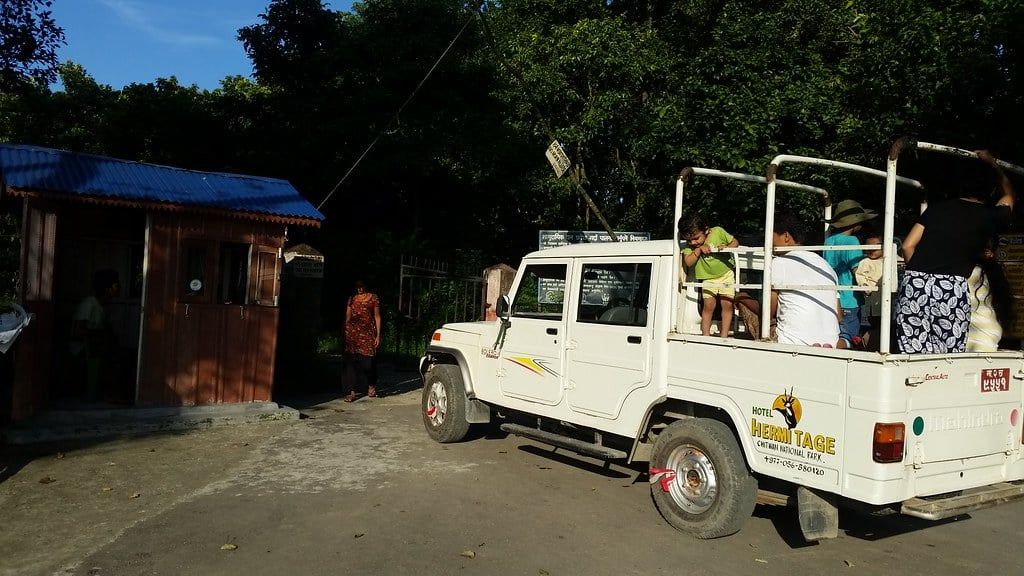
Jeep safari is the all-rounder and the only realistic format for tigers, gaur and sloth bears, covering ground no walker can. Shared half-day safaris run about 4–5 hours; full-day private jeeps reach the Churia hills and distant grasslands where the crowds don't. The canoe trip on the Rapti is the gharial-and-mugger format, drifting past basking crocodiles at eye level with kingfishers strung along the bank. Guided jungle walks are the most visceral option — you're inside the habitat, on foot, in rhino country — and a licensed guide is mandatory. Dawn birdwatching walks deliver the best light and the most activity for the price of a guide.
What it costs, per the Nepal Tourism Board's fee table and the park's own charter:
| Item | Cost | Best for |
|---|---|---|
| Park entry permit | NPR 2,000 per person per day (NPR 1,000 SAARC) | Mandatory, charged at every entry |
| Shared half-day jeep safari | Roughly NPR 1,250–1,900 per person | Rhinos, deer, first-timers |
| Jeep jungle-drive permit | NPR 5,000 per jeep | Paid per vehicle, separate from entry |
| Full-day private jeep safari | From about USD 220 per person | Tigers, gaur, sloth bears |
| Canoe trip on the Rapti | NPR 1,000–1,500 per person | Gharials, muggers, river birds |
| Licensed guide contribution | NPR 1,000–1,500 per person | Required for walks; included in most packages |
Current hours and entry-fee details are worth checking before you go, since the fee is per entry — a second day inside the park means paying again. Book everything through your lodge or a licensed operator the evening before; morning jeeps leave around 6:00–7:00 AM, and permits take about 15 minutes at the gate.
Allow two to three full days. One day is a lottery ticket; three days of different habitats at different times meaningfully improves your odds for elephants, gaur, sloth bears and — the long shot — tigers. Travelers arriving from the capital can bundle the logistics with tours from Kathmandu rather than piecing it together.
On safety and etiquette, the stakes are real: eleven people died in animal attacks in the Chitwan district in 2024–25, most from rhino charges. Keep distance from rhinos, follow your guide instantly on walks, never feed or bait anything, carry your rubbish out, and wear dull colors and closed shoes. Skip elephant riding entirely. Nepal is phasing it out, and the wild alternatives — a herd crossing the track in front of your jeep — are the better memory anyway.
When to Visit for the Best Wildlife Sightings
October to March is the golden window: dry, clear, with daytime temperatures around 21–29°C, and wildlife concentrated at waterholes as the dry season bites. December and January bring cold mornings — close to 8°C at dawn, sometimes with lowland fog — so pack a fleece for the early jeep. February is the sleeper month: by then the tall elephant grass has been cut, and visibility across the grasslands jumps.
April and May are a different game. Daytime highs push toward 37°C, but that heat is your friend if tigers are the mission — animals have to drink, and every waterhole becomes a stage. It's the best tiger-tracking window in the park, if you can take it. The monsoon, mid-June to mid-September, is the one to avoid for wildlife: roughly 80% of Nepal's annual rain falls then, tracks flood, the grass grows head-high, and canoe trips stop when the Rapti runs fast. For the full month-by-month picture, see our best time to visit Chitwan guide.
Birders should work the calendar differently. Migrants pass through September–November and February–April, and winter brings waterfowl down from the north — a February morning at the river can out-produce a week in summer.
Chitwan's Conservation Success Story
The animals on this page exist in these numbers because of one of Asia's most successful conservation programs. Chitwan's rhinos climbed from under 100 animals in the 1970s to 694 in 2021. Nepal became the first of the world's 13 tiger-range countries to double its wild tigers, and the 2025 census put the national total at 429 — 145 of them here. The gharial survives on Nepali rivers largely because of the Kasara breeding centre's hatch-and-release work since 1978.
The machinery behind it: the Department of National Parks and Wildlife Conservation manages the park, the Nepalese Army has patrolled it since 1975, the National Trust for Nature Conservation runs its research and monitoring, and buffer-zone communities — 729 sq km of them, added in 1997 — share park revenue in exchange for tolerating elephants in their maize. UNESCO cites that community model as a conservation partnership that works.
Your NPR 2,000 entry fee is part of the system. Paid legally, at the gate, it funds the patrols that keep poachers out and the communities in — which is the quiet reason there are still 694 rhinos to see.
Frequently asked questions
What are the Big 6 animals of Chitwan National Park?
Nepal's flagships: Bengal tiger, greater one-horned rhinoceros, sloth bear, leopard, gaur (the world's largest bovine) and Asian elephant — Chitwan's answer to Africa's Big Five. All six are present in healthy or recovering numbers: 694 rhinos, 145 tigers, roughly 250 sloth bears and 388 gaur in the latest counts.
How likely am I to see a Bengal tiger in Chitwan?
Possible, but genuinely rare. Chitwan holds 145 tigers (2025 census, Nepal's largest population) in dense sal forest and head-high grass. Early-morning jeep safaris between March and May, when heat pulls tigers to waterholes, give the best odds — and most visitors settle happily for pugmarks and alarm calls.
How many one-horned rhinos live in Chitwan?
694 in the 2021 national census — about 92% of Nepal's 752 rhinos and the world's second-largest population, up from under 100 in the 1970s. A rhino sighting is Chitwan's most realistic signature encounter; dawn and dusk near water are the reliable windows.
What is the best month to see wildlife in Chitwan?
October to March overall: dry, cool, and good rhino viewing, with February's cut grass boosting visibility. April–May heat (up to about 37°C) concentrates game at waterholes for the best tiger odds. Avoid mid-June to mid-September, when the monsoon floods tracks and the grass grows thick.
Are there crocodiles and river dolphins in Chitwan's rivers?
Both. Critically endangered gharials — restocked from the Kasara breeding centre, with 250+ released into the Rapti — share the rivers with common muggers, which bask on the banks in winter. Gangetic dolphins, one of the world's four freshwater dolphin species, are a rare bonus best sought at the Golaghat confluence.
How much does a Chitwan safari cost?
Entry is NPR 2,000 per person per day for foreign nationals (NPR 1,000 SAARC), charged at every entry. On top: about NPR 1,250–1,900 for a shared half-day jeep, NPR 5,000 for the per-jeep jungle-drive permit, NPR 1,000–1,500 for a guide, and from about USD 220 per person for a full-day private jeep.
Are there wild elephants in Chitwan, and can you ride elephants there?
Yes — around 50 wild elephants live in the park, part of a Nepal-wide wild population of roughly 400 (up from about 150 in 2008). Captive elephants live at breeding centres near Sauraha, but riding is being phased out in Nepal, so book experiences that observe elephants rather than sit on them.
Is a walking safari (jungle walk) in Chitwan safe?
Yes, with a licensed guide, which the park requires. The real close-range risks are rhinos and sloth bears, not tigers — keep your distance, stay quiet, never feed animals, wear neutral colors, and follow the guide's instructions the instant they're given.