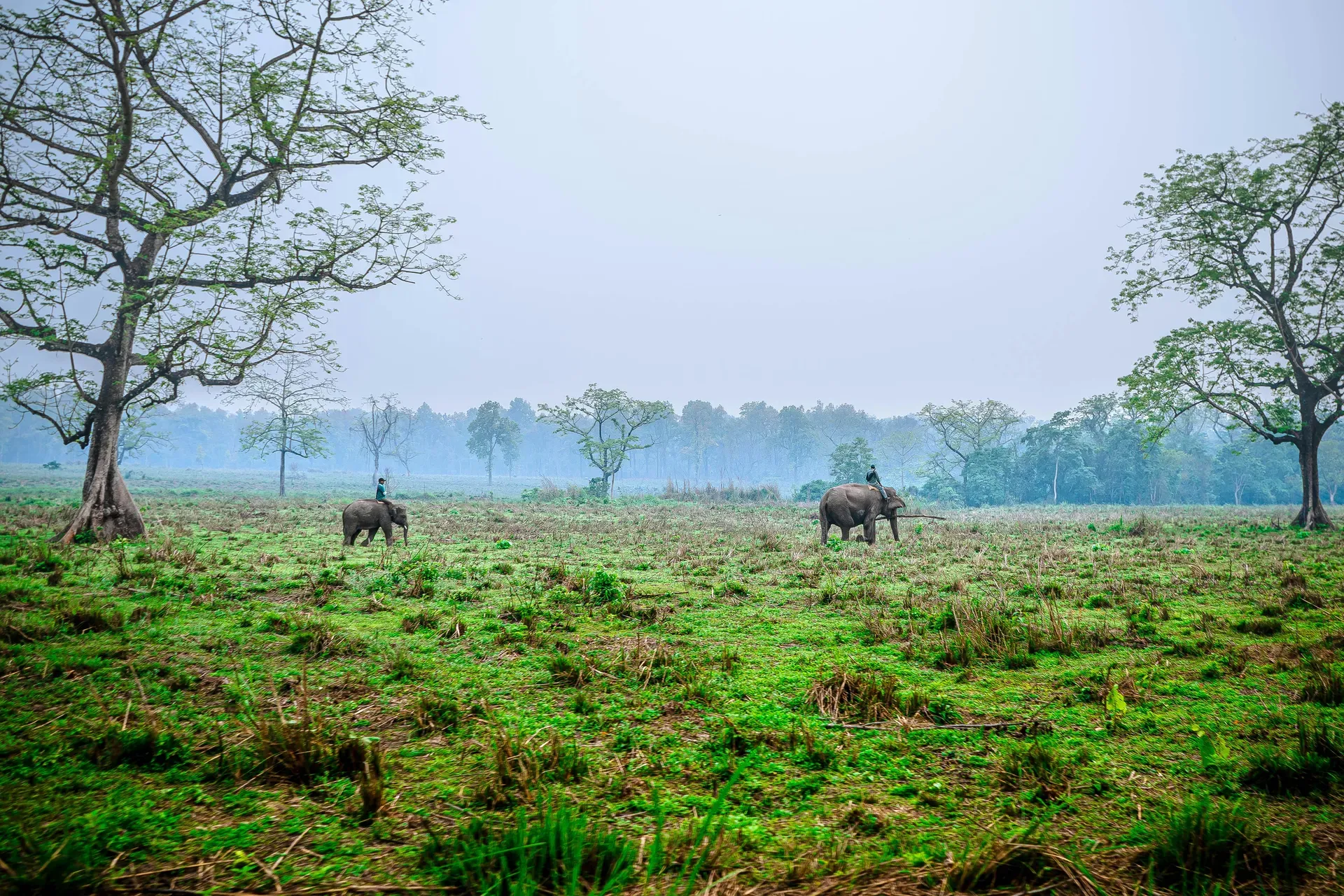
Explore Chitwan National Park on a jungle safari by canoe, on foot, and by jeep. Choose a one-day shared safari or a 3-day package with round-trip bus travel from Kathmandu and all meals included.
 Free Cancellation
 3-day, 2-night Chitwan safari with Kathmandu bus transfers, park fee, and all meals included.

Full-day shared tour: 35-45 min canoe ride, guided jungle walk, and afternoon jeep safari inside the park.
Read what travelers share about their experience visiting Chitwan National Park — from practical tips to personal highlights.
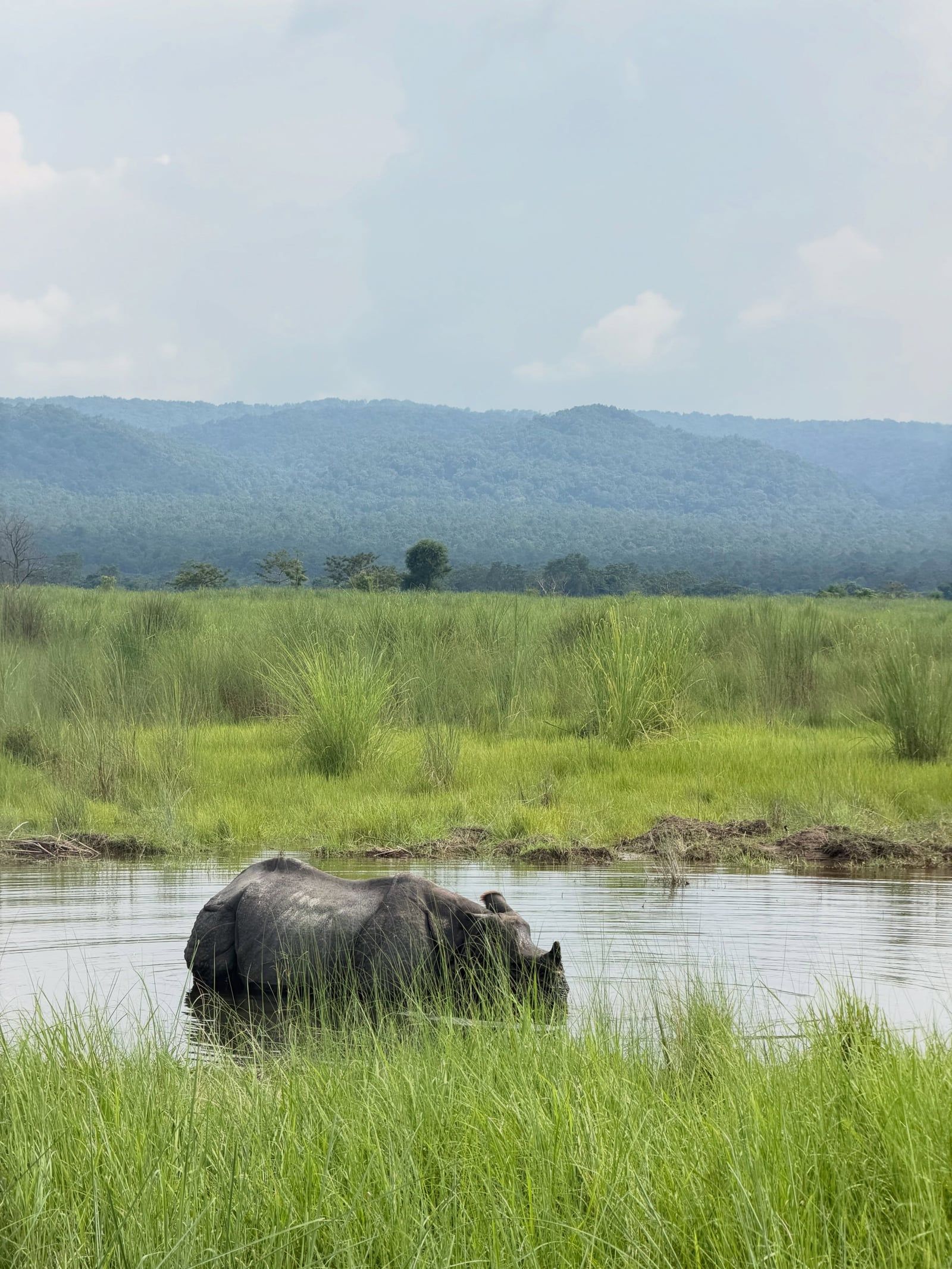
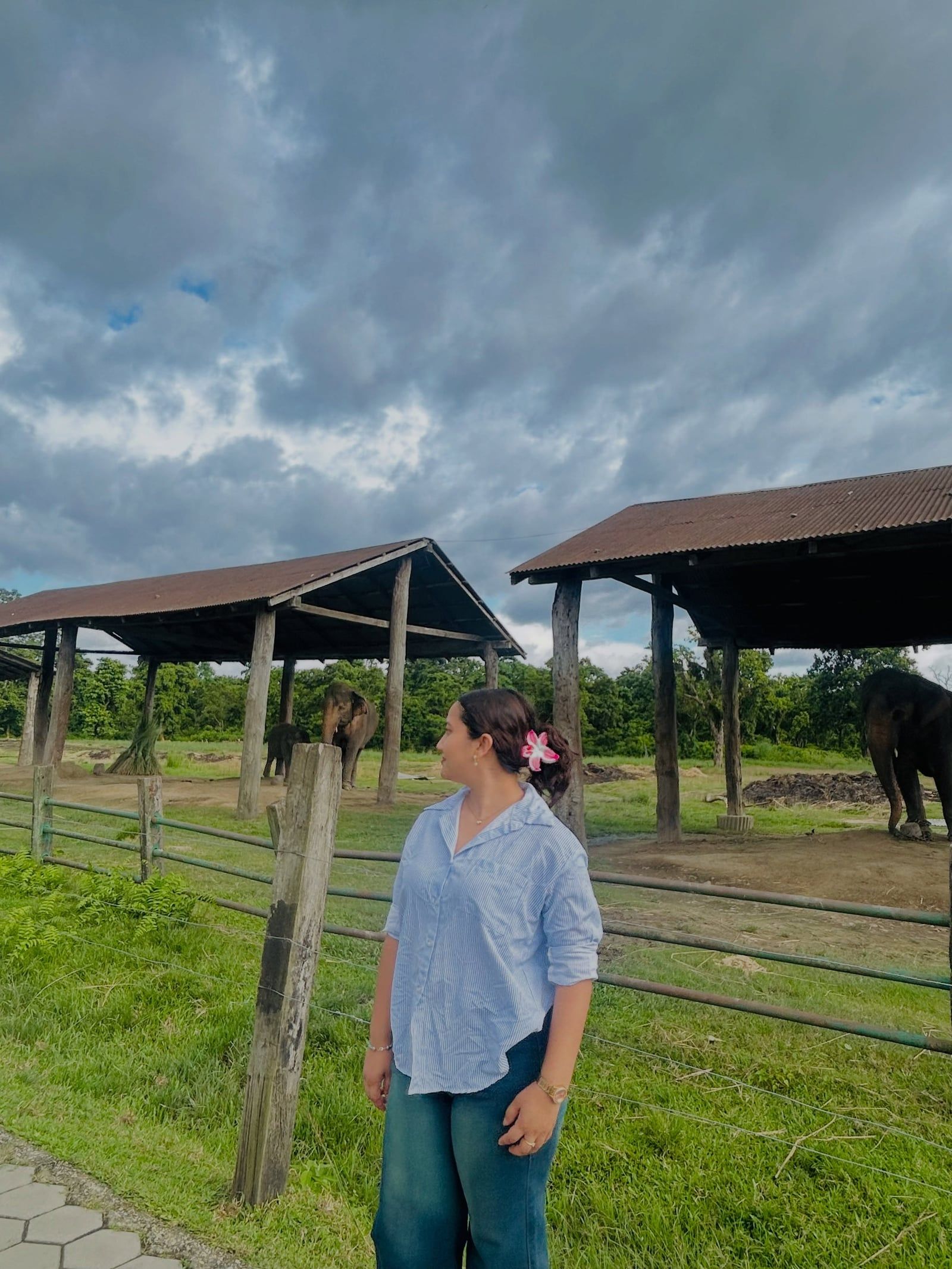
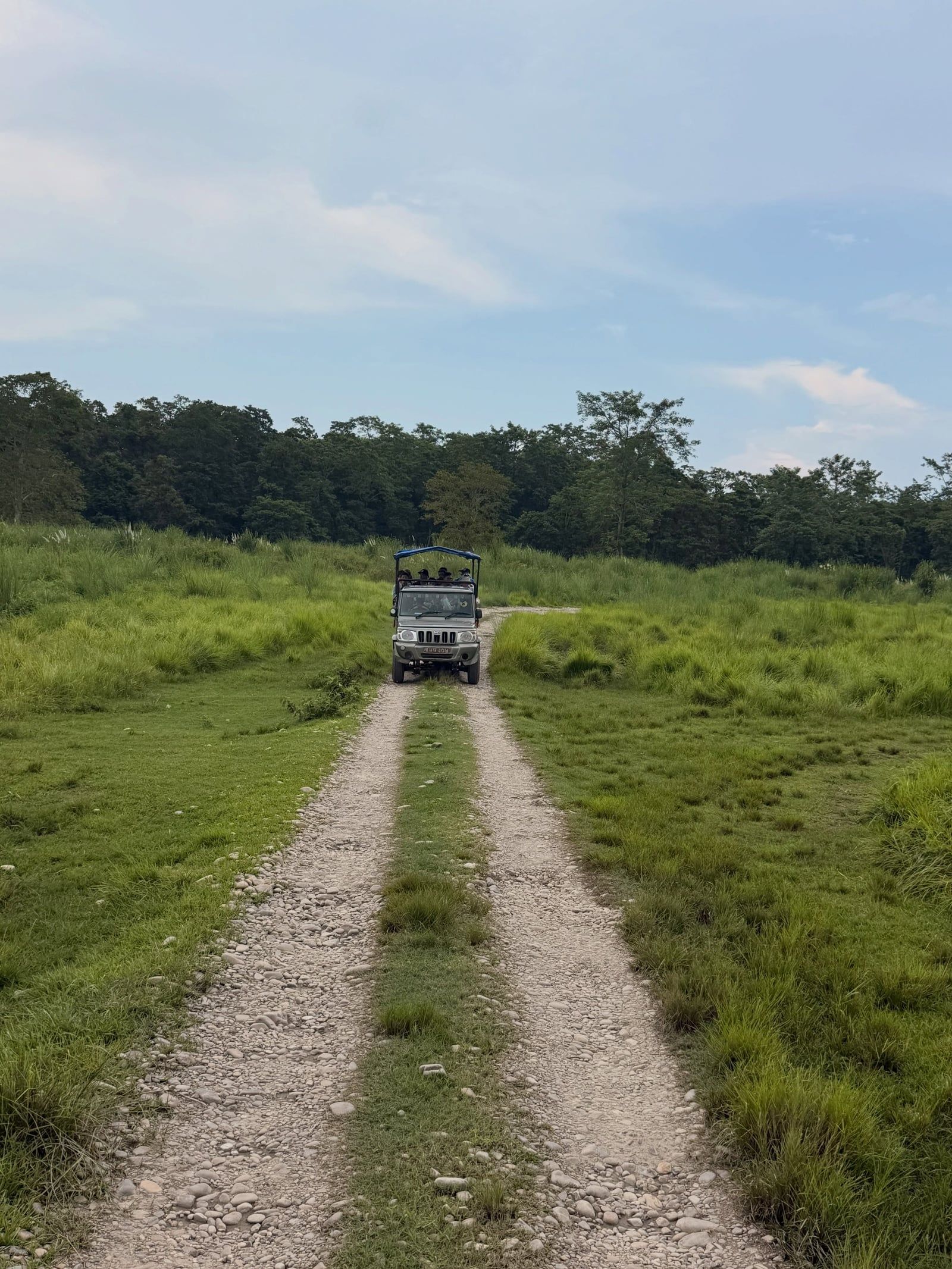
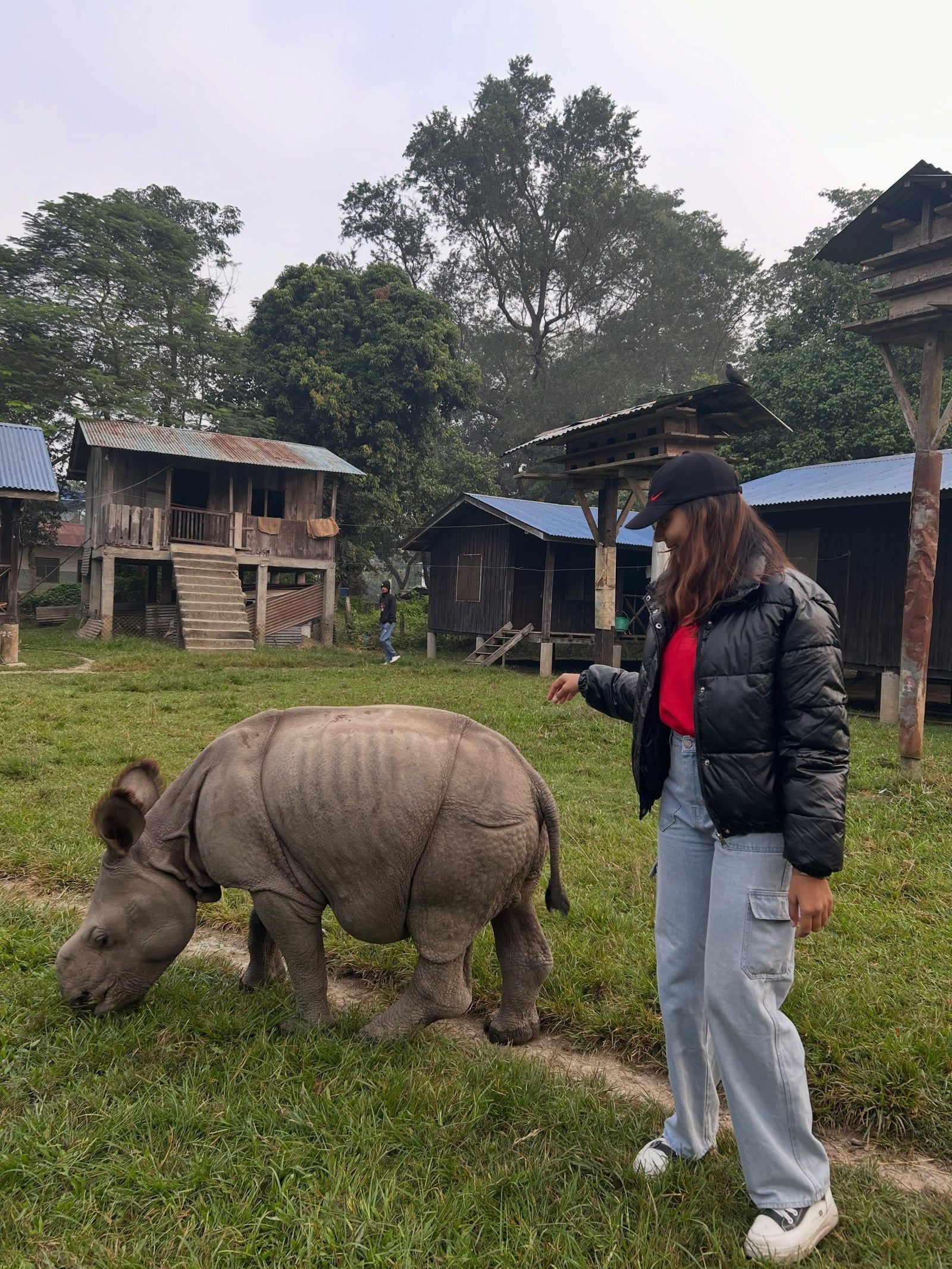
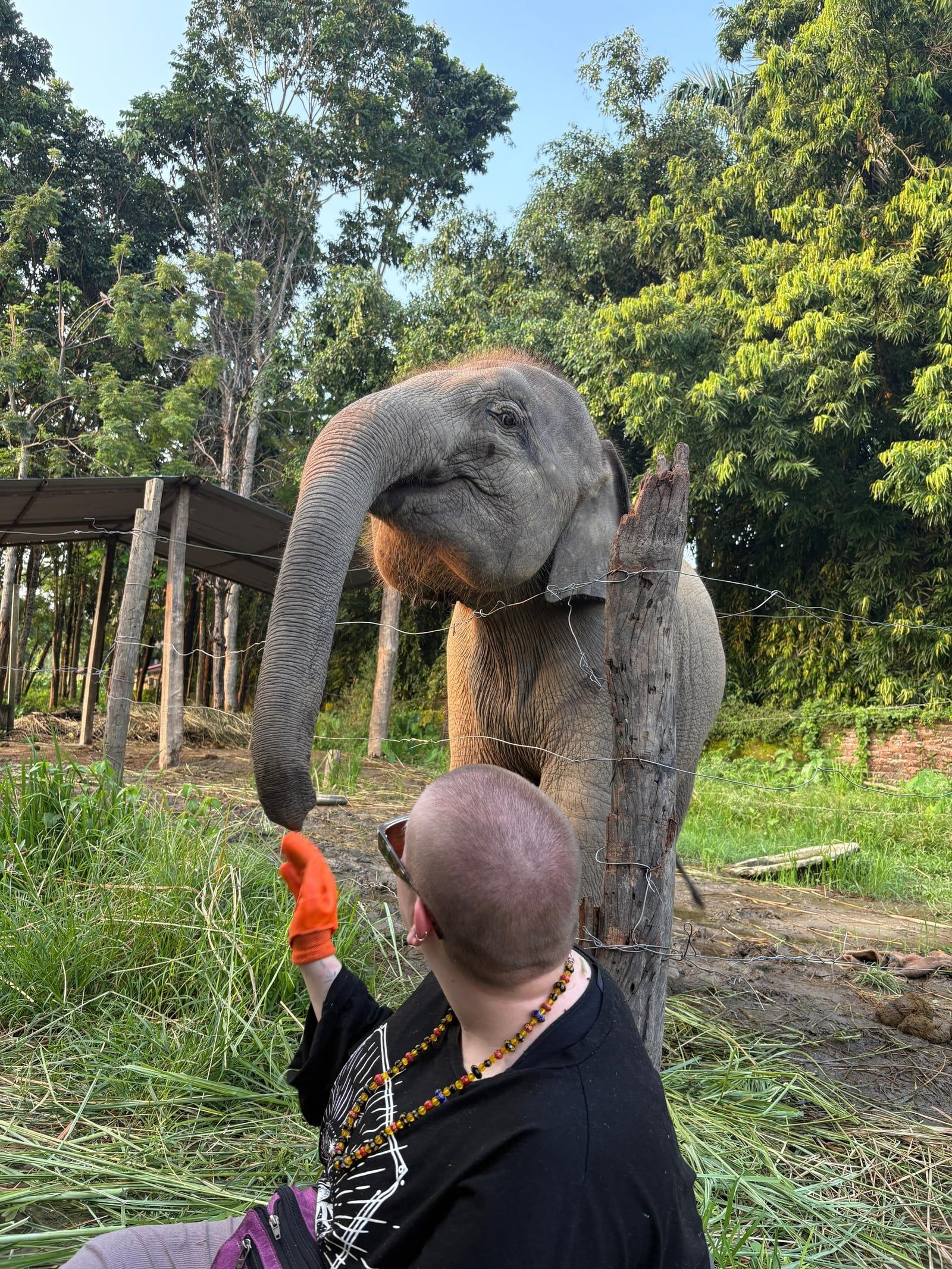
Chitwan National Park, Nepal's first national park (1973) and a UNESCO World Heritage Site since 1984, covers 952.63 sq km of sal forest, riverine grassland and oxbow lakes about 160 km from Kathmandu. A standard tour packs three activities into two or three days: a dugout canoe on the Rapti at dawn, a guided jungle walk, and an open-jeep safari through grassland where one-horned rhinos graze within meters of the track. With 694 rhinos (2021 census) and 145 tigers (2025 census), Chitwan delivers some of the most reliable big-mammal viewing in Asia.
Jeeps leave the Sauraha gate between 6:00 and 7:00 AM and follow the Rapti river flats, where sambar, spotted deer and wild boar step onto the tracks at first light. A shared half-day safari runs 4–5 hours and costs roughly NPR 1,250–1,900 per person. Go at dawn — that's when the animals move.
Chitwan holds 694 greater one-horned rhinos, the world's second-largest population, and sightings from a jeep are close to guaranteed in the dry season. You'll often watch them graze the river flats at 20–30 meters. Keep quiet and let the driver judge the distance.
Nepal's largest tiger population — 145 animals in the 2025 census — lives here, and dawn and dusk drives past waterholes give you the realistic odds. Tigers stay elusive; most visitors hear one before seeing one. Sloth bears, leopards and wild elephants are the rarer prizes.
A dugout canoe drifts 35–45 minutes down the Rapti past marsh mugger crocodiles and critically endangered gharials basking on the banks, with kingfishers and herons working the shallows. It costs NPR 1,000–1,500 per person. Best in the dry season, when the water is calm.
Evenings in Sauraha end with stick dances and drumming performed by the Indigenous Tharu community, usually in village venues after sunset. Pair it with a village walk past mud-and-thatch houses with painted walls. No park permit needed.
Chitwan is unusual in letting walkers into tiger habitat with trained guides carrying only bamboo sticks. Walks last 2–4 hours through tall grass and sal forest, focused on tracks, birds and smaller wildlife. Follow every instruction instantly — this is the real thing.
Two tour formats dominate Chitwan: the 2-night/3-day package with Kathmandu bus transfers and meals included, and the single-day safari with canoe, jungle walk and jeep. Know what's bundled and what isn't before you pay.
The classic option is a 3-day, 2-night package (around US$200 on Viator) including round-trip tourist bus from Kathmandu, park fee and all meals. Time-pressed travelers take the one-day shared safari (US$111.11), which stacks canoe, jungle walk and jeep safari into a single early start. You can also book activities individually through Sauraha lodges — a shared half-day jeep safari runs NPR 1,250–1,900 per person.
October to February is peak season, when safari and hotel prices run 20–30% higher and tourist buses from Kathmandu fill up. Book the 3-day package and your bus seats ahead for those months, especially Christmas–New Year. In the shoulder months of March or late September you can often arrange safaris through your lodge the evening before.
Read the fine print. The 3-day Viator package covers the national park fee; the one-day shared safari covers the entrance permit, guides, canoe, jungle walk and jeep safari. Many cheaper local packages exclude both the NRs. 2,000 foreigner entry fee and the NPR 5,000 per-jeep jungle-drive permit — confirm before paying.
The entry permit is charged per person per day, so a second day inside the park means a new fee. Buy permits at the park gates or in advance at the Tourist Service Center, Bhrikutimandap, Kathmandu — processing takes about 15 minutes. Foreigners need a passport copy. Everyone entering the core zone must be with a licensed guide.
Several sights sit outside the permit system. Cycle to Beeshazari Tal, a 32 sq km Ramsar oxbow-lake wetland about 12 km away (bike hire in Sauraha costs around NPR 500) — many travelers see more wildlife there than on a half-day jeep safari. Devghat, a Hindu pilgrimage site at a river confluence, is 30–45 minutes from Sauraha.
Jeep safaris suit all ages and fitness levels and are the standard workaround for reduced mobility — no walking required, though shared jeeps are listed as not wheelchair accessible. The one-day safari needs moderate fitness because of the jungle walk, and it's flagged as unsuitable for pregnant travelers or anyone with spinal injuries. Children under 10 enter the park free; under-5s are generally not taken on full-day safaris.
Policies differ sharply between products. The 3-day package offers a full refund if you cancel at least 24 hours before departure. The one-day shared safari is final — all sales, no refund. If your dates might shift, pay the extra for the refundable option.
Wear dull, earth-tone clothing — the one-day tour specifically advises against red, yellow and white — plus light sports shoes, sunscreen, insect repellent and water. Bring warm layers for December–January mornings, which start around 8°C. Binoculars transform tiger and bird sightings; a dry bag protects gear on the canoe.
Swipe to see more
| 3-Day Jungle Safari Package (Viator) | One-Day Shared Safari | Half-Day Shared Jeep Safari | Full-Day Private Jeep Safari | Lodge-Arranged Activities | |
|---|---|---|---|---|---|
| Duration | 3 days / 2 nights (72h) | Full day, early start | 4–5 hours, dawn or mid-afternoon departure | 7–10 hours | Flexible, per-activity |
| Best for | First-time visitors wanting the full experience without logistics work | Travelers short on time and with moderate fitness (jungle walk included) | Families with young children and travelers wanting just the drive | Wildlife photographers and serious tiger-spotters | Independent travelers staying 2+ nights in Sauraha |
| Includes | Round-trip tourist bus from Kathmandu, national park fee, breakfast/lunch/dinner, English-speaking guide, jeep safari | Entrance permit, guides, 35–45 min canoe trip, jungle walk with two guides, jeep safari; hotel pickup in Sauraha | Jeep safari with guide; park entry (NRs. 2,000) usually paid separately | Private jeep with canoeing and jungle walk; entry fees typically separate | Mix and match jeep (NPR 1,250–1,900), canoe (NPR 1,000–1,500), guide (NPR 1,000–1,500); entry fee separate |
| Price from | US$200 per person | US$111.11 per person | NPR 1,250–1,900 per person | About US$220 per person | About NPR 5,250–6,900 total for all activities |
Swipe to see more
The park allows entry from roughly 6:00 AM to 6:00 PM daily, though there is no single published gate schedule. Walking inside the park between sunset and sunrise is prohibited outright.
Jeep safaris depart at dawn (about 6:00–7:00 AM) and again in mid-afternoon. Permit counters operate roughly 10:00 AM–5:00 PM at the gates; the NTB permit desk in Kathmandu (Bhrikutimandap) runs about 9 AM–5 PM and closes Saturdays and public holidays.
Because morning safaris leave before the gates' counters are busy, arrange your permit through your lodge or operator the evening before. Half-day safaris last 4–5 hours; full-day safaris run 7–10 hours with a return after sunset is not permitted, so afternoon departures wrap by about 6 PM.
From Kathmandu (~160 km):
From Pokhara (~150 km): Tourist buses take 5–8 hours and mostly leave in the morning, arriving by afternoon; some seats run up to ~US$20. The 20-minute flight to Bharatpur is the fastest option.
Don't schedule a safari the same day you arrive — the road journey alone eats 5–7 hours.
October to March is the window. Daytime highs run 21–29°C, nights drop to about 8°C in December, and post-monsoon grass is short, so visibility improves just as animals concentrate at waterholes. October–February is also peak season: crowds and prices 20–30% above normal, worst around Christmas–New Year.
April–May is workable but hot — up to about 37°C in May. Plan dawn activities and rest at midday.
Skip June–September. July alone has about 24 rain days. Heavy rain closes jeep tracks, high water stops the Rapti canoe trips, and Chitwan is prone to flash flooding; one monsoon flood killed thousands of animals, including rhinos. If you must travel then, build in flexible days and expect cancellations.
Within any day, go early: dawn (6:00–7:00 AM departures) is when wildlife is most active.
The park's core is not wheelchair-friendly: tracks are rough dirt roads, transport is by open 4x4 jeep, and shared jeep safaris are explicitly listed as not wheelchair accessible. There are no ramps or paved trails at the gates.
Jeep safaris still work well for reduced-mobility and elderly travelers — no walking required, and gates are only 10–20 minutes from Sauraha and Bharatpur. Book a private jeep and hotel assistance in advance; specialized accessible Nepal itineraries including Chitwan exist through operators such as Nepal Tour Advisor.
For seniors, stick to half-day morning jeep safaris, canoe trips and cultural shows; skip the 2–4 hour jungle walks through tall grass. Full days on rough tracks are tiring even for fit travelers.
Families are common: children under 10 enter free (bring ID), under-5s are generally not taken on full-day safaris, and morning half-day tours are the family standard. Supervise children closely near the river — wildlife moves through buffer-zone areas.
Sauraha, on the park's eastern edge, is the tourism hub: lodges, restaurants, bicycle rental (~NPR 500/day), the Tharu Cultural Museum and the visitor center with wildlife exhibits. Bharatpur, 18 km away, has the airport and bigger hotels.
Inside the park and at the gates, expect basic facilities — no cafes or developed rest stops. Carry water, sunscreen and a hat on every safari.
Two breeding centers are open to visitors: the Gharial Breeding Center at Kasara (founded 1978 with Frankfurt Zoological Society support, hatchling pools visible) and the Elephant Breeding Center at Khorsor near Sauraha, where calves are born. Both are among the park's most visited official sites.
Evening facilities center on the Tharu cultural shows in Sauraha village venues after sunset, plus riverside sunset spots along the Rapti — all outside the permit system.
Permits: Entry is NRs. 2,000 per person per entry for foreigners (NRs. 1,000 SAARC, NPR 150 Nepali, under-10s free), charged per day. A licensed guide is mandatory in the core zone, and the jeep 'jungle drive' permit costs NPR 5,000 per jeep (NPR 3,000 per car). Drone filming needs separate written permission.
Prohibited: walking inside the park between sunset and sunrise; smoking or lighting fires; feeding or baiting wildlife; plastic bags and disposable plastic waste. Buying or carrying animal or plant products can lead to prosecution — do not purchase 'souvenir' wildlife items.
Safety: 11 people died and 41 were injured in animal attacks in Chitwan district in 2024–25, mostly rhino charges. View wildlife from a vehicle or with licensed guides, follow jungle-walk instructions instantly, and never approach animals for photos.
Dress: no enforced code, but wear khaki or green, long sleeves in the jungle, and modest clothing in Tharu villages. Avoid bright colors and perfume.
Not guaranteed, but the odds are real: Chitwan holds 145 tigers, Nepal's largest population (2025 census). Dawn and dusk jeep drives past waterholes in October–March give the best chances. Rhinos are the reliable sighting — 694 live in the park — while sloth bears, leopards and wild elephants are rarer.
The Viator 3-day package (US$200) covers round-trip tourist bus between Kathmandu and Chitwan, the national park fee, all main meals and an English-speaking guide. Pickup is available from Kathmandu, Lalitpur, Bhaktapur and Pokhara. Accommodation and personal expenses are the usual gaps to check.
Often, but not always. The 3-day package and the one-day shared safari both include the park fee or permit. Many cheaper local packages exclude it — foreigners pay NRs. 2,000 per person per entry, and the jeep jungle-drive permit adds NPR 5,000 per jeep, so confirm what's in your package before paying.
Yes. The one-day shared safari (US$111.11) starts early with a 35–45 minute canoe trip, then a jungle walk with two guides, then an afternoon jeep safari into the deeper park. It requires moderate fitness because of the walk, and it's not recommended for pregnant travelers. Free pickup from any hotel in Sauraha.
Tourist buses take 5–7 hours over ~160 km and cost NPR 500–1,500+, leaving Thamel between 6:30 and 9:00 AM. A private car takes 4–6 hours (NPR 12,000–20,000+ per vehicle), or Buddha Air flies Kathmandu–Bharatpur in 25 minutes, followed by an 18 km, 30–45 minute transfer to Sauraha. Confirm your bus drop-off — Sauraha, Bharatpur, Tandi and Ratnanagar are up to an hour apart.
It's safe when you follow instructions, but it's genuinely adventurous — guides carry only bamboo sticks, and 11 people died in animal attacks in Chitwan district in 2024–25, mostly from rhinos. Guides brief you on wildlife behavior beforehand; listen. Most visitors' worst outcome is a leech bite in the wet season.
October to March: dry weather, daytime highs of 21–29°C, short grass and animals gathered at waterholes. Dawn departures (6:00–7:00 AM) are when wildlife is most active. Expect 20–30% higher prices and bigger crowds from October to February, and avoid the June–September monsoon, when tracks close and canoe trips stop.
Yes — jeep safaris suit all ages and children under 10 enter the park free (bring a passport or ID). Children under 5 are generally not taken on full-day safaris because of the long hours and bumpy tracks, so families usually pick morning half-day tours. Kids must stay seated and follow guide instructions in the jeep.
It varies by product. The 3-day package offers a full refund if you cancel at least 24 hours before departure. The one-day shared safari is all sales final — no refund for any cancellation. If your travel dates could shift, book the refundable package.
No malaria cases are reported specifically from Chitwan National Park, and one travel-medicine clinic advises bite precautions only for short park visits. But Australia's Smartraveller lists malaria and dengue as risks in the Terai, so use repellent, long sleeves and screened rooms, and ask your doctor about prophylaxis and the Japanese encephalitis vaccine before you go.
Browse verified tours with free cancellation and instant confirmation.
Find Tours


Three days and two nights, with round-trip tourist bus travel between Kathmandu and Chitwan, plus the national park fee and all main meals (breakfast, lunch, dinner) already in the price. English-speaking guides throughout. The days are built around the standard Chitwan activity set: jeep safari inside the park, a canoe ride, a jungle walk, a village tour, and an evening Tharu culture dance. Expect rough counts of around 198 tigers and 650 one-horned rhinos across Nepal — sightings depend on luck and season, so don't book this purely for a tiger. Pickup is flexible: you choose your own point in Kathmandu, Lalitpur, Bhaktapur, or Pokhara. Cancel at least 24 hours before departure for a full refund.
For a full refund, cancel at least 24 hours before the scheduled departure time.
English


The day starts early with a 35-45 minute canoe trip on the river, followed by a jungle walk with two guides who cover wildlife behavior and safety instructions beforehand — worth listening to, since you're on foot. Afternoon is the jeep safari, and the guide drives into the deeper parts of the park, past natural lakes where animals gather. The whole tour runs about 8 hours. Likely sightings: greater one-horned rhinoceros, sloth bear, four deer species, two monkey species, and plenty of birds. A Royal Bengal tiger sighting is rare but possible. If the park closes the jeep safari for any reason, you get a jeep safari in the Buffer Zone forest instead. Included: English-speaking guides, the National Park entrance permit fee, and all three activities (canoe, jungle walk, jeep safari). It's a shared tour. Pickup and drop-off are free from any hotel or resort in Sauraha; pickups outside Sauraha village and airport transfers cost extra. All sales are final — no refunds on cancellation.
All sales are final. No refund is available for cancellations.
English