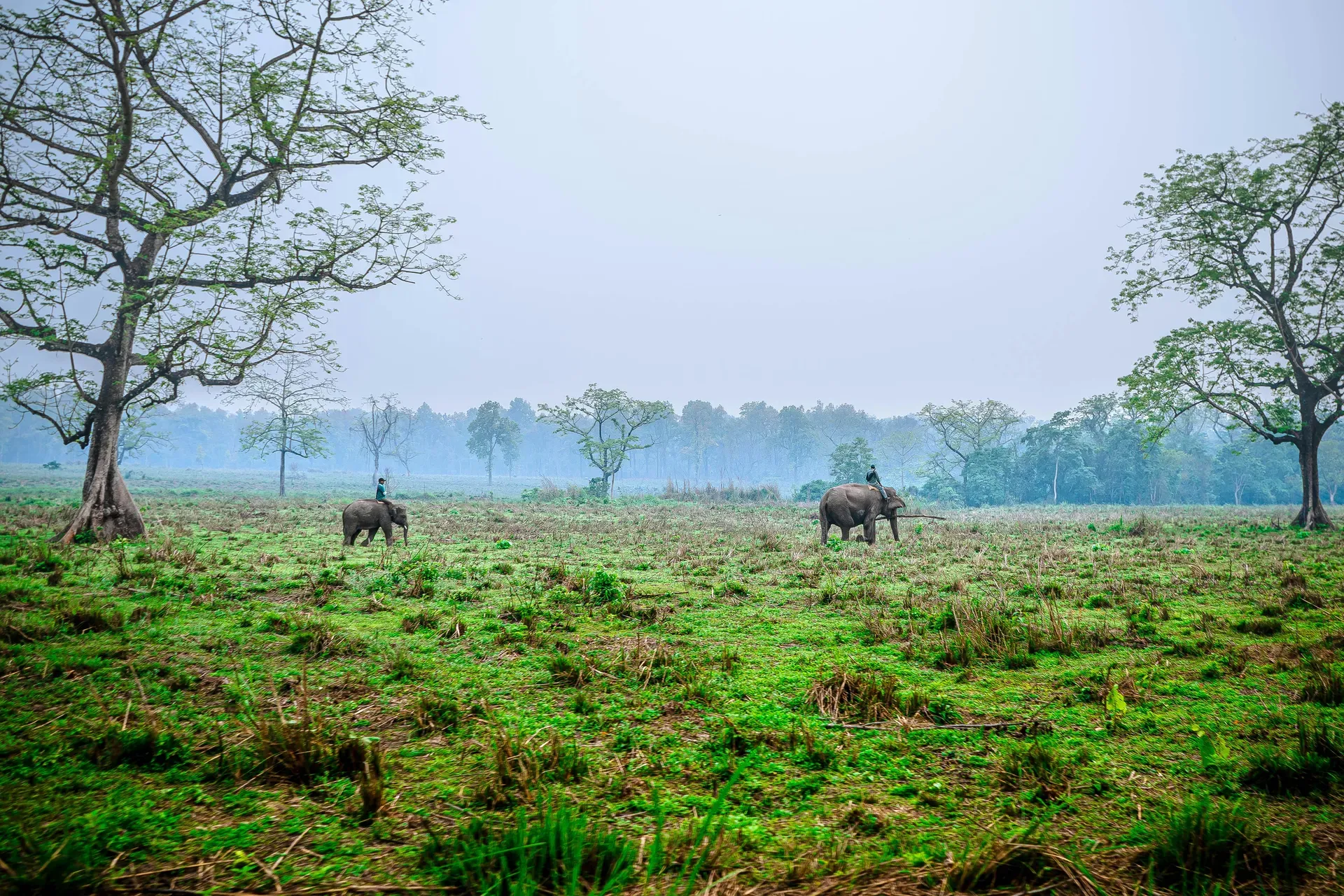
Chitwan National Park protects 952 sq km of sal forest, grassland and river in Nepal's subtropical Terai lowlands, about 160 km from Kathmandu. Nepal's first national park and a UNESCO World Heritage Site since 1984, it holds one of the world's last great populations of one-horned rhinos and Bengal tigers.
Chitwan National Park is Nepal's first national park, established in 1973 across 952.63 sq km of the subtropical Inner Terai lowlands in south-central Nepal, about 160 km by road from Kathmandu. It covers parts of the Chitwan, Nawalpur, Parsa and Makwanpur districts and sits between the Siwalik hills and the Indian border. UNESCO added it to the World Heritage List in 1984, calling it one of the last undisturbed vestiges of the Terai ecosystem that once stretched across the entire India–Nepal piedmont. Most of that ecosystem is gone. Chitwan is what survived.
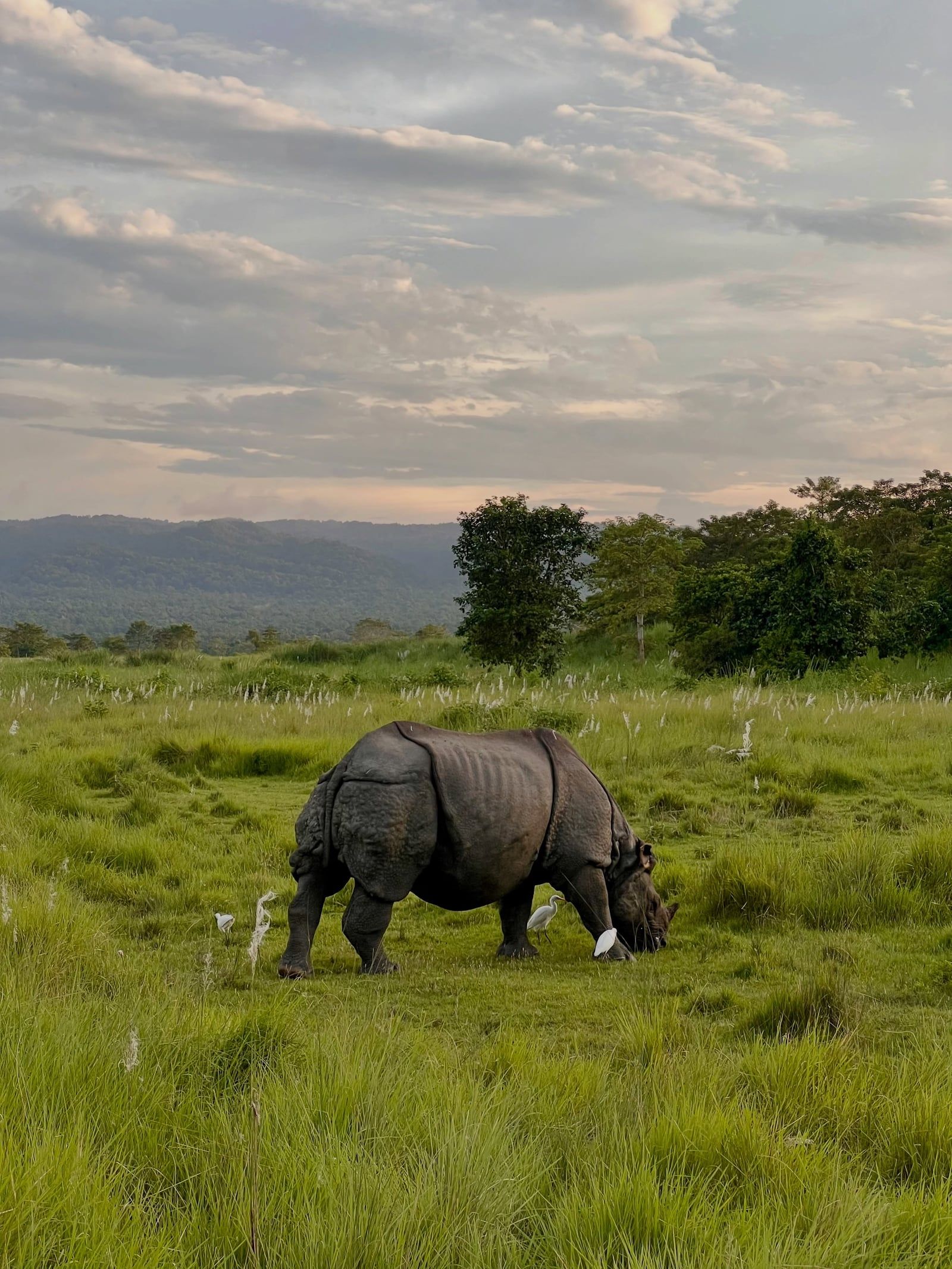
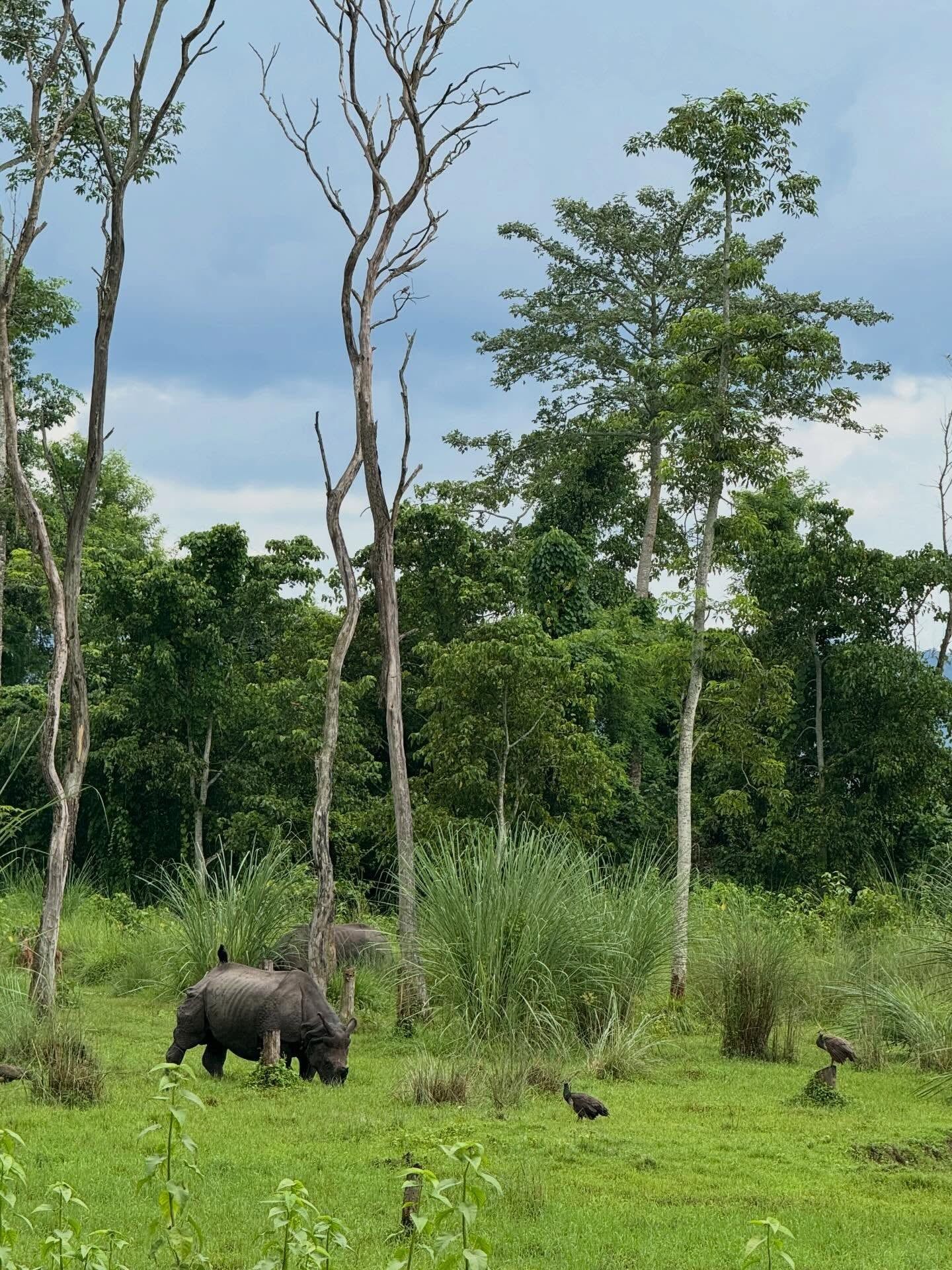
The park's numbers are why people come. It holds 694 greater one-horned rhinoceroses (2021 census), the world's second-largest population, and 145 Bengal tigers (2025 census), the largest count of any park in Nepal. Add 68 mammal species, 544 bird species, gharial crocodiles on the sandbanks, and tall grasslands that support one of the highest wild ungulate biomasses anywhere in the subcontinent. A dawn jeep safari through the sal forest along the Rapti river flats, where rhinos graze at first light, is the standard way to see it.
Nearly all visitors base themselves in Sauraha, the tourist town on the park's eastern edge, and run the same rhythm: a jeep safari and a dugout canoe ride on the Rapti, a jungle walk with a licensed guide, and an evening Tharu stick-dance performance. Chitwan is Nepal's most visited protected area and anchors the tourism economy of Sauraha, Bharatpur and Meghauli. October to March is the window — dry, cool, with short grass that makes animals easier to spot.
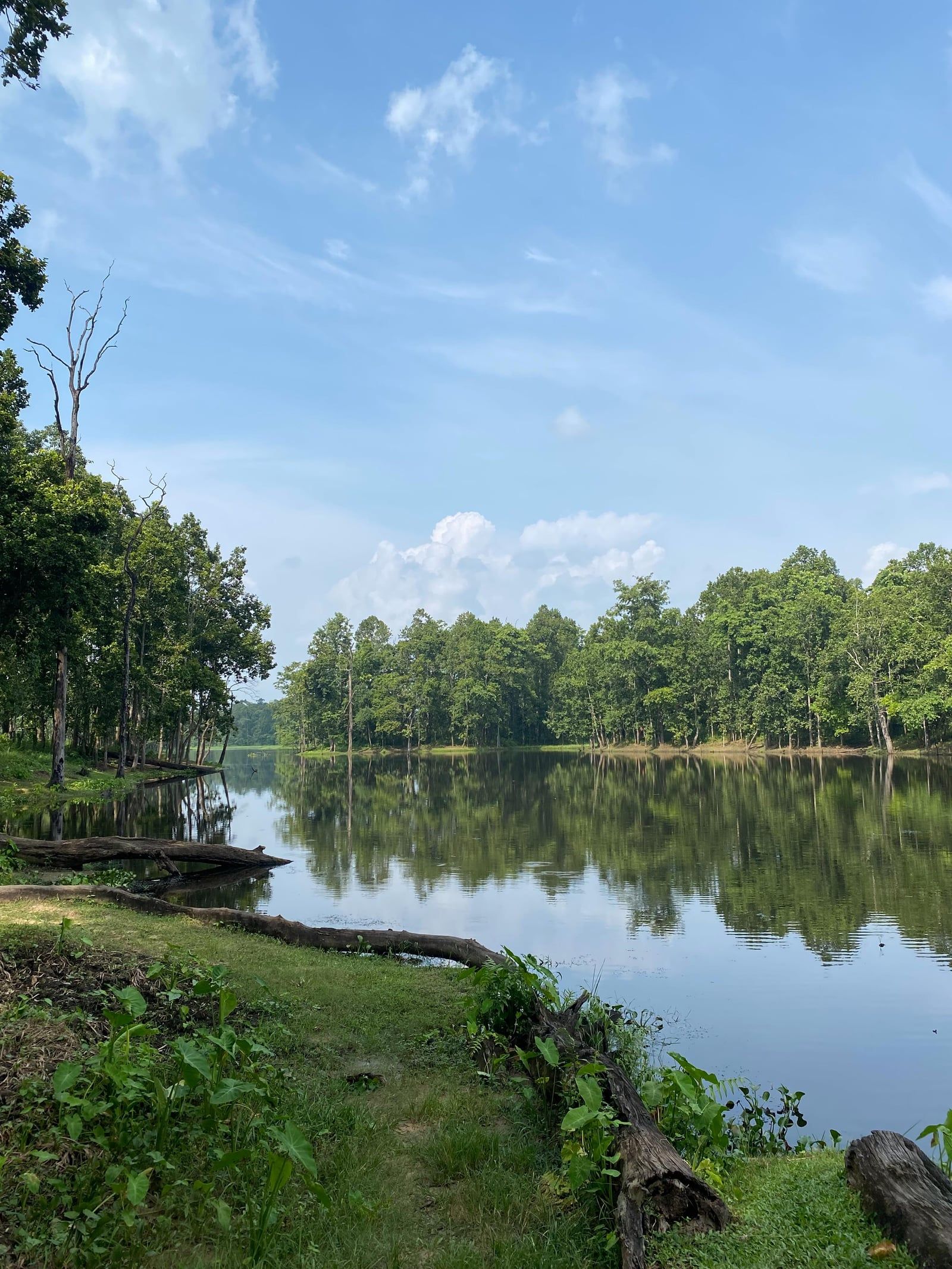
Until the 1950s, the Chitwan forest covered more than 2,600 sq km and served as a winter hunting ground for Nepal's ruling class. Roughly 800 one-horned rhinos lived in it. That world ended fast. After malaria control and settlement programs opened the Terai in the 1950s and 60s, farmers cleared forest, and poaching cut through the wildlife. By the late 1960s the rhino population had collapsed so far that conservationists warned the species could vanish from Nepal entirely.
The government answered in 1973 by gazetting Royal Chitwan National Park — the country's first. The boundaries were extended in 1977 to the present 952.63 sq km, covering the sal forests, grasslands and river corridors between the Rapti, Reu and Narayani rivers. Protection started paying off almost immediately. In 1978, with support from the Frankfurt Zoological Society, the park opened the Gharial Breeding Center at Kasara, which still collects wild gharial eggs, hatches them, and restocks the rivers with a critically endangered crocodile that had nearly disappeared.
UNESCO inscribed Chitwan on the World Heritage List in 1984. The citation points to the park's role in preserving the Terai ecosystem and its threatened species. In 1997 the government added a 729.37 sq km buffer zone around the core, where villages share in park revenue in exchange for managing forest and grassland on the park's fringes. The buffer zone includes Beeshazari Tal, an oxbow-lake system of 32 sq km designated a Ramsar wetland in 2003.
The recovery since the 1970s is the park's real story. Rhinos are back to 694 animals in the 2021 census. Tigers in the Chitwan complex reached 145 in the 2025 national survey — part of Nepal's nationwide count of 429, itself a conservation record for the country. Poaching has not disappeared, and a monsoon flood in the district killed thousands of animals, including rhinos. But by every measure that matters, Chitwan has gone from near-loss to the flagship of Nepali conservation.
Chitwan sits in the Inner Terai, a subtropical lowland valley tucked between two east–west river valleys at the base of the Siwalik range, the outermost hills of the Himalaya. Elevation runs from about 100 m in the river valleys to 815 m on the Sivalik ridge. Three rivers border and drain the park — the Rapti, the Reu and the Narayani — and their floodplains shape nearly everything a visitor sees. Sal forest (Shorea robusta) covers the higher ground, breaking into riverine forest and elephant grass along the water. The adjacent Parsa reserve continues the same sal-forest complex eastward, giving wildlife a far larger connected range than the park boundary alone suggests.
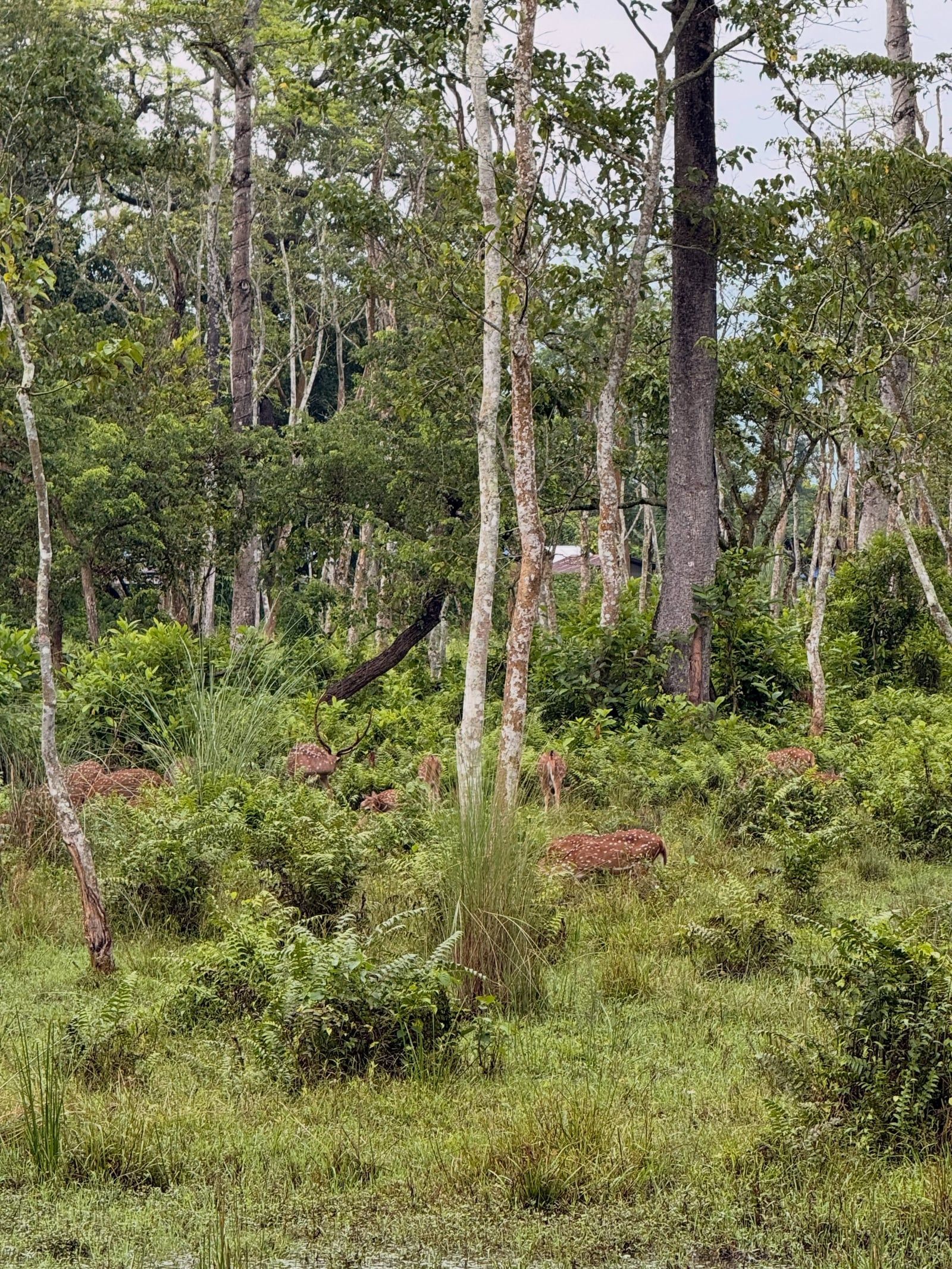
The grasslands are the biological engine. Chitwan's tall floodplain grasses support one of the highest wild ungulate biomasses in the subcontinent — sambar, spotted deer, hog deer, wild boar — which in turn feeds the tiger population. Cutting the grass, by controlled burning and hand, keeps the habitat open; short grass after the monsoon is why dry-season safaris see so much more. In the buffer zone, Beeshazari Tal ("Twenty Thousand Lakes") adds 32 sq km of oxbow-lake wetland at 286 m elevation, a Ramsar site since 2003 and arguably better for birds than the park core.
The species list is long for a park this size: 68 mammals, 544 birds, 56 herpetofauna and 126 fish species. Gharials — the thin-snouted, fish-eating crocodile — bask on the Narayani sandbanks; muggers patrol the slower water. Sloth bears dig for termites in the sal forest, and leopards keep to cover. Bring binoculars. Half the animals you'll find here announce themselves by sound before you ever see them.
The Tharu people are the Terai's Indigenous community, and Chitwan is one of the best places to encounter them. Their villages around Sauraha still have traditional mud-and-thatch houses with painted walls, and the evening stick-dance performances — drumming and synchronized dance — grew from a martial tradition into the region's signature show. The Tharu Cultural Museum in Sauraha covers their history, crafts and food, and village walks need no park permit, so they work for any budget. For the Tharu, tourism revenue tied to the park has become a genuine livelihood; for visitors, it's the cultural half of a Chitwan trip that would otherwise be all animals.
The park itself carries an older history as a hunting ground for Nepal's ruling class, who came down from Kathmandu each winter to shoot rhinos and tigers in the same forest that is now closed to hunting entirely. That reversal — from royal game reserve to the country's flagship protected area — is part of what Chitwan means to Nepalis.
Religion clusters nearby too. Devghat, 6 km north of Bharatpur at the confluence of the Trishuli and Kali Gandaki rivers, is one of Nepal's prominent Hindu pilgrimage sites, with hot springs and a major festival on Makar Sankranti in January. And 131 km southwest, Lumbini — the Buddha's birthplace and a UNESCO site in its own right — pairs naturally with Chitwan on a Terai itinerary; direct buses from Sauraha run some mornings for about NPR 1,400.
Chitwan is one of the few parks in Asia where you can walk in tiger habitat — and the guides carry no firearms, only bamboo sticks. All safety rests on training and distance.
The Gharial Breeding Center at Kasara, founded in 1978 with Frankfurt Zoological Society support, collects wild gharial eggs and restocks rivers with this critically endangered crocodile.
Chitwan held roughly 800 rhinos before the 1950s, nearly lost them to poaching, and now counts 694 (2021 census) — the world's second-largest population of the species.
Beeshazari Tal, the Ramsar-listed oxbow wetland in the park's buffer zone, spans 32 sq km. Many travelers report seeing more wildlife there, by bicycle, than on a half-day jeep safari.
Eleven people died and 41 were injured in animal attacks — mostly rhino charges — in Chitwan district in 2024–25. The danger is real, not a marketing line.
The Elephant Breeding Center at Khorsor, near Sauraha, explains the care of the park's domesticated elephants, and you can watch calves born there. It's controversial with some travelers but remains one of Chitwan's most visited official sites.
A monsoon flood in Chitwan killed thousands of animals, including rhinos. Flash flooding is why the park effectively shuts down its canoe trips and many jeep tracks from June to September.
Chitwan is famous for one-horned rhinoceroses and Bengal tigers. It holds 694 rhinos (2021 census), the world's second-largest population, and 145 tigers (2025 census), the most of any park in Nepal. It's also Nepal's first national park (1973), a UNESCO World Heritage Site since 1984, and the country's most visited protected area.
The park was established in 1973 as Royal Chitwan National Park, Nepal's first. Its boundaries were extended to the present 952.63 sq km in 1977, UNESCO inscribed it in 1984, and a 729.37 sq km buffer zone was added in 1997. The forest itself was a royal hunting ground long before that.
The core park covers 952.63 sq km, with an additional 729.37 sq km buffer zone added in 1997. Elevation ranges from about 100 m in the river valleys to 815 m in the Sivalik Hills. The adjacent Parsa reserve extends the same sal-forest complex, so the connected wildlife habitat is larger still.
Possible, never guaranteed. Chitwan holds 145 tigers (2025 census), and dawn and dusk jeep drives past waterholes in the dry season give the best odds. Rhinos are seen far more reliably — 694 of them — while sloth bears, leopards and wild elephants are rarer.
Foreigners pay NRs. 2,000 per person per entry, SAARC nationals NRs. 1,000, Nepali citizens NRs. 150, and children under 10 enter free. Note the fee is separate from safari costs: the park separately charges NPR 5,000 per jeep for a jungle-drive permit, plus guide and activity fees.
Yes — you cannot enter the core zone alone. Every visit requires a park entry permit and a licensed guide arranged through your lodge or a registered operator, usually booked the evening before. Permits take about 15 minutes to process at the gates or at the Tourist Service Center in Kathmandu.
No. The permit is charged per person per entry or per day, so each day inside the park means a new fee. If you plan to exit and re-enter the same day, arrange it with the park counter or your operator beforehand.
October to March. The weather is cool and dry (daytime highs 21–29°C, nights around 8°C in December), the tracks are passable, and short post-monsoon grass plus dry-season waterholes concentrate animals where you can see them. June to September is the monsoon — canoe trips stop and jeep tracks flood — and April–May reaches about 37°C.
Guided jungle walks are run with trained guides and are a genuine Chitwan specialty, but they carry real risk: 11 people died in animal attacks in Chitwan district in 2024–25, mostly rhino charges. Follow guide instructions instantly, never walk between sunset and sunrise, and most visitors' worst outcome is a leech bite.
Tourist buses take 5–7 hours for the ~160 km run (NPR 500–1,500+), private cars 4–6 hours (NPR 12,000–20,000+ per vehicle), or you can fly the 25-minute Buddha Air route to Bharatpur and transfer 30–45 minutes to Sauraha. Confirm your bus drop-off when booking — "Chitwan" can mean Sauraha, Bharatpur, Tandi or Ratnanagar, which are up to an hour apart.
Browse verified tours with free cancellation and instant confirmation.
Find Tours