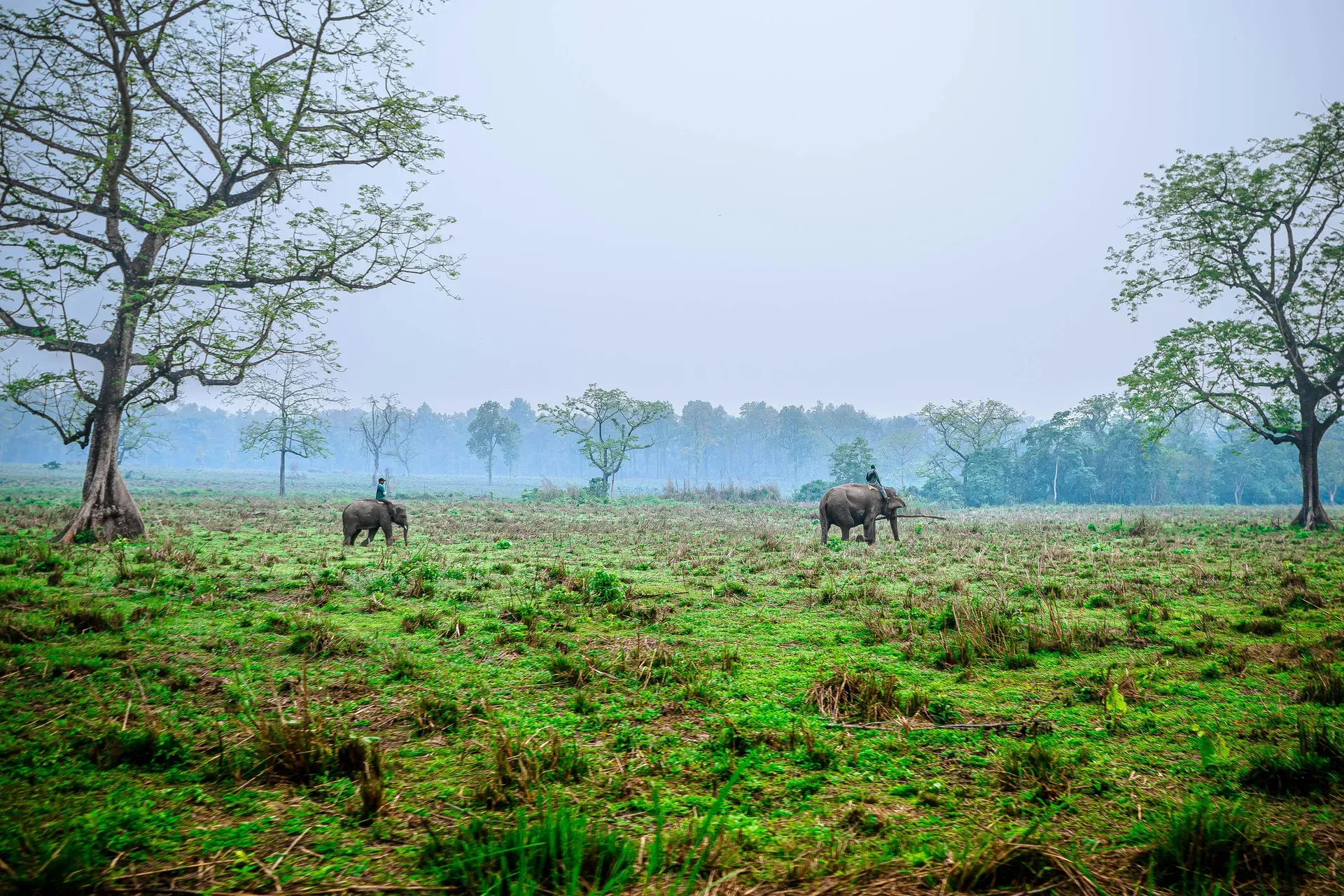
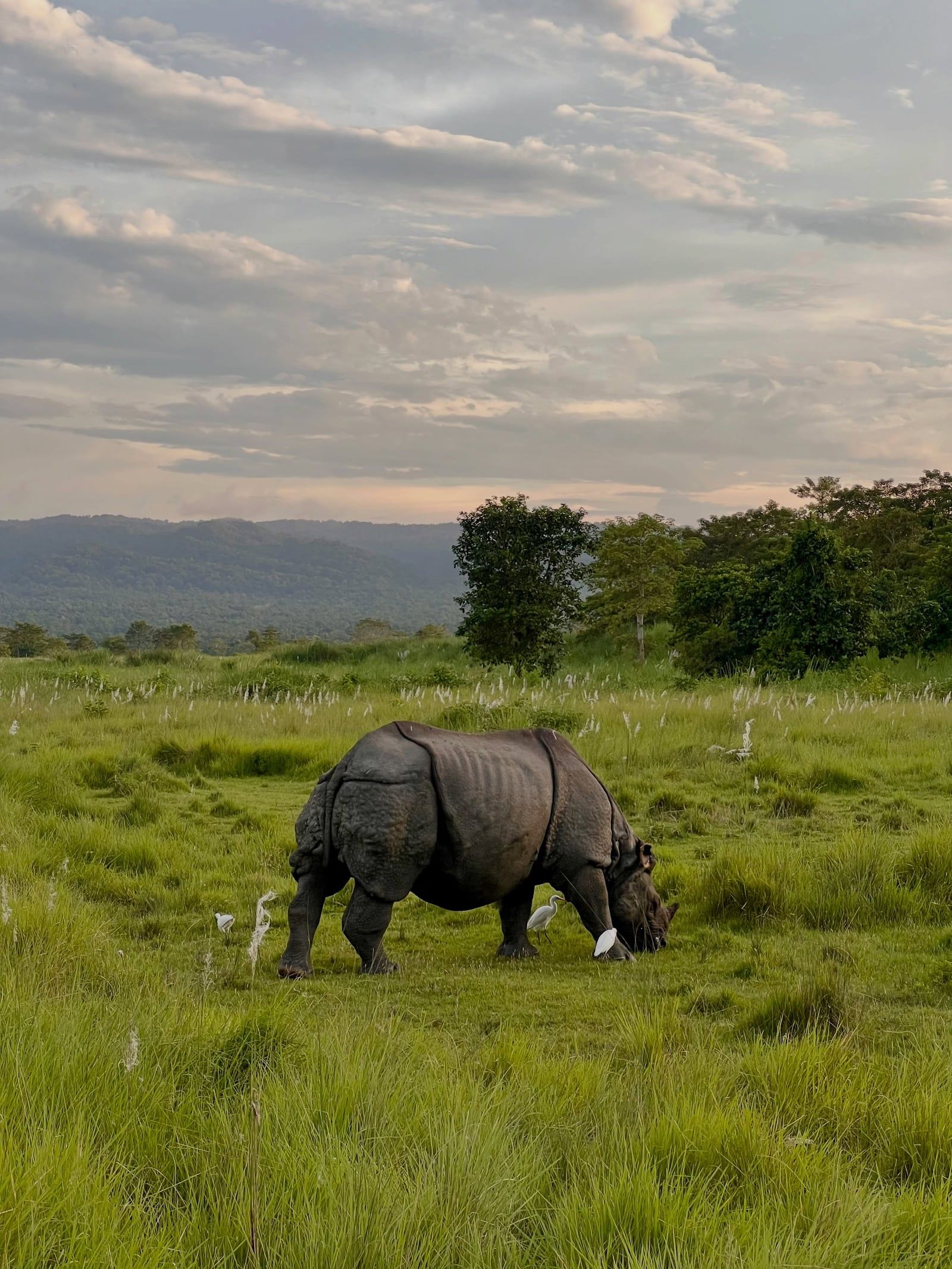
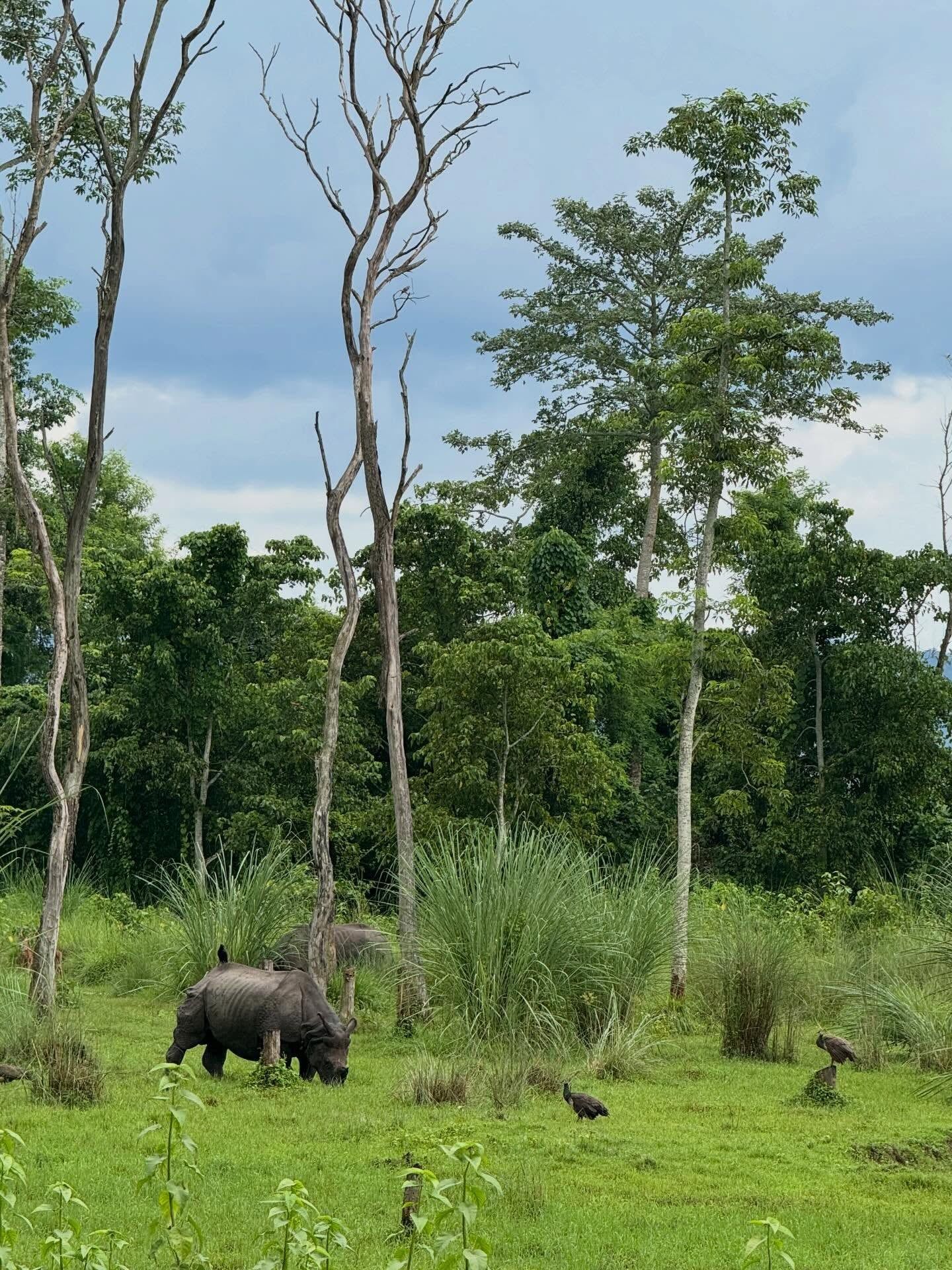
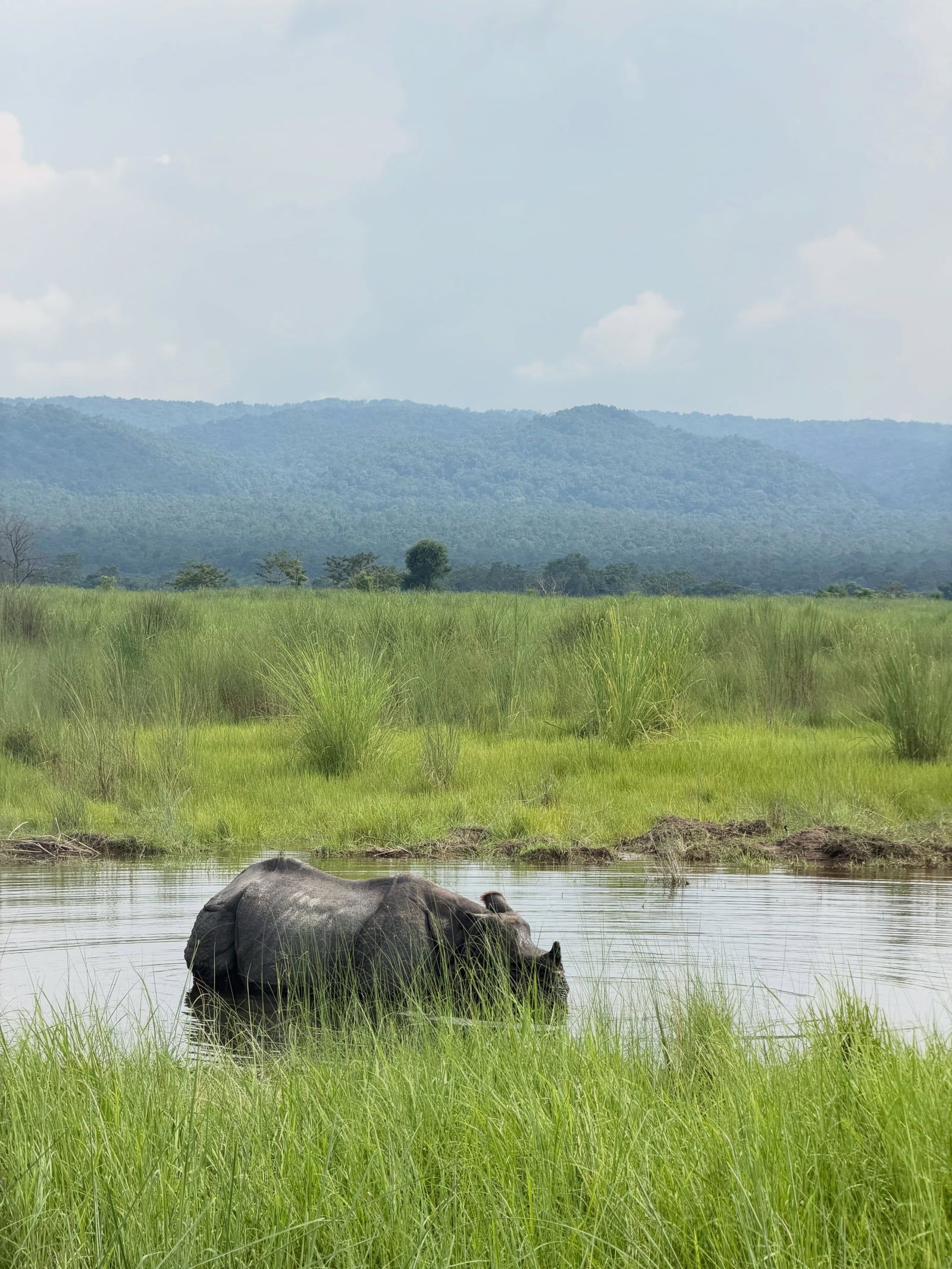
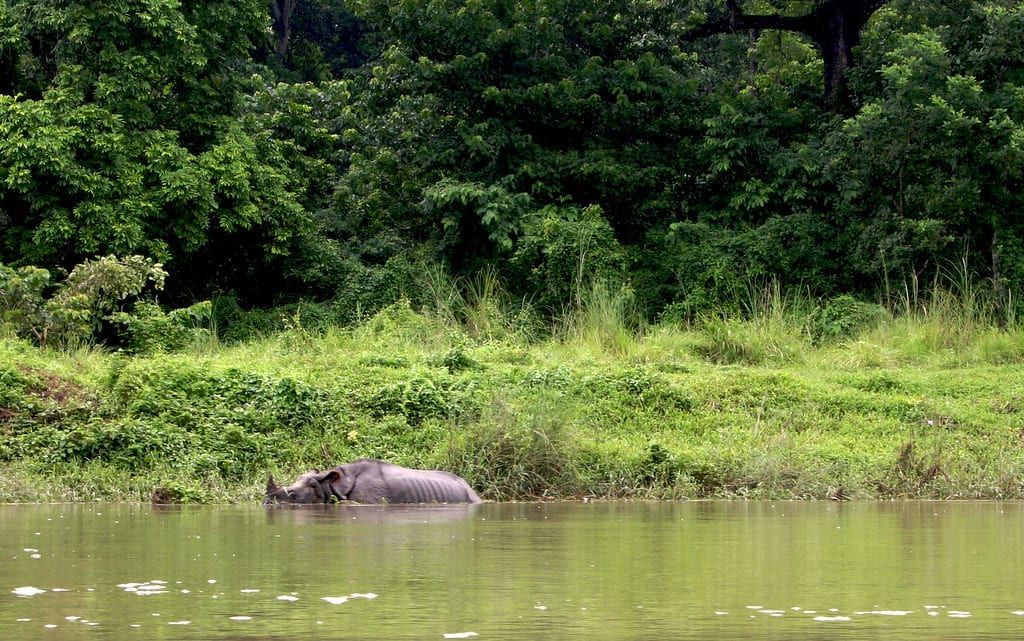
At dawn in Chitwan National Park, one-horned rhinos graze the Rapti river flats while jeeps queue at the Sauraha gate for the 6 AM safari. This is Nepal's first national park — 952 sq km of sal forest and grassland holding 694 rhinos, 145 Bengal tigers and 544 bird species — and the country's best wildlife show by some distance.
Find Guided ToursChitwan National Park is Nepal's first national park, established in 1973 across 952.63 sq km of subtropical lowland in the country's south-central Inner Terai, about 160 km by road from Kathmandu. It covers the districts of Chitwan, Nawalpur, Parsa and Makwanpur, and UNESCO inscribed it as a World Heritage Site in 1984.
The park protects one of the last stretches of the Terai ecosystem that once ran the length of the India–Nepal piedmont. Its sal forests, tall riverine grasslands and oxbow lakes hold 68 mammal species, 544 bird species, 126 fish species and 56 herpetofauna species. Two animals anchor the park's reputation: 694 greater one-horned rhinos (2021 census), the world's second-largest population, and 145 Bengal tigers (2025 national census), Nepal's biggest count. Elevation runs from about 100 m along the Rapti, Reu and Narayani river valleys up to 815 m in the Sivalik Hills, and the Ramsar-listed Beeshazari Tal wetland sits in the buffer zone.
Until the 1950s the Chitwan forest spread over more than 2,600 sq km and served as a winter hunting ground for Nepal's ruling class, when roughly 800 one-horned rhinos lived there. Settlement, poaching and cultivation then shrank both the forest and its wildlife. The park was created as Royal Chitwan National Park in 1973, extended to its current size in 1977, and given a 729.37 sq km buffer zone in 1997.
Protection worked. The Gharial Breeding Center opened at Kasara in 1978 with Frankfurt Zoological Society support, and decades of patrols brought rhinos back to 694 and tigers in the park complex to 145. Chitwan is now Nepal's most visited protected area, anchoring the tourism economy of Sauraha, Bharatpur and Meghauli.
Discover the full history and cultural significance on our About page.
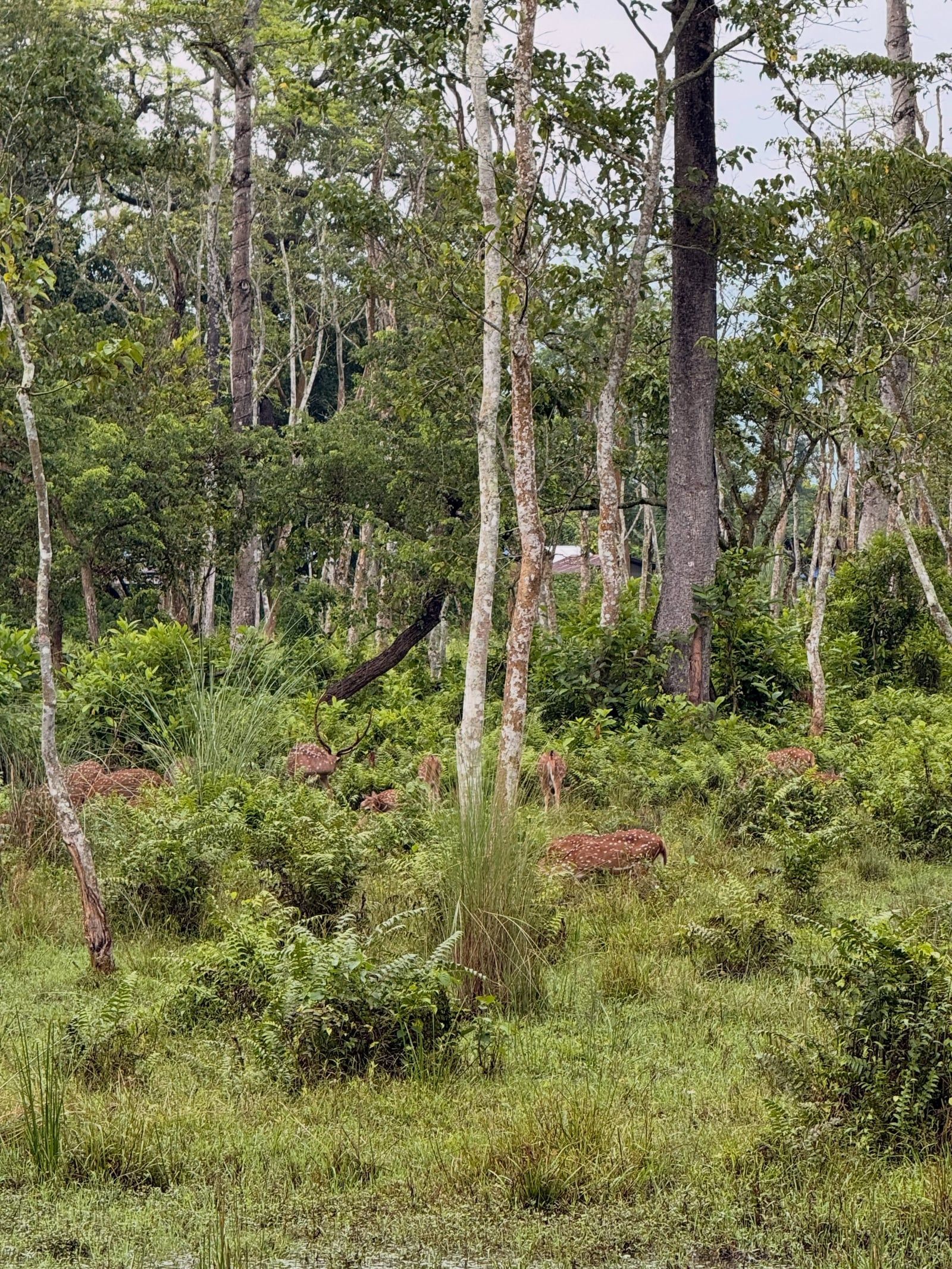
Jeeps leave Sauraha's gate between 6:00 and 7:00 AM and reach the Rapti river flats just as one-horned rhinos come out to graze. Sambar, spotted deer and wild boar cross the tracks. With 694 rhinos in the park, an encounter is close to certain.
Chitwan holds 145 Bengal tigers, Nepal's largest population, and dawn or dusk jeep drives past waterholes give you a real shot. Short post-monsoon grass from October to March improves the odds. No guarantees — but sloth bears, leopards and gharials are strong consolation prizes.
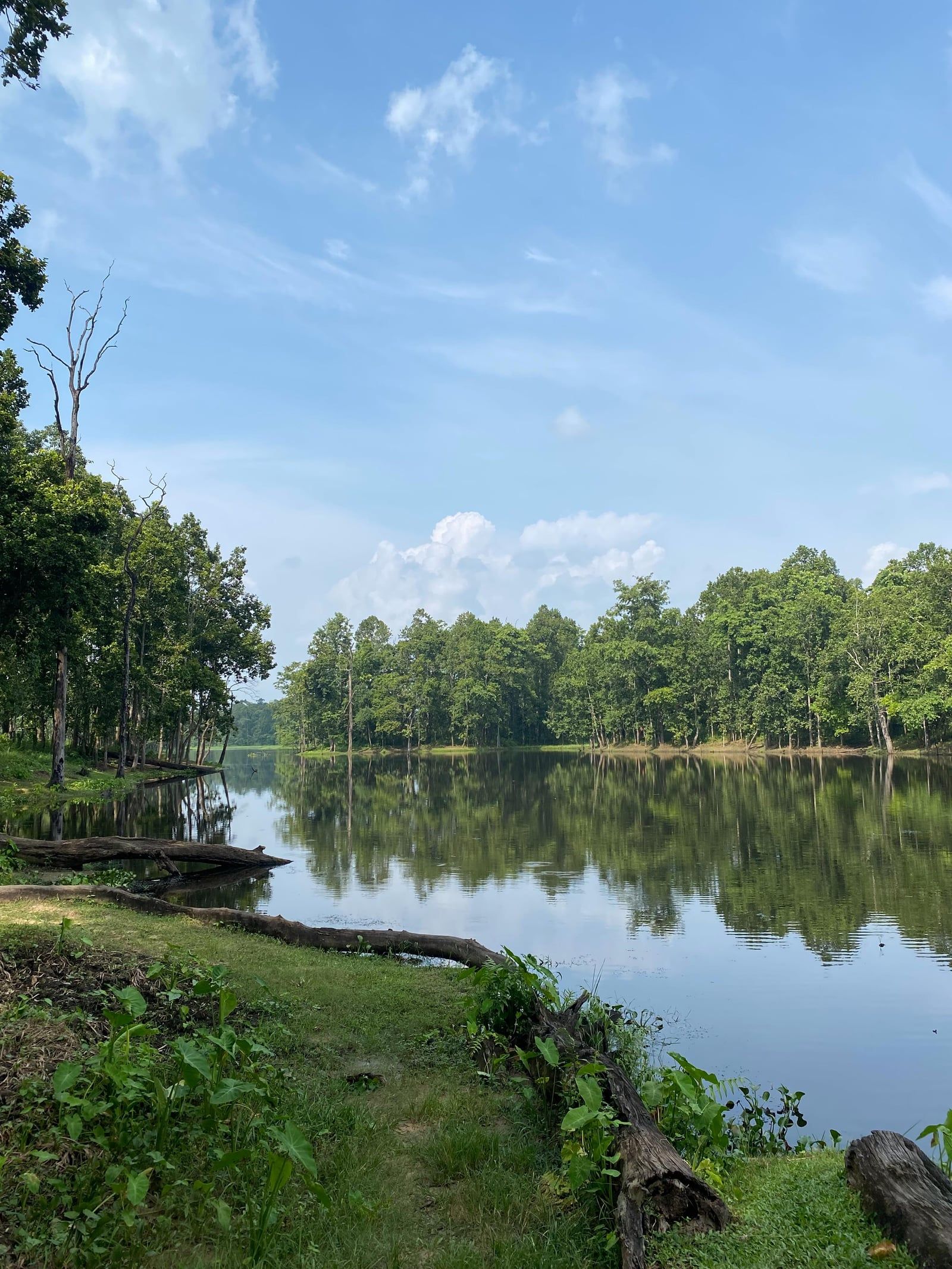
A dugout canoe slips you silently down the Rapti past marsh mugger crocodiles and critically endangered gharials, with kingfishers and herons working the banks. It runs one to two hours and costs NPR 1,000–1,500. Pick a dry-season morning, when the water is calm.
After sunset in Sauraha, dancers of the Indigenous Tharu community perform stick dances and drumming in village venues. Pair it with an afternoon walk past mud-and-thatch houses with painted walls. It's the cultural counterweight to the safari — and it needs no park permit.
Book a jeep safari, canoe ride, or overnight jungle tower stay — multi-day packages start at $144 and include Kathmandu bus transfers.
Swipe to see more
 Free Cancellation 72h
 Free Cancellation 72h
 Free Cancellation 96h
 Free Cancellation Free Cancellation 72h
 Free Cancellation 96h
 Free Cancellation 72h
 96h
October to March is the best time to visit Chitwan National Park: the weather is cool and dry, monsoon-flooded tracks are passable again, and short grass plus animals gathering at waterholes makes for peak wildlife viewing. Avoid the June–September monsoon, when floods and rain shut down safaris.
March still sits in the prime viewing window, but heat builds fast — daytime highs reach about 37°C by May. Tolerable, if hot and sweaty; go early, pack water, and expect animals sheltering from the midday sun.
The monsoon. July alone sees around 24 days of rain, jeep tracks turn to mud, canoe trips on the Rapti are interrupted by high water, and flash floods are a real hazard — one past flood killed thousands of animals. Skip it.
The rains taper off and October delivers the sweet spot: highs around 29°C, dry tracks, and short post-monsoon grass that makes rhinos and deer easy to spot. It's also peak season, so expect crowds and prices 20–30% higher.
Cool, dry and prime for viewing — animals concentrate at waterholes while daytime highs sit near 21°C in December. Nights drop to around 8°C, so bring warm layers for 6 AM jeep departures. Still peak pricing through February.
Chitwan National Park has no single published gate schedule, but entry is consistently described as possible from about 6:00 AM to 6:00 PM daily. Walking inside the park is prohibited between sunset and sunrise. In practice, jeep safaris leave the Sauraha gate at dawn (roughly 6:00–7:00 AM) and again in mid-afternoon. Permit counters at the gates run roughly 10:00 AM–5:00 PM; if you'd rather sort paperwork in Kathmandu, the Nepal Tourism Board desk at the Tourist Service Center in Bhrikutimandap operates about 9 AM–5 PM and closes on Saturdays and public holidays.
| Category | Price |
|---|---|
| Foreign visitors (per person, per entry/day) | NRs. 2,000 |
| SAARC nationals (per person, per entry/day) | NRs. 1,000 |
| Nepali citizens (per person, per entry/day) | NRs. 150 |
| Children below 10 years | Free |
| Jeep jungle-drive permit (per jeep, per park citizen charter) | NPR 5,000 |
| Car jungle-drive permit (per car, per park citizen charter) | NPR 3,000 |
| Guide contribution (typical, per person) | NPR 1,000–1,500 |
The permit is charged per person per entry or per day, so a second day inside the park means paying again — if you plan to exit and re-enter the same day, arrange it with the park counter or your operator beforehand. Permits take about 15 minutes to process; bring a passport copy (foreigners) or citizenship/passport/national ID (Nepalis). The entry fee does not cover safaris: shared jeep contributions run roughly NPR 1,250–1,900 per person and canoe rides NPR 1,000–1,500, on top of the jungle-drive permit. Everyone needs a licensed guide for the core zone, and the practical move is to have your lodge book permits the evening before a morning safari. October to March is the peak window — expect safari and hotel prices 20–30% higher then, especially around Christmas and New Year.
For complete schedules and ticket prices, visit our Hours & Fees page.
Chitwan sits about 160 km from Kathmandu: tourist buses cover it in 5–7 hours (NPR 500–1,500+), private cars in 4–6 hours, or you can fly the 25-minute Buddha Air route to Bharatpur Airport and transfer 18 km to Sauraha in 30–45 minutes. Coming from Pokhara, buses take 5–8 hours over roughly 150 km.
📍 No single street address: the park headquarters is at Kasara, Chitwan District, south-central Nepal, about 160 km by road from Kathmandu; most visitors base themselves in Sauraha, the main tourist gateway on the park's eastern edge.
The classic budget choice. Buses leave from near Thamel between about 6:30 and 9:00 AM and run roughly 160 km to Sauraha in 5–7 hours. Fares run NPR 500–1,500+ per person depending on whether you take a standard, deluxe, or VIP 'sofa' bus. Buses can drop at Sauraha, Bharatpur, Tandi, or Ratnanagar — confirm your stop before booking, as these points are up to an hour apart.
Buddha Air flies Kathmandu–Bharatpur in 25 minutes, the fastest option by far. Fares are dynamic, with no fixed published price, and frequency drops in the low season. Bharatpur Airport sits about 18 km from Sauraha, so budget another 30–45 minutes by pre-booked hotel transfer, taxi, or local transport. Arrive at the airport an hour before departure and expect schedule changes — verify the current timetable before booking.
A door-to-door, hotel-to-hotel transfer costing NPR 12,000–20,000+ per vehicle, best for families with children, small groups, or anyone with fixed safari or check-in times. The drive covers the same roughly 160 km in 4–6 hours depending on road conditions and traffic. Confirm in writing whether fuel, driver, tolls, and waiting time are included, since operators differ on what the quoted price covers.
Handy on the Kathmandu–Pokhara–Chitwan circuit. Tourist buses cover roughly 150 km to Sauraha in 5–8 hours, mostly departing Pokhara in the morning and arriving by afternoon. Costs vary by operator and seat type, with some tourist services cited at up to about US$20. Journey time swings with route, traffic, and road conditions, and you should check whether you're being dropped at Sauraha or Bharatpur when booking.
For detailed transport options and routes, visit our Directions page.
Morning jeep safaris leave the Sauraha gate between 6:00 and 7:00 AM, so have your lodge or operator sort the entry permit the evening before. Processing takes about 15 minutes, and the permit covers a single entry per day — a second day inside means paying the NRs. 2,000 foreigner fee again. You can also buy in advance at the Tourist Service Center, Bhrikutimandap, Kathmandu (closed Saturdays and public holidays). Bring a passport copy; Nepali visitors show citizenship or national ID.
The NRs. 2,000 entry ticket is only the start. The park separately charges NPR 5,000 per jeep for a jungle drive, a shared safari contribution runs NPR 1,250–1,900, guides NPR 1,000–1,500, and a Rapti canoe ride NPR 1,000–1,500. Realistic activity total: about NPR 5,250–6,900 per person plus VAT, before accommodation or meals. Confirm exactly what your package includes before paying — many travelers discover these charges are extras.
"Chitwan" on a bus ticket can mean Sauraha, Bharatpur, Tandi, Ratnanagar or Patihani — drop-offs up to an hour apart. Check the exact stop before booking from Kathmandu (5–7 hours, NPR 500–1,500) or Pokhara. And don't schedule a safari the same day you arrive; after that road journey you'll want the morning slot fresh. Tourist buses from Kathmandu leave between 6:30 and 9:00 AM, so book ahead for October–February.
Eleven people died and 41 were injured in animal attacks in Chitwan district in 2024–25, mostly rhino charges. Walking in the park between sunset and sunrise is prohibited for this reason, and guides on jungle walks carry only bamboo sticks — no firearms. When a guide tells you to move, move instantly. Rhinos can kill without warning if they feel threatened, and this is the park's 694-strong population, so encounters are common.
The shared morning jeep safari (4–5 hours) is the comfortable pick for families and older travelers. Children under 10 enter the park free but under-5s are generally refused on full-day safaris — the 7–10 hour bumpy tracks are too much. Elderly visitors should skip the 2–4 hour jungle walks and stick to jeeps, canoe rides, and the Tharu cultural show instead. Roads from Sauraha to the gates take just 10–20 minutes.
Drones appear on the park's prohibited-practices list and need special written permission from park authorities, so don't count on aerial footage. Also steer clear of "souvenir" wildlife products — buying them can lead to legal prosecution under Nepal's wildlife law, and the park enforces it. Personal photography is fine and rewarding; just never use flash or bait animals for a shot. Plastic bags should stay out of the park too.
A 32 sq km Ramsar wetland of oxbow lakes in the park's buffer zone, designated in 2003. Birdwatching is the draw, and crocodiles, deer and even rhinos show up; many travelers see more here than on a half-day jeep safari. Rent a bicycle in Sauraha for about NPR 500.
A Hindu pilgrimage site where the Trishuli and Kali Gandaki rivers meet to form the Narayani, with natural hot springs. It swells with pilgrims on Makar Sankranti in January. An easy half-day stop en route between Bharatpur and the park.
The birthplace of Lord Buddha and a UNESCO World Heritage Site, with the Maya Devi Temple, a sacred garden and an international zone of monasteries built by Buddhist countries. Direct buses from Sauraha run some mornings at roughly NPR 1,400.
Read what travelers share about their experience visiting Chitwan National Park — from practical tips to personal highlights.
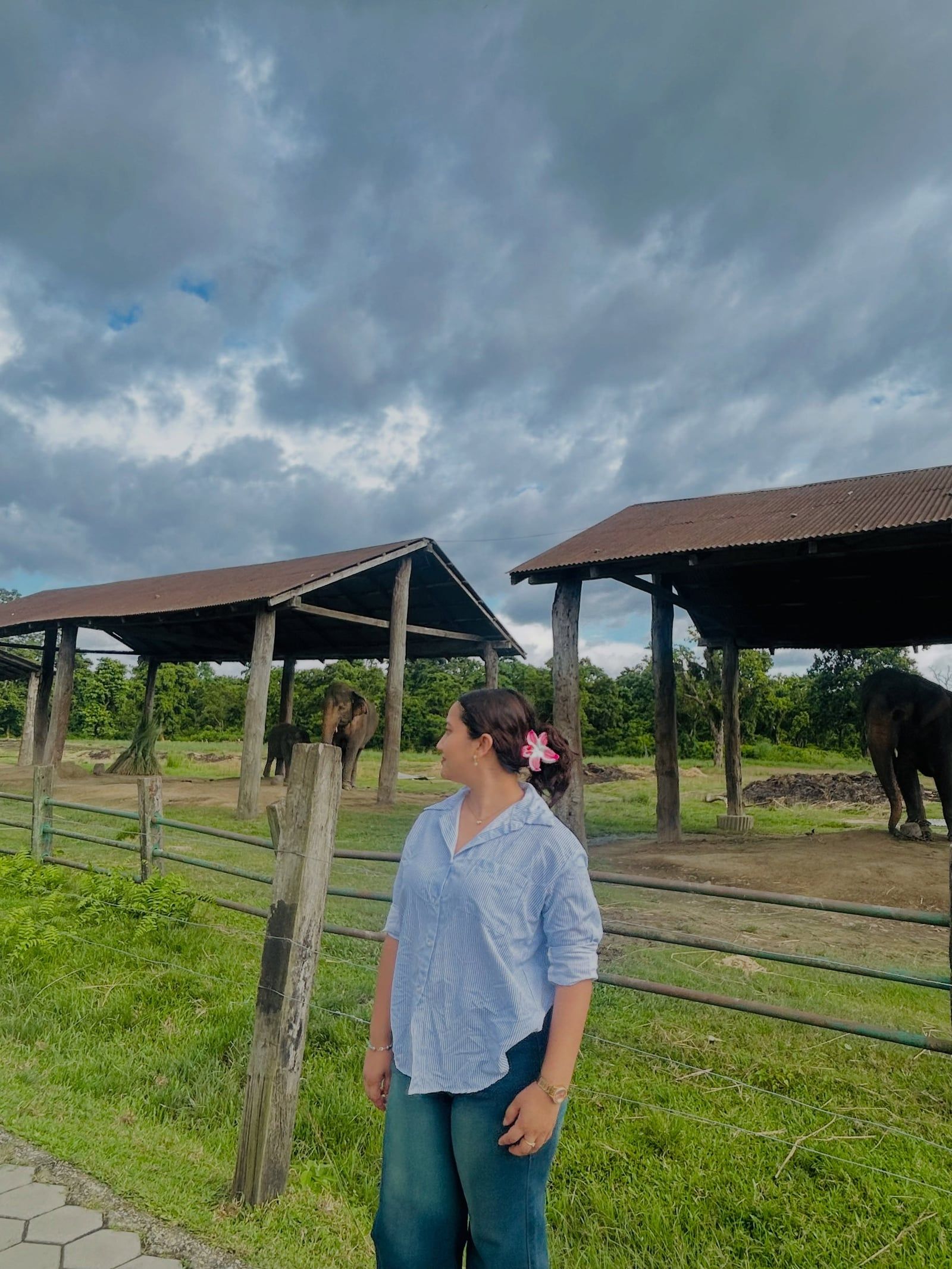
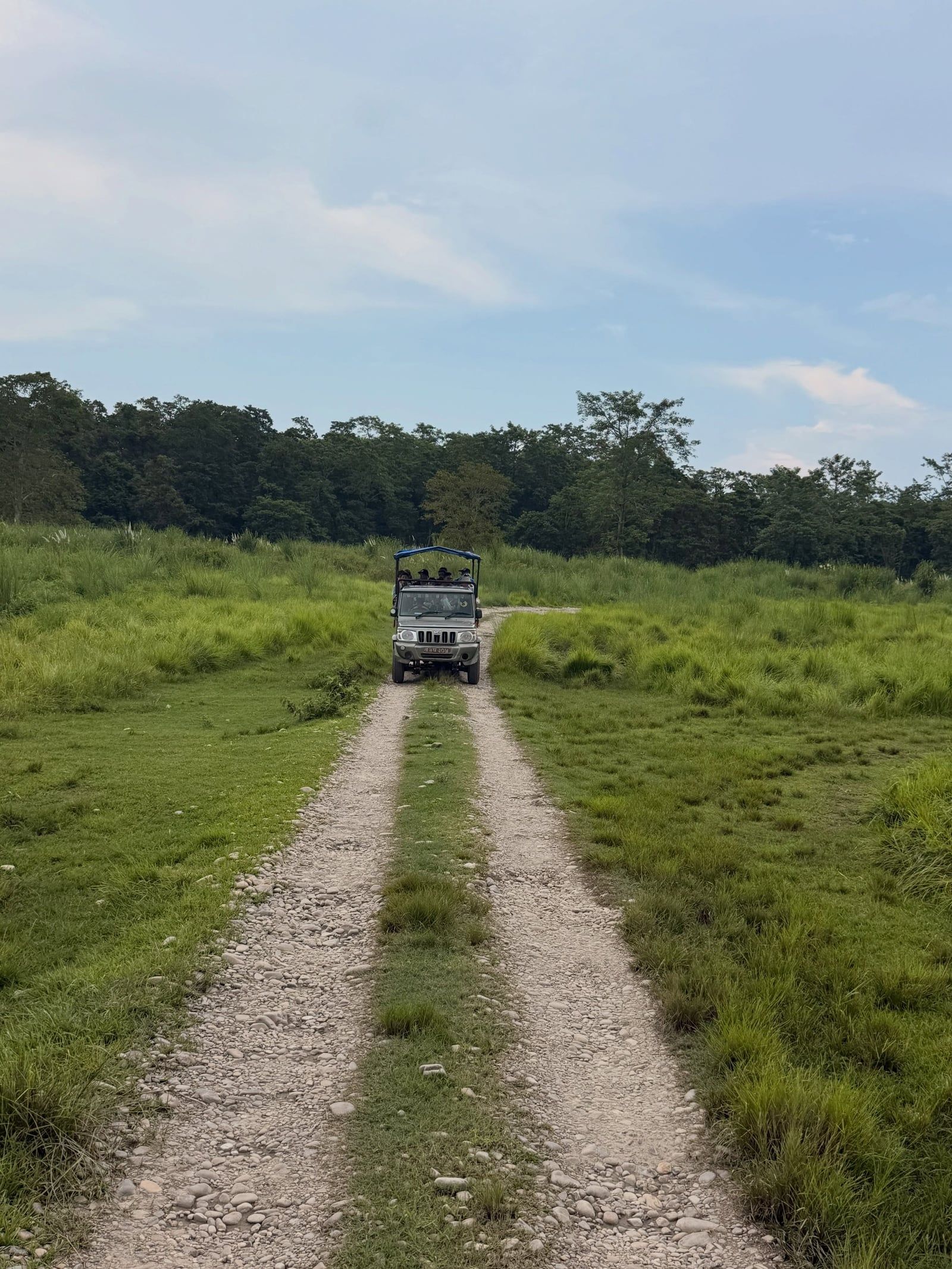
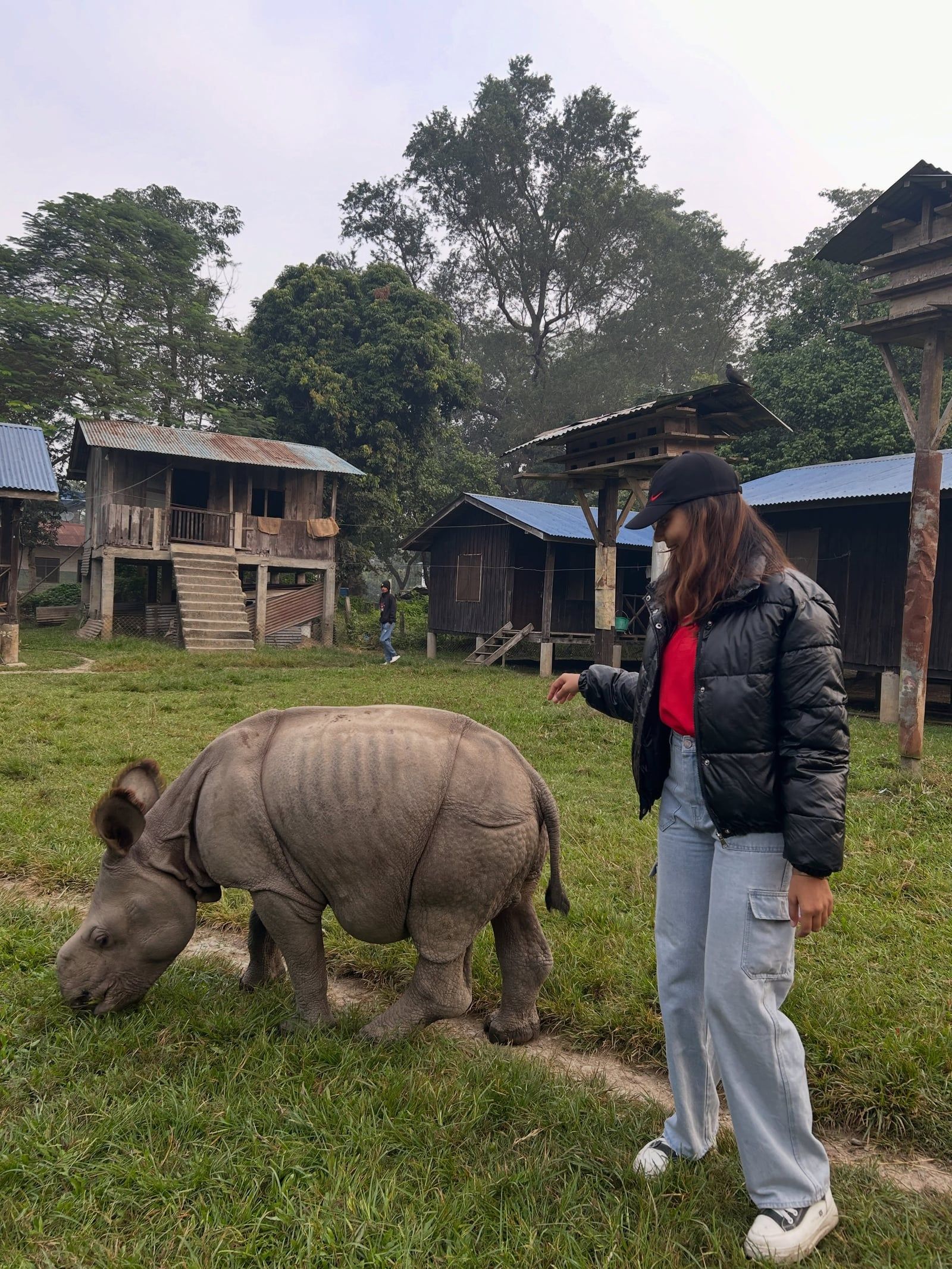
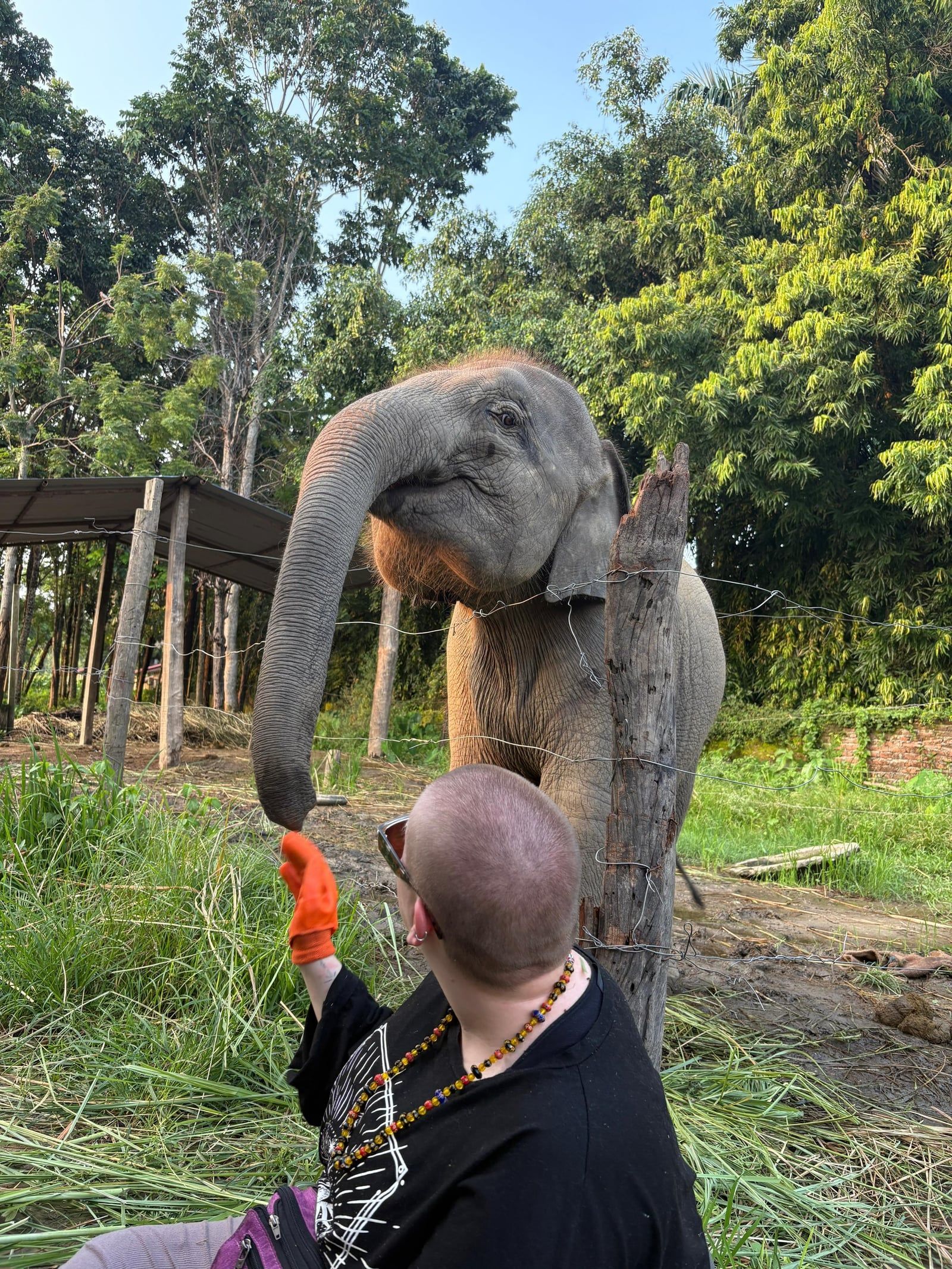
Planning advice, comparisons, and practical tips.
A Chitwan National Park safari is the classic two- or three-day jungle add-on to a Nepal trip, and it costs a fraction of an African safari. Nepal's…
Chitwan National Park sits in Nepal's subtropical Terai lowlands, 160 km southwest of Kathmandu, and its calendar runs on a rhythm the Himalayan…
There are no hotels inside Chitwan National Park — every bed within reach of the park sits in the buffer zone or in one of four base towns outside…
Sixty-eight mammal species, 544 birds, and the world's second-largest population of greater one-horned rhinos: Chitwan National Park packs more…
Foreigners pay NRs. 2,000 per person per entry, SAARC nationals NRs. 1,000, and Nepali citizens NRs. 150, with children under 10 free. That only covers entry — budget roughly NPR 1,250–1,900 for a shared jeep safari, NPR 1,000–1,500 for a guide, and NPR 1,000–1,500 for a canoe ride, plus the NPR 5,000 jungle-drive permit per jeep.
October to March is the window: daytime highs of 21–29°C, short post-monsoon grass for visibility, and animals crowding waterholes in the dry season. Skip the June–September monsoon (July alone has about 24 rain days, and floods cancel canoe trips), and know that April–May can hit 37°C.
The ~160 km route takes 5–7 hours by tourist bus (NPR 500–1,500+), 4–6 hours by private car (NPR 12,000–20,000+ per vehicle), or a 25-minute Buddha Air flight to Bharatpur plus a 30–45 minute transfer to Sauraha. Confirm your bus drop-off before booking — 'Chitwan' can mean Sauraha, Bharatpur, Tandi or Ratnanagar, which are up to an hour apart.
Yes to both — you can't enter the core zone alone. Permits take about 15 minutes to process at the gates or at the Tourist Service Center in Bhrikutimandap, Kathmandu, and the permit is charged per day, so a second day inside means a new fee. Book your licensed guide through your lodge or operator the evening before, since morning safaris leave around 6:00–7:00 AM.
Maybe — the park holds 145 tigers (2025 census, Nepal's largest population), and dawn and dusk jeep drives past waterholes in October–March give the best odds. Rhinos are far more reliable: 694 were counted in the 2021 census, and shared 4–5 hour safaris from the Sauraha gate regularly find them grazing the Rapti river flats at first light.
Dull earth-tone clothing, long sleeves, sturdy shoes, insect repellent and a hat — bright colors and perfume alert wildlife. Bring warm layers for December–January mornings that start around 8°C, binoculars for tigers and birds, and a dry bag for the canoe trip. Skip the plastic bags; they're discouraged inside the park.
Not in the core — tracks are rough dirt roads with no ramps or paved trails, and shared jeep safaris are listed as not wheelchair accessible. The jeep itself is the workaround: no walking required, and operators like Nepal Tour Advisor arrange wheelchair-accessible Nepal itineraries that include Chitwan. Elderly visitors should pick half-day morning safaris and skip the 2–4 hour jungle walks.
Two nights and three days is the standard structure — Tharu village walk and cultural show on arrival day, jeep safari and Rapti canoe on day two, birdwatching before departure on day three. Book through your lodge or a licensed operator the evening before each activity, and expect prices 20–30% higher in the October–February peak.
Browse verified tours with free cancellation and instant confirmation.
Find Tours